Some links on this site are affiliate links. If you book through one, Tokyo Trailhead earns a commission at no extra cost to you. It never decides what appears here.
Both of these mountains are a train ride from Shinjuku. Both have a cable car. Both have a religious site near the top that has been standing for more than a thousand years. Every guide will tell you that both are worth doing, and every guide is correct, which is exactly why that answer is no use to you.
If you have typed “is Mount Takao worth it” into a search box, or the same question with Mount Mitake in it, you were probably not asking about the mountain. You were asking whether you are about to spend one of your few days in Tokyo on the wrong thing. That is a fair thing to worry about, and it deserves a better answer than the one everybody gives, which is that both are lovely.
So here is the useful version of the question. Not which mountain is better. Which mountain fits the day you actually have.
I have walked both. On Mount Takao I have walked the main routes up, including the paved one, the stream one, and the ridge one, and taken the cable car and the chairlift. On Mount Mitake I walked the whole thing end to end on a weekday in August 2026, in at one station and out at another, seven hours and seven minutes door to door with four hours and forty-five minutes of that on foot.
Everything below is measured rather than collected. And the first thing the measurements say is that difficulty is not the deciding factor. Neither of these mountains is hard. Both of them will carry you most of the way up in a cabin if you want. What actually separates them is the shape of the day: how much of it you spend before you start walking, where you make your decisions, and what is waiting for you at the top.
The short answer
| If you… | Go to |
|---|---|
| have half a day rather than a full one | Mount Takao |
| want to be walking by eight in the morning | Mount Takao |
| want to choose how you climb, and use your legs | Mount Takao |
| want food, shops and toilets the whole way along | Mount Takao |
| want a hot spring within two minutes of finishing | Mount Takao |
| are doing your first mountain in Japan | Mount Takao |
| have a full day | Mount Mitake |
| want to decide nothing in advance | Mount Mitake |
| want a village on a ridge, or a night in a pilgrim lodge | Mount Mitake |
| want the shrine itself to be the destination | Mount Mitake |
| want to walk over the mountain and come down at a different station | Mount Mitake |
| are bringing a dog | Mount Mitake (with one catch, covered below) |
Neither column is the losing column. If your day matches four things in one of them, that is your mountain, and you can stop reading and go to the Mount Takao route guide or the Mount Mitake day plan.
The rest of this article is for the people whose day matches things in both columns.
Affiliate link. This site earns a commission if you book through it, at no extra cost to you. Photo from our own walk.
The one sentence that decides it
Mount Takao is a mountain where you decide how to climb. Mount Mitake is a mountain where you decide what to do once you are up.
That is not a slogan. It is a description of where the decision physically happens.
On Mount Takao the choosing is done before you start walking, at the station, because the mountain offers you numbered trails and you have to pick one. The famous trap is that the wide paved trail, the one almost every first-timer picks, is the hardest way up, and the dirt trail through the trees is the gentlest. Once you commit to a route you are mostly on it.
On Mount Mitake the choosing is done after you arrive. The cable car lifts you 424 vertical metres (1,391 feet) and puts you at 831 metres (2,726 feet) on a paved lane. Everything above that is optional: a shrine, a mossy river valley, a ladder to a waterfall, a chain up a boulder, a ridge that carries you off the mountain to a hot spring on a different railway line. You do not have to decide any of it until you are standing there.
So the three questions that settle it are:
- How much of your day can you spend before you start walking?
- Do you want to decide in advance, or on the spot?
- How long do you want to be up there?
You already know your answers. The next three sections give you the numbers that go with them.
1. What it costs you to reach the start
This is the difference that people underestimate, and it is the one that decides most days.
| Mount Takao | Mount Mitake | |
|---|---|---|
| Train from Shinjuku | Keio Line, about 50 minutes, 430 yen, no change of train | JR, about 90 minutes, about 1,034 yen with an IC card, changing at Ome |
| After the train | Nothing. The trailheads start at the station exit | Bus 4 to 5 minutes (340 yen), then cable car 6 to 7 minutes (600 yen) |
| Door to the start of walking | The ticket gate | About two hours and ten minutes, including two waits |
| One way, all in | 430 yen, or 920 yen with the cable car | Under 2,000 yen |
| Weekend direct train | Every train is direct | Holiday Rapid Okutama, no change at Ome, no reservation, no surcharge |
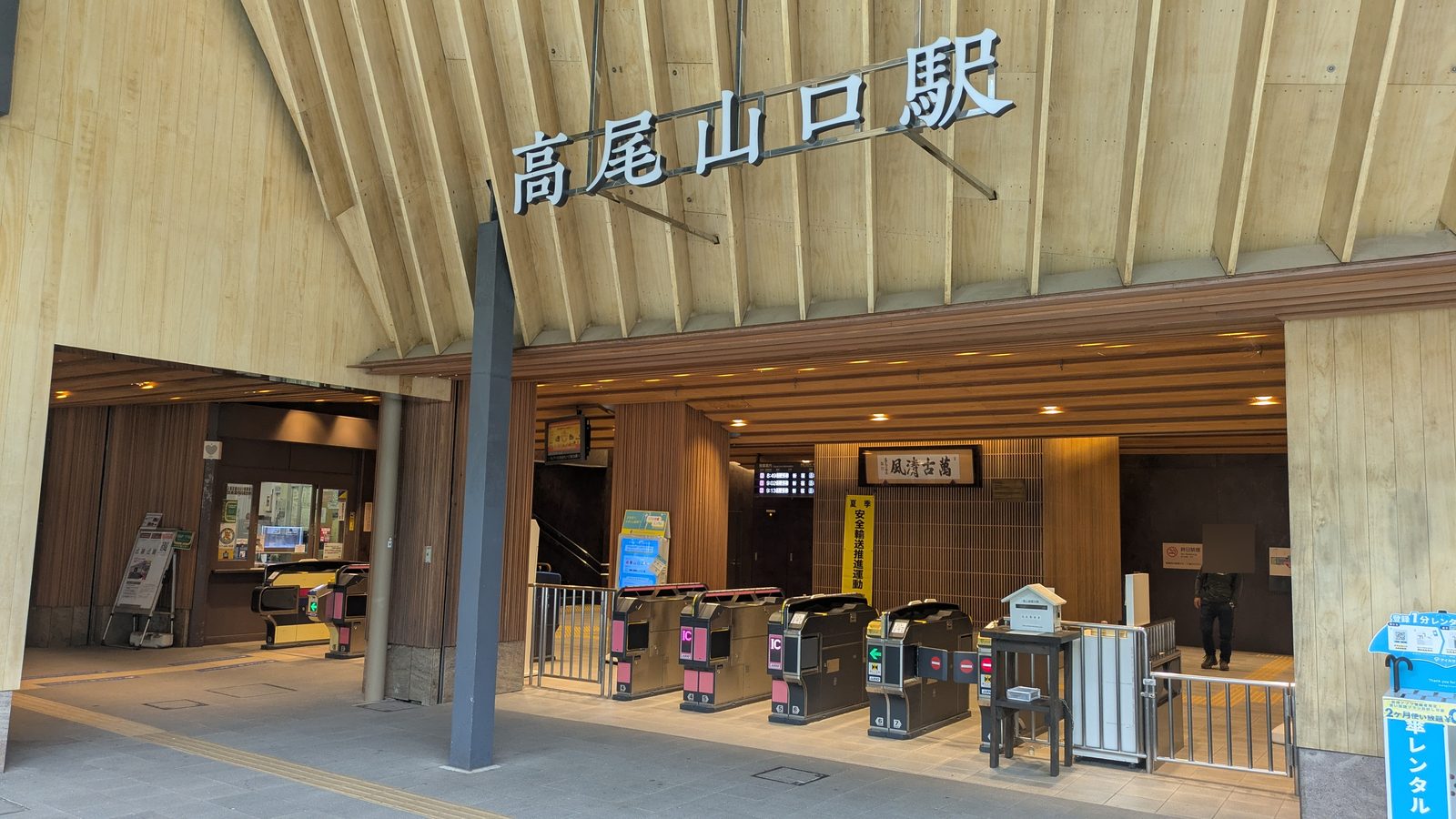
Mount Takao at 599 metres (1,965 feet) has something genuinely rare: the station and the trailhead are the same place. No bus, no taxi, no transfer, no timetable to line up with a second timetable. That is a large part of why this mountain is as busy as it is, and it is why it is the right first mountain for anybody who has not done this in Japan before. It also means the whole of your morning goes into walking rather than into arriving.
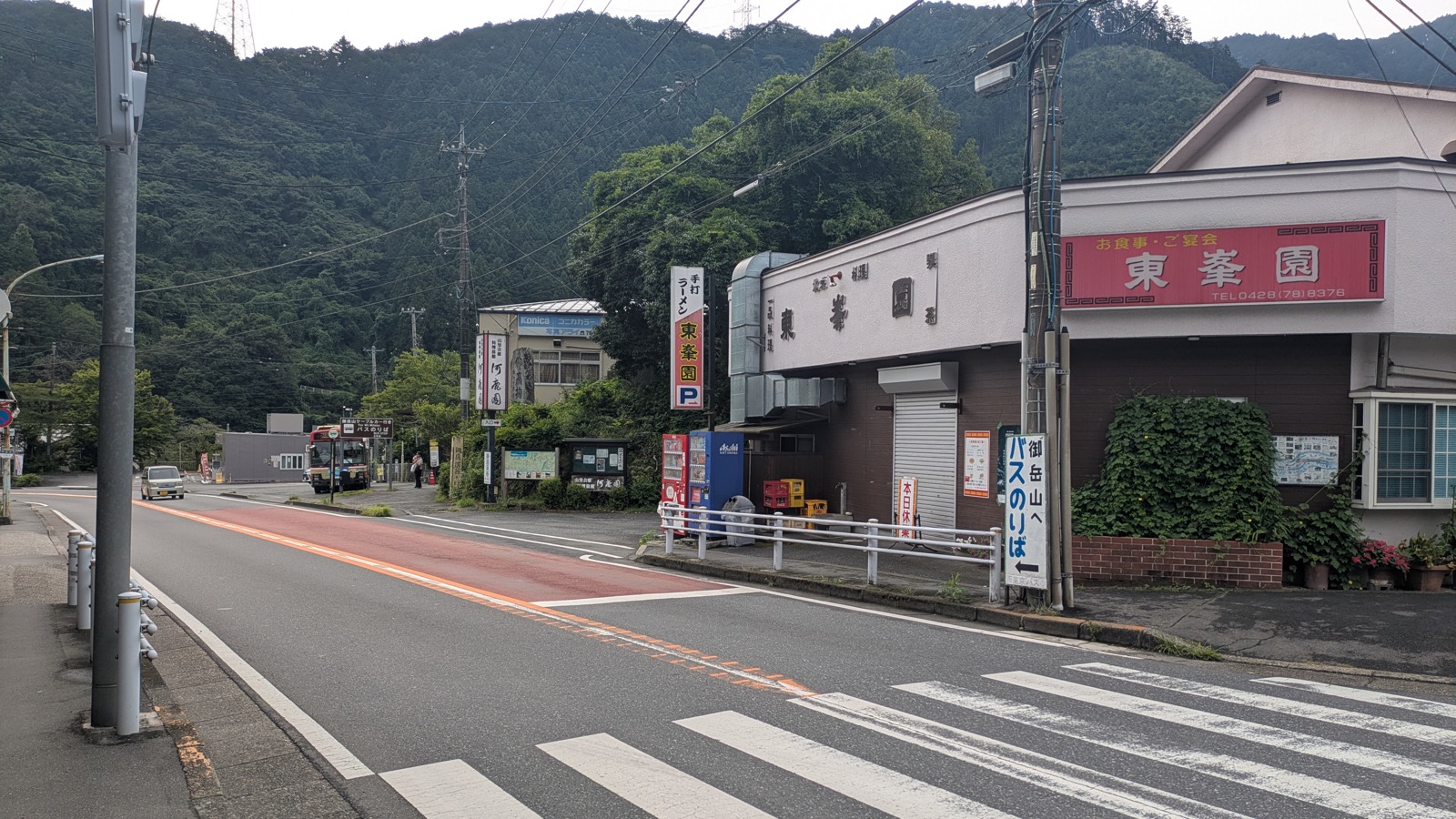
Mount Mitake charges you two hours and about two thousand yen before you take a step. What you get for that is a start at 831 metres with the climbing already done, and a valley that feels a long way from the city. Whether that is a good trade depends entirely on how many hours you have.
The part almost nobody writes down: the tickets tell you the same thing
Here is where it gets interesting, because the ticket structure on each mountain encodes exactly the difference described above.
Keio sells a Takao Mountain Pass, which bundles a return train ticket from your station with a discounted cable car or chairlift ticket, at 22 percent off for adults. From Shinjuku it is 1,450 yen with the cable car return, or 1,090 yen with the cable car one way, and 740 or 560 yen for a child. It is valid on the day of purchase only, and it is sold at ticket machines at Keio Line and Inokashira Line stations, though not at Takaosanguchi itself (Keio, station-by-station prices, PDF). In other words: on Mount Takao, deciding in advance is rewarded with a discount.
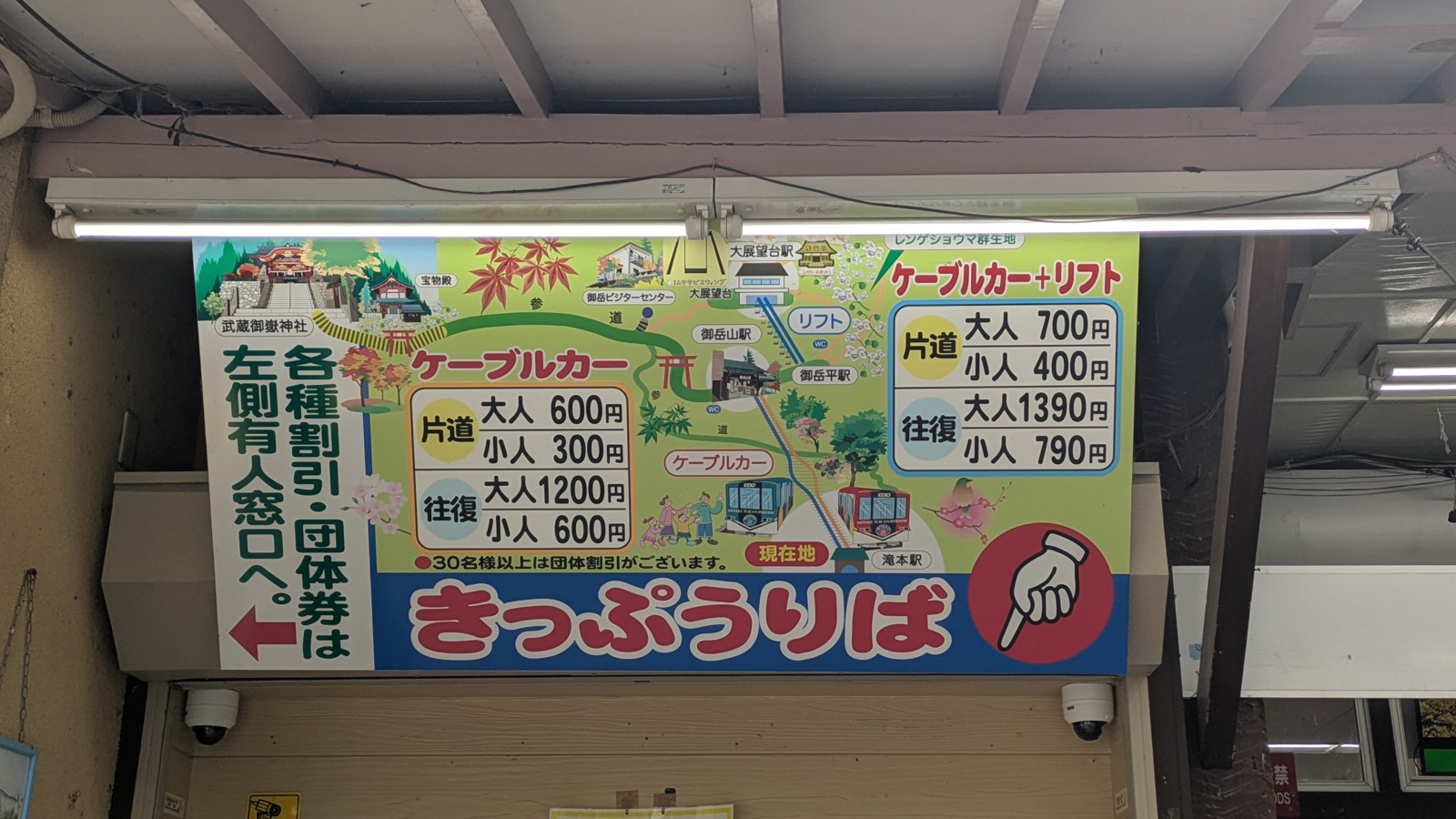
On Mount Mitake there is no discount to be had. A single up the cable car is 600 yen. A return is 1,200 yen. The return is two singles at full price, with nothing attached to it, and it has been that way since the operator removed the return discount on 1 April 2024 (Mitake Tozan Railway fares). The only thing a return buys you is validity for two days, which is useful if you are sleeping in one of the lodges on the ridge and nobody else. So: on Mount Mitake, deciding in advance earns you nothing, which means buying a single and keeping the day open is simply the correct move.
Two companies, two price lists, and the same sentence written in both of them. One mountain pays you to decide early. The other does not care, so you may as well decide late.
Note that the Takao pass also comes in a one way version, so this is not a case of Mount Takao locking you into a return. The point is narrower and more useful than that: Takao rewards a plan, Mitake is indifferent to one.
2. Where you make the decision
| Mount Takao | Mount Mitake | |
|---|---|---|
| What you choose | Which trail to go up | What to do once you are up |
| Where you choose it | At the station, before walking | At Nagaodaira, a junction ten minutes past the shrine |
| The counterintuitive part | The paved trail is the hardest. The dirt ridge trail is the gentlest and the quietest, at 80 to 100 minutes | The cable car does 424 metres in six minutes, and everything after that is optional |
| Can you change your mind? | Not easily. Once you are on a trail you are on it | Yes. Every option has a place to stop |
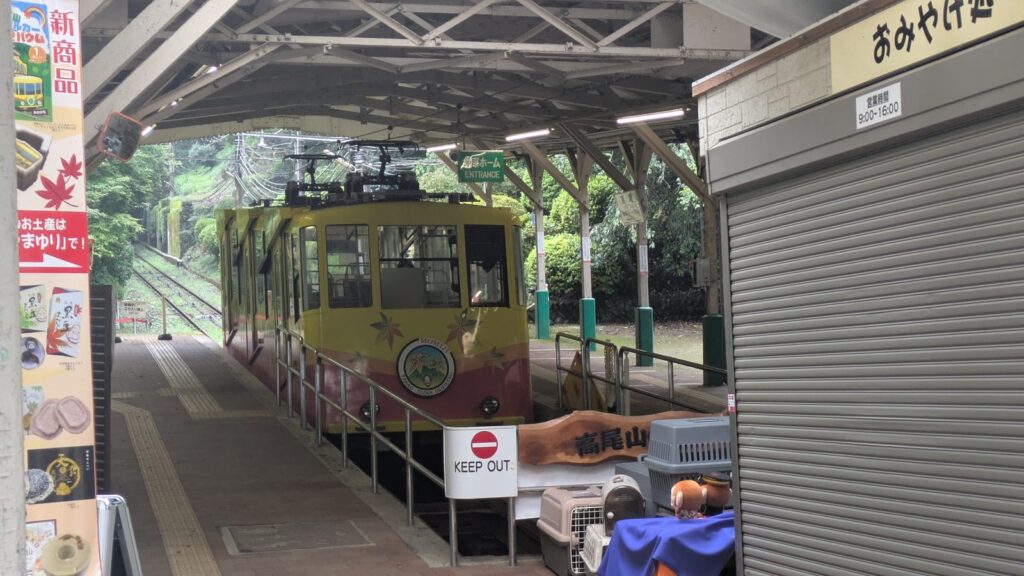
On Mount Takao the decision is real and it is made early. The route guide exists because getting this wrong is the most common way to have a bad day here: people take the sealed Trail 1 because it looks easy, and find out on a concrete slope that it is not. If you want the easiest walk on foot and the fewest people, that is the Inariyama Trail, on dirt, under trees, 80 to 100 minutes. If you want the temple and the street food, that is Trail 1. If you want shade and a stream, that is Trail 6. If you would rather skip the climbing, the cable car or the chairlift both cost 490 yen one way and put you 45 paved minutes from the summit.
One warning that matters if the quiet trail is what drew you: check that it is open before you build a day around it. The Inariyama Trail was closed for more than eight months in 2025 while hazardous trees were cleared. Closures on this mountain are measured in months rather than days, and they do not reach the English-language internet. The Takao Visitor Center posts current conditions.
On Mount Mitake the decision is deferred by design. You can walk from the top cable car station to the shrine, look at your watch, look at the sky, feel how your legs are, and only then decide whether your day is two hours, four hours, or seven. The junction where that happens has a map board and English interpretive signs on it, so the information arrives at the same moment the choice does. And each option has an exit: the spur to the waterfall with the iron ladder is a there-and-back that you can skip, the chain up Tengu Rock is optional, and if you do not cross to Mount Hinode you simply ride the cable car back down.
That is the real difference in one line. On Takao, a wrong choice costs you the day. On Mitake, there is almost no way to make a wrong choice, because you make it late and you can undo it.

3. What is waiting at the top
Both mountains have something old and religious near the summit, and this is where most comparisons stop, because at that level of detail the two look identical. They are not. The interesting difference is not that each has a religious site. It is the relationship each one has with its own summit.
| Mount Takao | Mount Mitake | |
|---|---|---|
| The site and the summit | The temple is on the way. You pass Yakuo-in and continue to the summit at 599 m (1,965 ft) | The shrine is the summit, at 929 m (3,048 ft). There is no summit marker, no cairn, no trig point |
| What is enshrined | Izuna Daigongen. The temple was founded in 744 and the original object of worship was Yakushi Nyorai, which is where the name Yakuo-in comes from | A wolf, Okuchimagami, known affectionately as Oinu-sama |
| What is around it | A temple town. Shops, street food, toilets, the whole way | A village on the ridge. About fifty buildings, most of them pilgrim lodgings, at around 869 m (2,851 ft) |
| Can you sleep up there? | It is a day mountain | Yes, in a lodge, with a vegetarian dinner and the shrine steps to yourself at dawn |
| Paying for things | Cash at the shops on the mountain | Fully cashless at the village shop: six card networks, three QR wallets, transport IC |
| Finishing in hot water | Two minutes from the station | About two hours from the junction, over Mount Hinode, coming out at a different station |
Take those one at a time, because each one is a reason somebody might choose differently.
Yakuo-in is a working temple on the road to the summit. It was founded in 744 by the priest Gyoki at imperial command, it is one of the three head temples of the Shingon Chizan school alongside Naritasan Shinshoji and Kawasaki Daishi, and although the object of worship today is Izuna Daigongen, enshrined in 1375, the name of the temple still points at the Yakushi Nyorai it started with (Takaosan Yakuo-in). You walk through it. It is a stop, and a very good one, and then you carry on to the top. If the etiquette is what puts you off, that has its own guide.
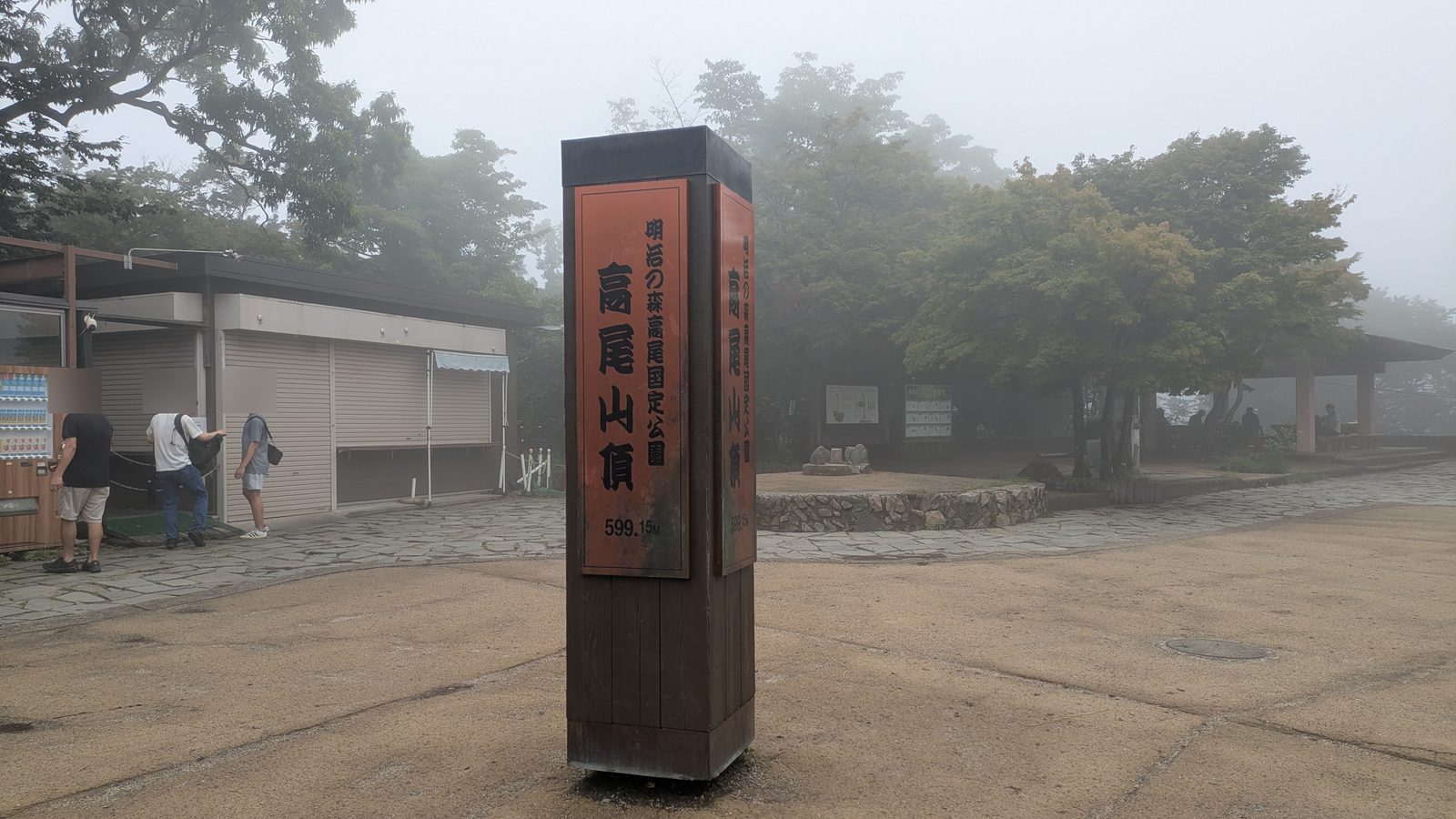
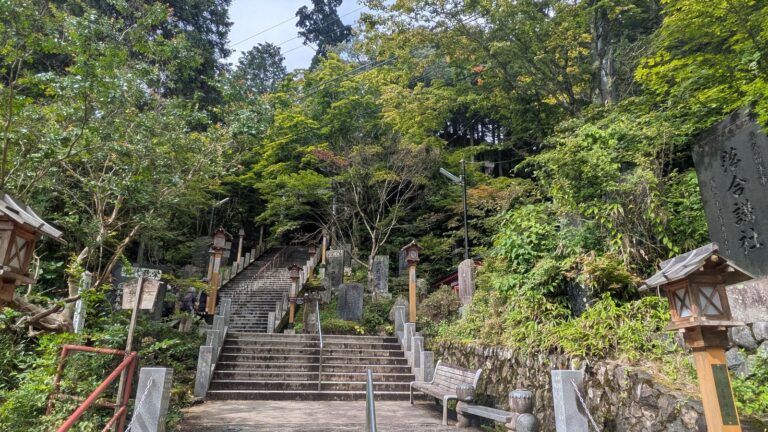
Musashi Mitake Shrine is the top. The lane ends in a flight of stone steps and the shrine stands at the highest point of the mountain, at 929 metres, and there is nothing else up there to photograph as a summit. Visitors who came for a peak sometimes walk right through the top of the mountain looking for the marker. Say that out loud before you go and it stops being a disappointment and starts being the point.
The deity is a wolf. If you have visited a lot of shrines in Japan you have met foxes at Inari shrines and deer at Kasuga. A wolf is rarer. The Japanese wolf has been extinct since the early twentieth century, and the mountain shrines that kept faith with it are concentrated in this range and the ridges of Chichibu to the west (Ministry of the Environment, Kanto Regional Office). Because the everyday name for that deity uses the ordinary word for dog, this became a mountain where people bring dogs to pray, and the shrine offers blessings for them (Musashi Mitake Shrine). It is covered properly in the article on the shrine and the village.
And the rarest thing on either mountain is the village. People live at 869 metres and take the cable car down to work. There is a shop, drinking water, a postal address, a visitor centre. Mount Takao has a temple town that closes when the mountain closes; Mount Mitake has a settlement that goes to bed there. If you want one image to hold on to, it is this one: the shop in that village takes six kinds of credit card, while the shops on Mount Takao want cash. The rule everybody repeats about Japan, that you need more cash the higher you go, is inverted across these two mountains.

If you are doing both
Do Mount Takao first. Not because it is more famous, and not because it is easier, but because of what it gets out of the way.
Takao teaches you the machinery: how a Japanese mountain cable car works, what it is to walk a temple approach lined with shops, how to behave at the hall, and above all what time of day the crowds arrive. Starting before eight in the morning is the single most effective thing you can do on Mount Takao, on every route, and once you have felt why, you carry that knowledge to every mountain in this country.
Then Mount Mitake asks you for none of that, and you arrive with all your attention free for the only thing it actually wants from you, which is a decision at a junction.
Doing it the other way round works too. It is just that you spend some of Mount Mitake learning things Mount Takao would have taught you for 430 yen.
How this plays out on the day
The night before, most people have ten tabs open. Two forum threads, three listicles, a page that says Mitake is quieter, a page that says Takao is more convenient, and no way to weigh either statement. The tabs get closed and nothing has been decided.
The version where this has gone well is quiet and slightly boring. You are on a platform in the morning holding a ticket, and you are not wondering about the other mountain.
“I have half a day and I want to be walking by eight. Takao.”
“I have the whole day and I do not want to decide anything until I get there. Mitake.”
That is the whole benefit. Not a better mountain. A decided one.
For what it is worth, my own answer changes with the day. I have walked Mount Takao by every main route, including the paved one that catches people out, and I have walked Mount Mitake end to end in seven hours and seven minutes, from the first bus to a hot spring on the other side. On that Mitake day it had rained the night before, I slipped on the rocks on the spur to the waterfall, and I decided at the boulder afterwards not to take the chain. That decision was made on the mountain, at the moment it came up, and that is exactly what that mountain is for.
Either mountain can also be done with a guide. On Mount Takao, one small-group guided day covers the temple, the summit and a hot spring. On Mount Mitake, one private day tour drives you from your hotel to the cable car and walks the shrine and the Rock Garden with you.
Affiliate links · Takao: small group of up to 7, about 8 hours · Mitake: pickup inside the 23 wards, about 10 hours · Free cancellation up to 24 hours before
Questions people actually ask
Which one is less crowded? Mount Mitake, on the evidence available. Be careful with how strongly anybody states this, including me: my crowd data for Mount Mitake is a weekday morning in August, and I have not walked it on a Saturday, so I will not tell you what a weekend there is. What I can tell you is that on Mount Takao the time of day matters more than the day of the week, and that starting before eight transforms it.
Which one is harder? Neither, in the way that word is normally meant. If you want the hardest hour available on either mountain, it is the paved Trail 1 on Mount Takao. If you want the longest day, it is Mount Mitake across to Mount Hinode.
Can I do both in one day? No. They are on opposite sides of the western suburbs and each one is a day.
Is Mount Takao worth it if I have already seen a lot of temples? Yes, but choose the Inariyama Trail rather than Trail 1, and treat it as a forest walk with a temple available rather than a temple visit with a walk attached.
Is Mount Mitake worth it if I only have half a day? No. Half a day is four hours of travel and two hours on the mountain. Go to Mount Takao and enjoy it.
What about rain? Mount Takao on Trail 1 and Mount Mitake as far as the shrine both work in rain, because both are paved. Everything else on both mountains gets slippery, and the chain and the ladder on Mount Mitake are best left alone.
I am bringing a dog. Mount Mitake is unusually set up for dogs, for the reason described above, and the cable car sells pet tickets. The catch is at the bottom: a dog walking on a lead cannot ride the bus, though a dog in a carrier can. Drivers can park at Takimoto and skip the problem. The full detail is in the getting there guide.
Do I need a car? No, for either. This site exists partly to make that point: both of these are ordinary commuter trains, and the bus on the Mitake side is covered in how to ride a Japanese bus.
Affiliate link. This site earns a commission if you book through it, at no extra cost to you. Photo from our own walk.
Where to go from here
Neither of these is the wrong mountain. There are only days that do not fit. Work out which shape your day has, and the rest of the planning follows from it.
If you chose Mount Takao, the next thing to read is which trail to take, because that is the decision that makes or breaks the day. After that: the cable car or the chairlift, Trail 1, Trail 6, the Inariyama Trail, the temple, the hot spring at the station, and, when you want a longer day on the same mountain, the traverse to Lake Sagami.
If you chose Mount Mitake, start with the day plan, which lays out the two hour, four hour and seven hour versions. Then: getting there, the shrine and the village, the Rock Garden, and the crossing to Mount Hinode and the hot spring.
If the other mountain is not the question, the same comparison is done for a day that involves no mountain at all in Mount Takao or Kamakura.
And if you are still undecided, take that as information too. It means your day fits both, which means you cannot get this wrong. Go to the one with the better weather.
Both of these mountains leave the decision to the morning of the walk. For the comparison where that stops being true, see Mount Takao or Mount Fuji.