Some links on this site are affiliate links. If you book through one, Tokyo Trailhead earns a commission at no extra cost to you. It never decides what appears here.
Three legs take you to Mount Mitake: a train, a bus, and a cable car. Not one of them is hard. What catches people out is that the three timetables were never designed to meet each other, and that the ticket window at the bottom offers you a return ticket that saves you nothing at all.
On a weekday in August 2026 the doors of the train opened at Mitake Station at 07:47. Standing at the top cable car station, 831 metres (2,726 ft) above sea level, happened at 08:27. Forty minutes, door to summit village.
Fourteen of those forty minutes involved moving. Three walking to the bus stop, four on the bus, seven on the cable car. The other twenty-six were spent standing still.
That is the whole shape of the journey, and it is good news, because waiting that you know about in advance is not waiting. It is a schedule.
There is exactly one decision on the way up that costs you anything, and it is made at a ticket machine at 407 metres. A single up the cable car is 600 yen. A return is 1,200 yen. The return is two singles at full price, with no discount attached to it.
So buy the single. It costs you nothing to leave the question of how you come down until you are standing at the top, and on this mountain that question is the whole point.
Affiliate link. This site earns a commission if you book through it, at no extra cost to you. Photo from our own walk.
What this guide covers12 sections
- Forty minutes, and what they are made of
- Buy a one-way ticket
- Getting to Mitake Station from Tokyo
- The bus stop is not outside the station
- This particular bus, in four lines
- Nobody times the connection for you
- Takimoto Station, 407 metres
- Six minutes, 424 metres
- What is waiting at 831 metres
- Where you actually need cash
- Questions people actually ask
- Where to next
Forty minutes, and what they are made of
| Time | Where | Height |
|---|---|---|
| 07:47 | Arrive Mitake Station (JR Ome Line) | — |
| 07:50 | Reach the bus stop, about 200 m (220 yd) from the station | — |
| 07:56 | Bus departs (weekday timetable) | — |
| 08:00 | Arrive Cable-shita, the stop for the cable car | 407 m / 1,335 ft |
| 08:20 | Cable car departs | — |
| 08:27 | Arrive Mitakesan Station | 831 m / 2,726 ft |
What it costs, one way from the station
| Adult | Child | |
|---|---|---|
| Bus, Mitake Station to Cable-shita | 340 yen | 170 yen |
| Cable car, single | 600 yen | 300 yen |
| Total | 940 yen | 470 yen |
Add a train ticket from central Tokyo, about 1,034 yen with an IC card from Shinjuku, and the whole journey from the middle of the city to 831 metres comes to under 2,000 yen one way.
Two heights are worth writing down, because every distance on this mountain is measured from them. The bottom cable car station, Takimoto, is at 407 metres. The top station is at 831 metres. The cable car covers the 424 metres (1,391 ft) between them in six minutes.
The summit of Mount Mitake itself, where the shrine stands, is at 929 metres. That is only 98 metres (322 ft) above where the cable car leaves you.
Buy a one-way ticket
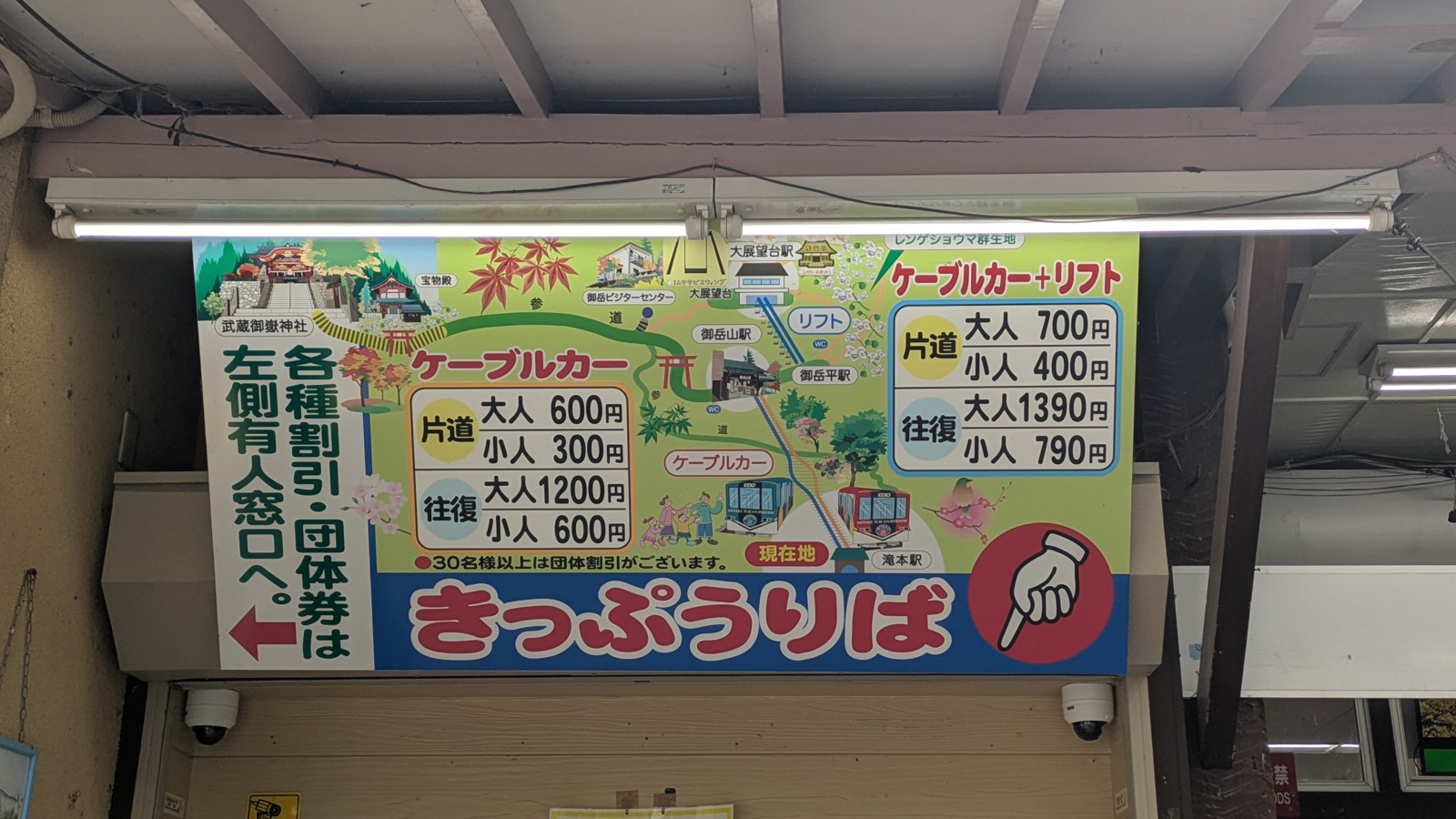
The fare board hanging above the ticket window at Takimoto Station reads as follows. This is what it said on 6 August 2026.
| Single | Return | |
|---|---|---|
| Cable car, adult | 600 yen | 1,200 yen |
| Cable car, child | 300 yen | 600 yen |
| Cable car with chairlift, adult | 700 yen | 1,390 yen |
| Cable car with chairlift, child | 400 yen | 790 yen |
Look at the first two rows. The return is exactly twice the single. There is no return discount on the cable car, and there has not been one since 1 April 2024, when the operator removed it. The combined cable car and chairlift return saves you ten yen, which is not a reason to decide anything.
So the return ticket buys you no money. What it does buy, if you want it, is time: a return is valid for two days, one round trip, which suits people staying overnight in one of the pilgrim lodges on the mountain. Everyone else should buy a single and keep the day open.
That matters more here than on most mountains, because Mount Mitake gives you three genuinely different ways down, and two of them do not touch the cable car at all.
- Ride back down. Simple, six minutes, and you buy the second single at the top.
- Walk down the old pilgrim path, the Omotesando, which drops from the top station to Takimoto through cedar forest.
- Walk out over Mount Hinode and down to a hot spring, which puts you on a different railway line entirely and never brings you back past the cable car.
If you have already paid for a return, the third option quietly costs you 600 yen and starts arguing with you at about two in the afternoon. If you hold a single, it costs you nothing, and you can decide when you can see the weather, the time, and your own legs.
One more thing about the fare board. Two English travel pages still list this cable car at 590 yen single and 1,110 yen return, which were the fares before the 2024 revision. The board at the station is the one that takes your money.
Getting to Mitake Station from Tokyo
From Shinjuku, take the JR Chuo Line towards Ome, change at Ome Station to the Ome Line towards Okutama, and get off at Mitake. It is about ninety minutes, and about 1,034 yen with an IC card.
On Saturdays, Sundays, and holidays there is a direct train in the morning called the Holiday Rapid Okutama, which runs from Shinjuku into the valley without the change at Ome. It is an ordinary train with no reservation and no surcharge.
There is also a way to skip the train and the bus completely. One private Mitake day tour collects you from your hotel in Tokyo and drives you to the cable car by van. The cable car ticket, about 1,200 yen return, is still paid by each guest at the station.
Affiliate link · Pickup inside the 23 wards · About 10 hours · Free cancellation up to 24 hours before
Two names are worth separating before you go, because they are almost the same word and they are 424 metres apart in height.
- Mitake Station (御嶽駅) is the JR station in the valley. This is where the train leaves you.
- Mitakesan Station (御岳山駅) is the top station of the cable car, on the mountain.
The bus stop between them adds a third name. The bus calls it Cable-shita (ケーブル下), which simply means below the cable car, while the cable car company calls the same place Takimoto. Both names appear on signs, and both mean the last stop.
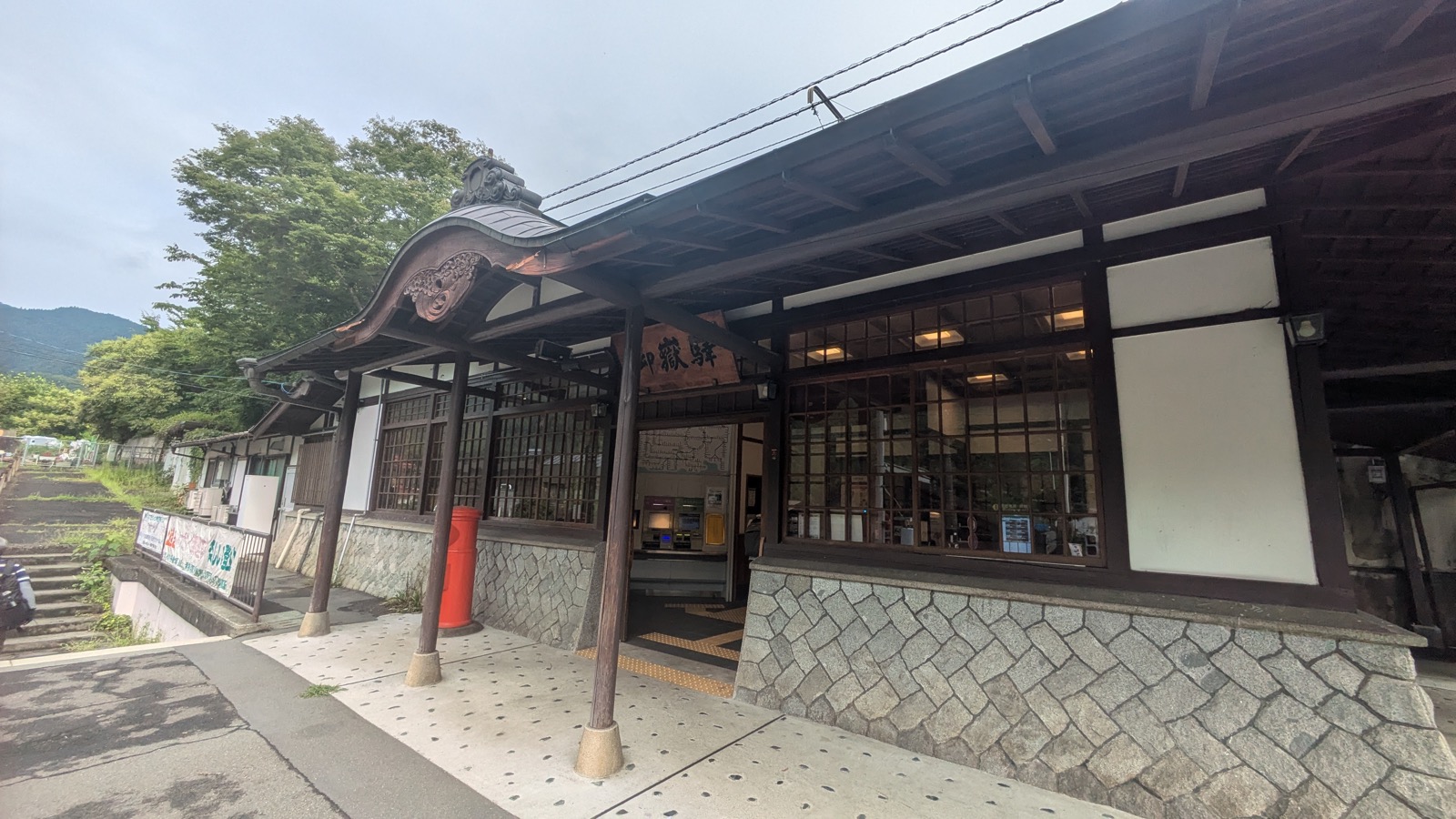
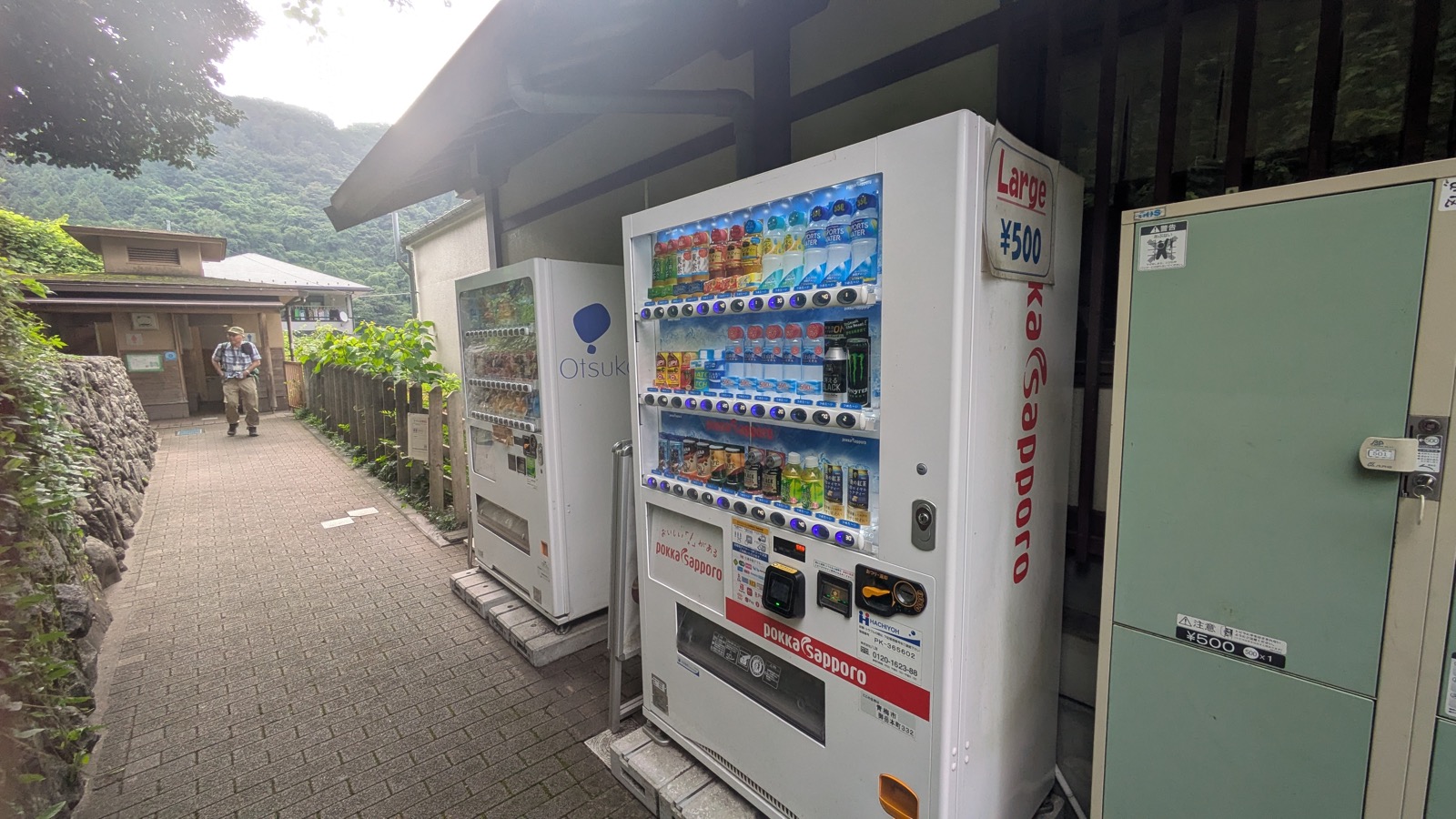
Mitake Station is small and staffed, with toilets, vending machines, coin lockers, and a shop or two outside the entrance. It is worth using the toilets here. The next reliable ones are at the top of the cable car.
The bus stop is not outside the station
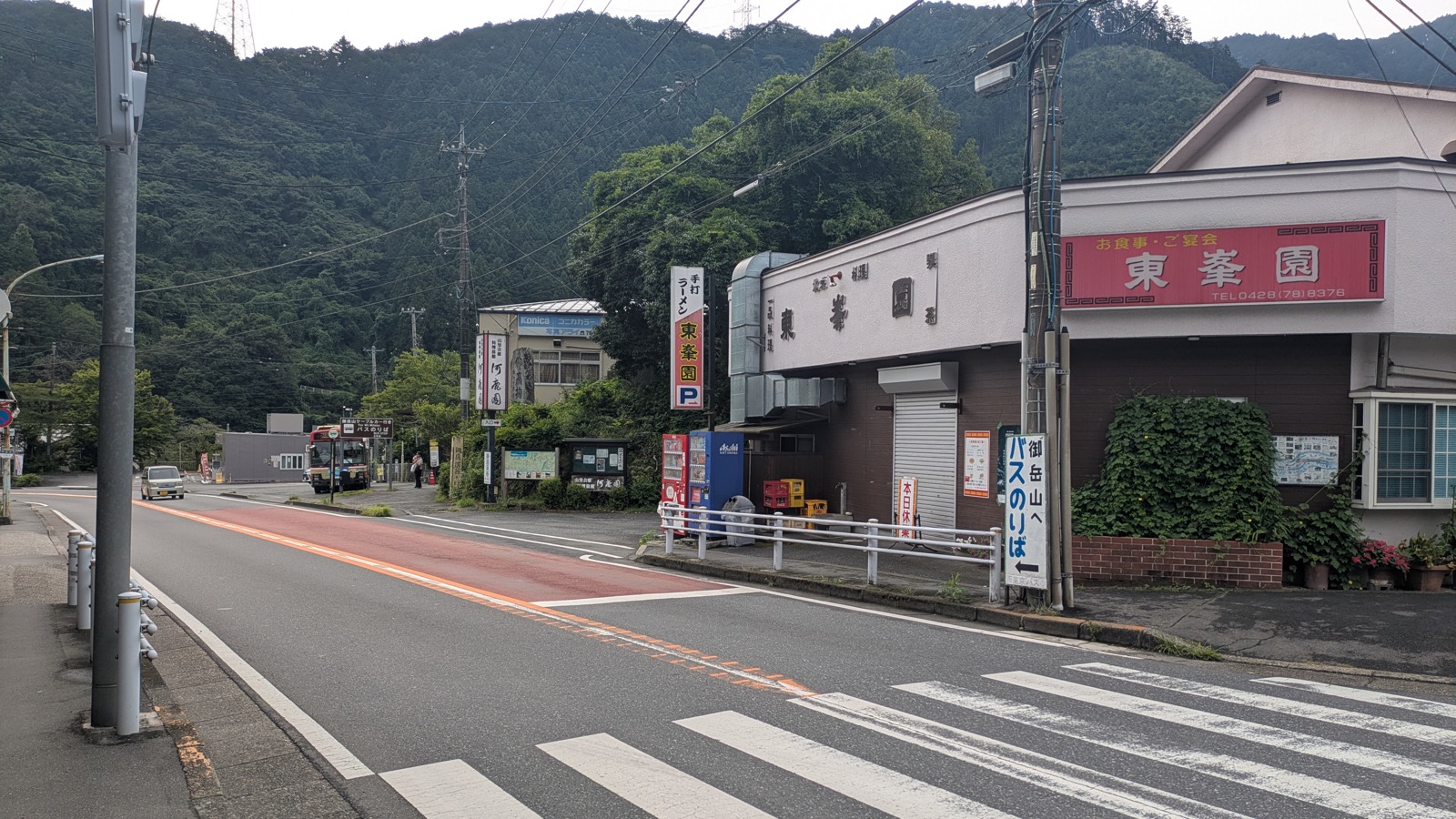
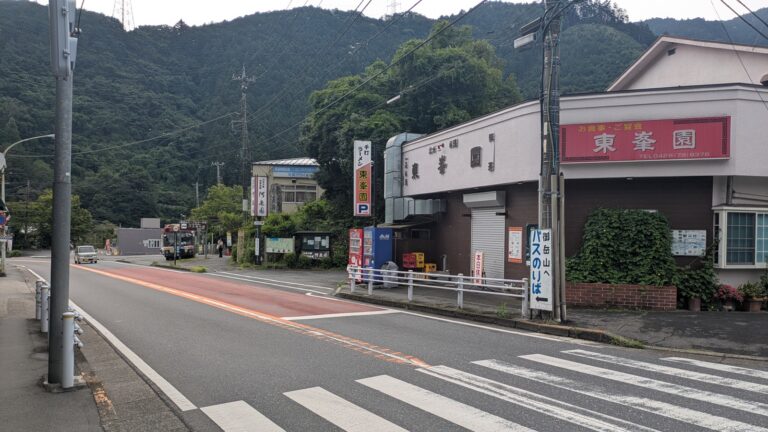
Leave the ticket gate, go down the steps to the road, and the bus stop is about 200 metres (220 yd) along it. Three minutes on foot. It is the one part of the journey where you might briefly wonder whether you have gone the wrong way.
You have not. The stop is marked by a large brown sign that reads For Mt. Mitake / BUS STOP in English, above the Japanese, with the route diagram and the timetable on a post beside it.
The service is route 御10, run by Nishi-Tokyo Bus. Almost every bus from this stop is going to the same place, and that place is the last stop.
Departures from Mitake Station to Cable-shita, from the timetable posted at the stop, revised 1 April 2026
| Departures | |
|---|---|
| Weekdays | 7:30, 7:56, 8:34, 9:12, 9:58, 10:45, 11:26, 12:10, 12:53, 13:40, 14:20, 15:02, 15:46, 16:34, 17:06, 17:34, 18:07 |
| Saturdays, Sundays, holidays | 7:12, 7:38, 8:12, 8:38, 9:12, 9:44, 10:10, 10:44, 11:16, 11:45, 12:20, 12:47, 13:21, 13:52, 14:25, 14:51, 15:15, 15:41, 16:07, 16:34, 17:00, 17:28, 18:07 |
Seventeen buses on a weekday, twenty-three at the weekend. During the Obon week in August the weekend timetable is used on weekdays as well, which in 2026 was posted as the 12th to the 14th of August.
The published journey time is ten minutes. The 07:56 took four, on an empty road on a Thursday morning. Assume ten when you are planning, and treat the extra as a gift.
You can also walk this section. It is about 45 minutes along the road beside the river. We took the bus both times and cannot tell you what the walk is actually to do, so this guide will not pretend otherwise.
This particular bus, in four lines
Country buses in Japan are paid at the end rather than at the start, and the fare depends on where you got on. That is worth learning properly once, with photographs, so there is a separate guide on this site that does exactly that. This section is only about this one bus.
- Board through the middle door, marked 入口 with ENTRANCE under it. The front door, beside the driver, is the exit.
- Take the numbered ticket, or touch your Suica or PASMO on the reader beside the door. A yellow label in English tells you to do one of those two things.
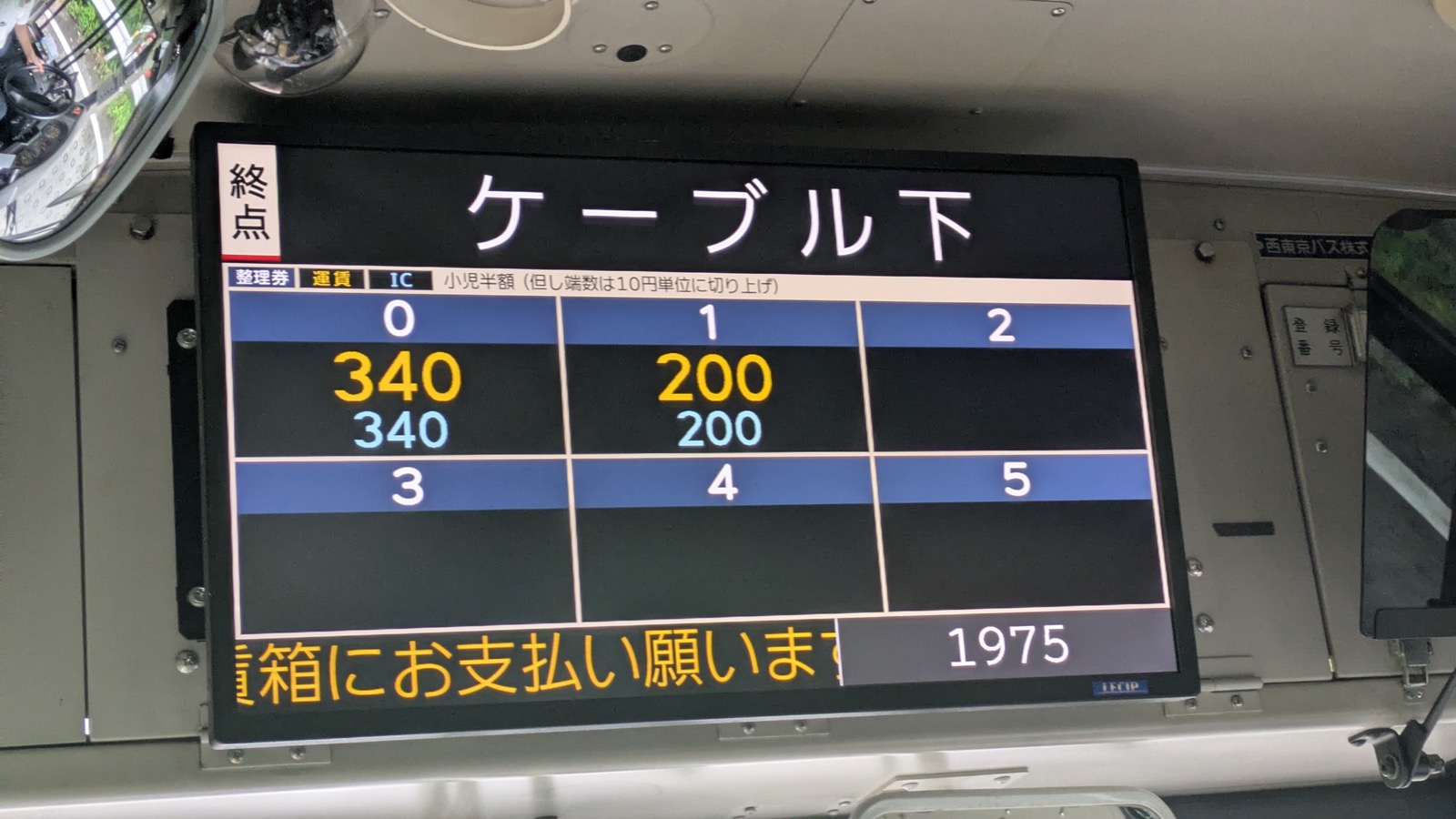
- Your ticket will say 0, because Mitake Station is the first stop, and the fare display shows 340 under the 0. It is 340 yen in cash, 340 yen by card.
- Do not press the stop button. Cable-shita is the terminus. Pay at the front as you get off, into the box beside the driver.
The fare box gives no change, so it changes a 1,000 yen note into coins first. An IC card removes that problem entirely.
One detail beside that fare box says something about the whole mountain. Facing you as you pay is a small printed card: Mitake Station to Takimoto, Adult 340 yen, Child 170 yen, in English. Somebody thought about a foreign passenger standing exactly there, holding exactly that question.
Nobody times the connection for you
The bus set us down at 08:00. The cable car left at 08:20.
That gap is not bad luck, and it is not a mistake in the planning. The bus timetable and the cable car timetable are published by two different companies and they do not line up, so there is a gap on every single departure of the day.
Take the weekday timetable, allow the published ten minutes for the bus, and here is what you actually get.
| Bus leaves Mitake Station | Arrives Cable-shita | Next cable car | Wait |
|---|---|---|---|
| 7:30 | 7:40 | 7:55 | 15 min |
| 7:56 | 8:06 | 8:20 | 14 min |
| 8:34 | 8:44 | 9:00 | 16 min |
| 9:12 | 9:22 | 9:40 | 18 min |
| 9:58 | 10:08 | 10:20 | 12 min |
| 10:45 | 10:55 | 11:10 | 15 min |
The wait is twelve to eighteen minutes whichever morning bus you take. You cannot outsmart it, and there is no clever bus that gets you a better connection. Weekends are gentler, because the cable car runs roughly every sixteen minutes instead of every twenty to thirty.
So plan on it. Twelve to twenty minutes at Takimoto is enough time to buy a ticket, use the toilet, fill a bottle, and still stand on the platform early.
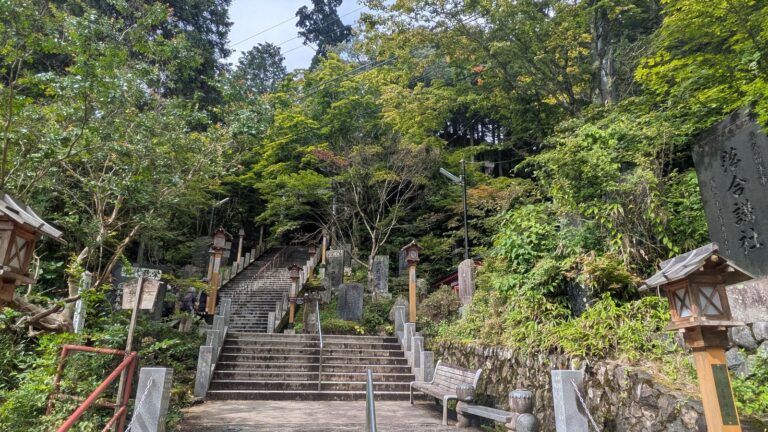
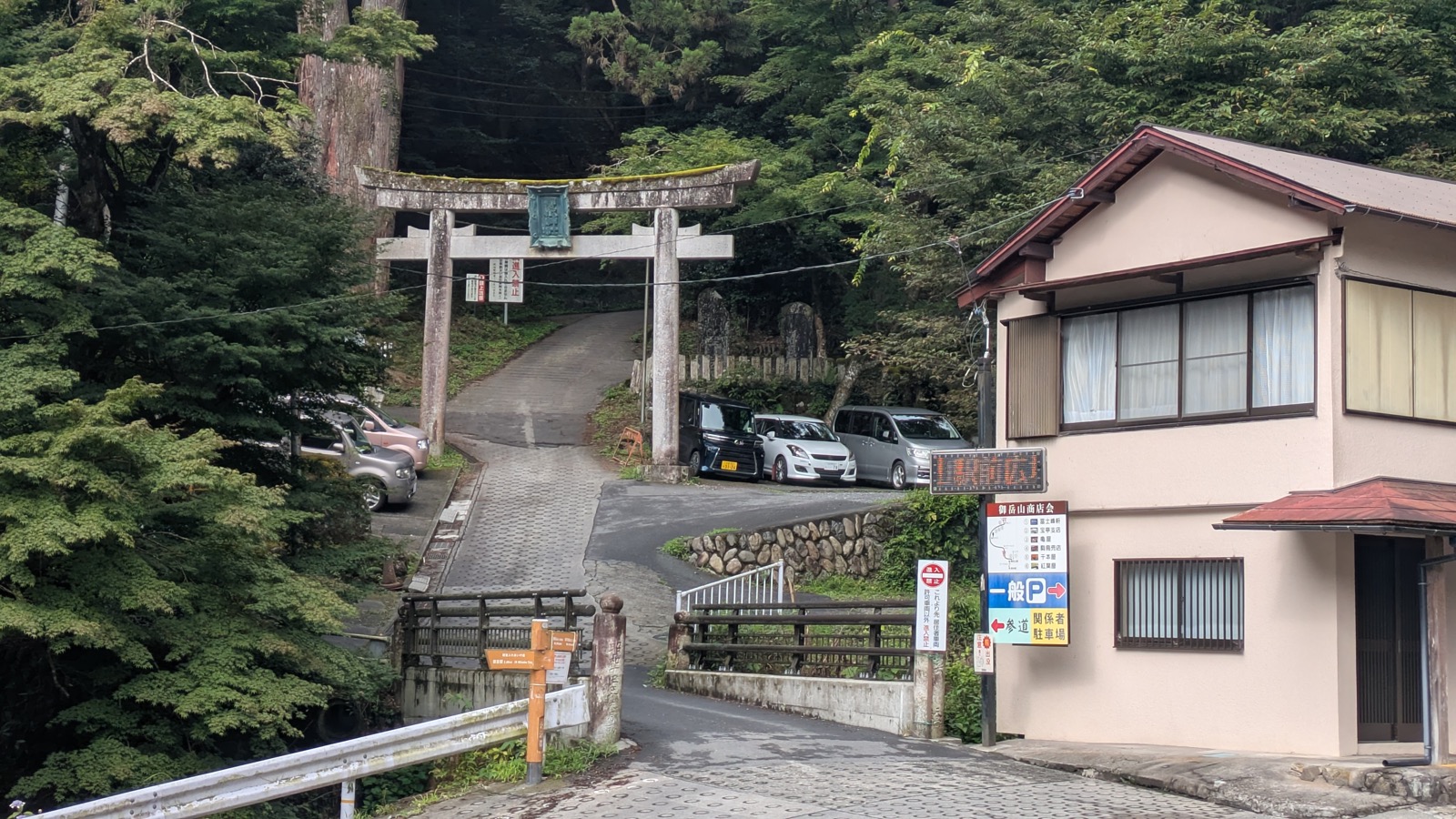
If you would rather spend it outside, walk two minutes up the lane. There is a stone torii gate over the road, closed to cars, and behind it the Omotesando climbs into the cedars. That is the old pilgrim path to the shrine, the route everybody used before 1935, and the published figure for walking it is about ninety minutes against six by cable car. We have not walked it, so that is all this guide will say about it.
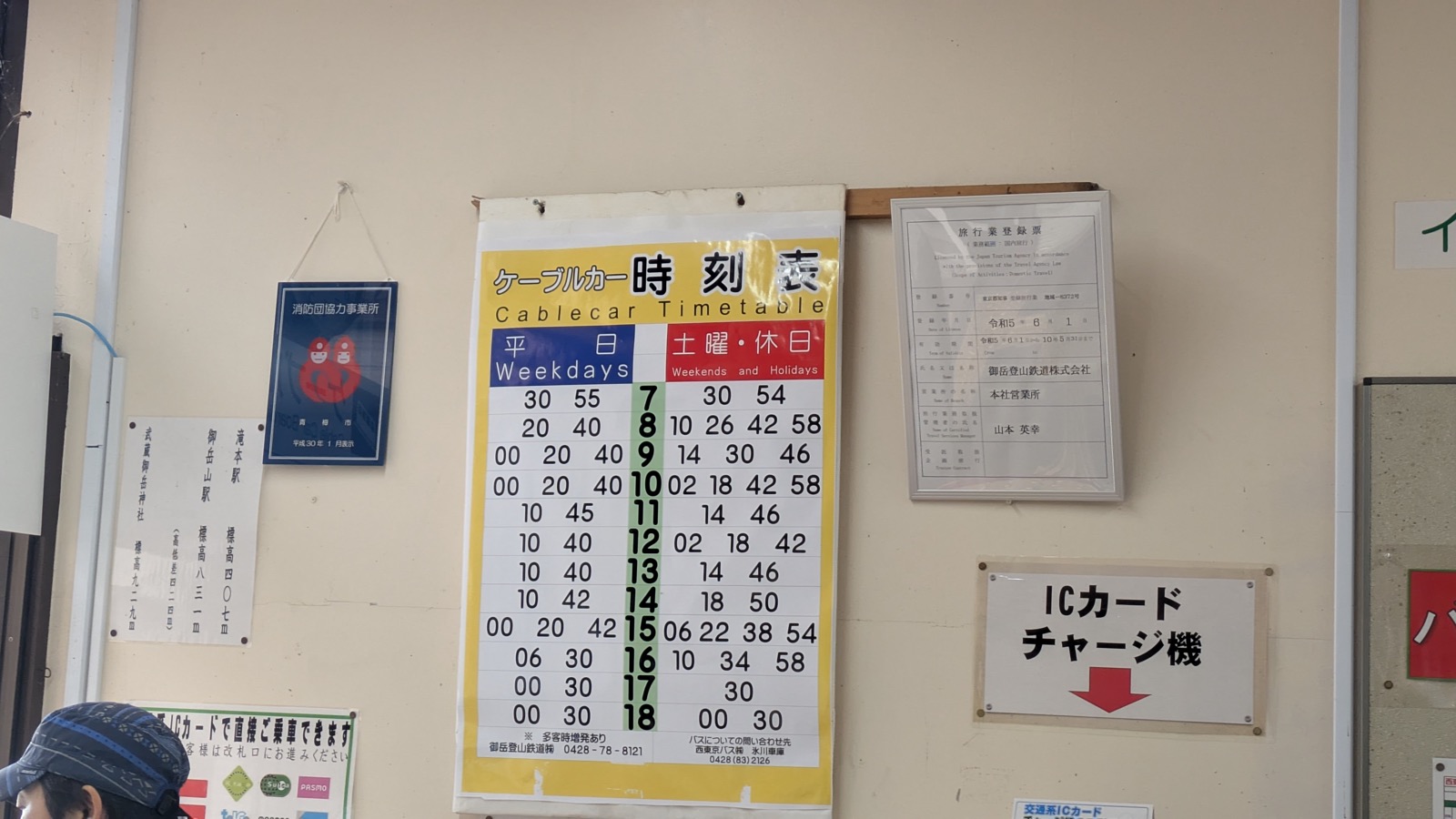
Cable car departures from the board at Takimoto. The two cars are counterweighted on one rope, so the top and the bottom depart at the same times.
| Departures | |
|---|---|
| Weekdays | 7:30, 7:55, 8:20, 8:40, 9:00, 9:20, 9:40, 10:00, 10:20, 10:40, 11:10, 11:45, 12:10, 12:40, 13:10, 13:40, 14:10, 14:42, 15:00, 15:20, 15:42, 16:06, 16:30, 17:00, 17:30, 18:00, 18:30 |
| Weekends, holidays | 7:30, 7:54, 8:10, 8:26, 8:42, 8:58, 9:14, 9:30, 9:46, 10:02, 10:18, 10:42, 10:58, 11:14, 11:46, 12:02, 12:18, 12:42, 13:14, 13:46, 14:18, 14:50, 15:06, 15:22, 15:38, 15:54, 16:10, 16:34, 16:58, 17:30, 18:00, 18:30 |
Extra services are added when it is busy.
Takimoto Station, 407 metres
The bus stops in front of it. There is no walking to be done.
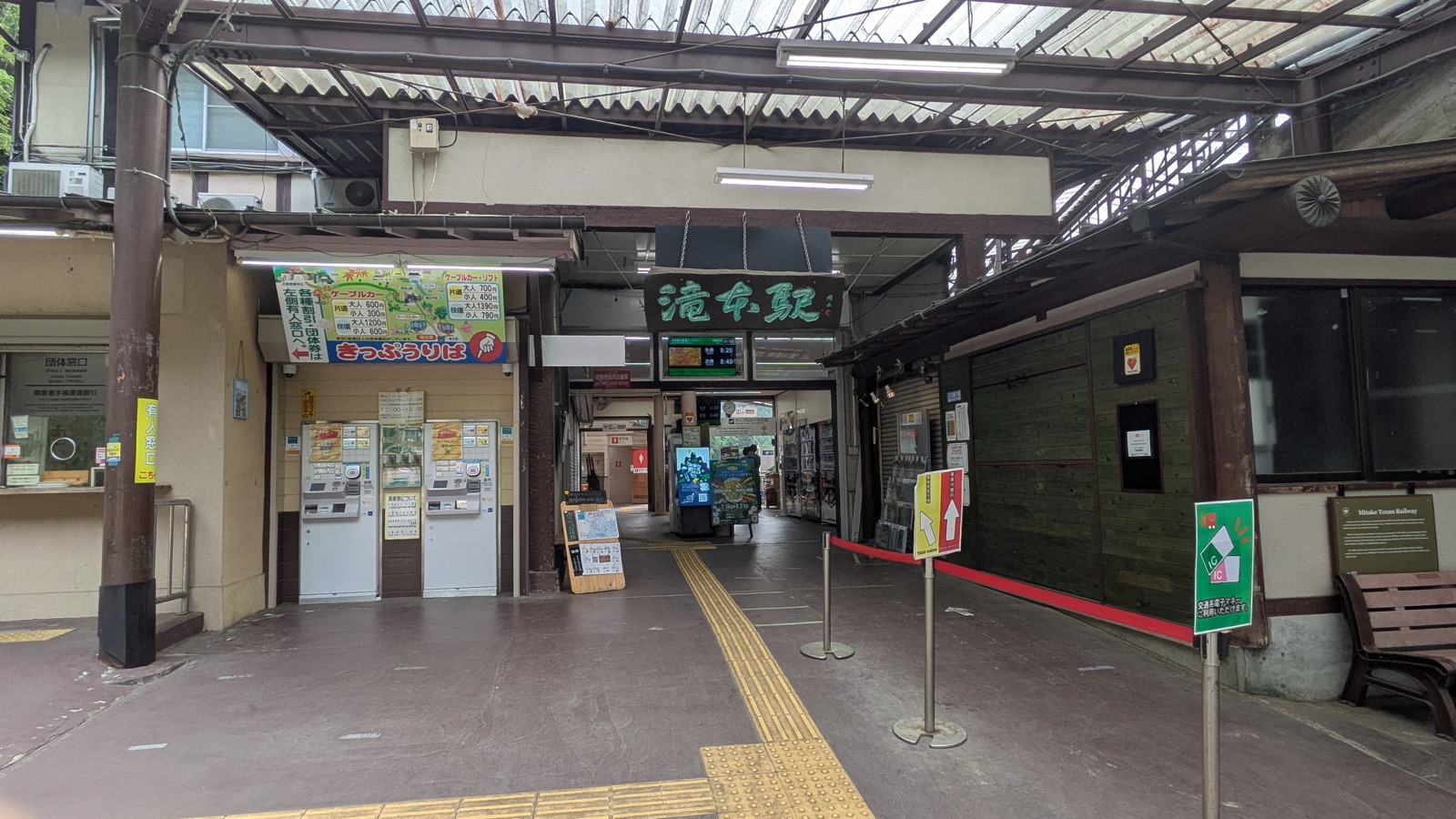
Under the roof there is a ticket window on the left, two ticket machines, a barrier gate, and a green board showing the next two departures. Prices are on the illustrated board above the window.
If you have an IC card, you do not need a ticket at all. Touch it on the gate and walk through, exactly as on a train. There is a top-up machine on the wall for adding money to it. One card per person at the gate, so a group cannot pass on one card. The ticket machines themselves do not accept IC cards, only cash, which is a small trap: the card works at the gate and at the shop, but not at the machine.
Two signs at this station are worth reading before you go up.
The first is the child fare rule, printed in Japanese and English. Adult fare from 13 years old. Child fare under 12. Under 5, one child travels free with each adult. Under 1, free.
The second is about the chairlift at the top, and it is easy to miss: the chairlift closes from 12:00 to 13:00, to give the staff a break and to keep them out of the midday heat. Its hours are 9:00 to 16:10.
And here is the pattern that repeats all over this mountain, visible in a single glance under this roof. The timetable on the wall is printed in Japanese and English, headed Cablecar Timetable, Weekdays, Weekends and Holidays. The fare board above the ticket window, two metres away, has no English on it at all.
On Mount Mitake, whether something is in English does not depend on how important it is. It depends on who made the sign.
Six minutes, 424 metres
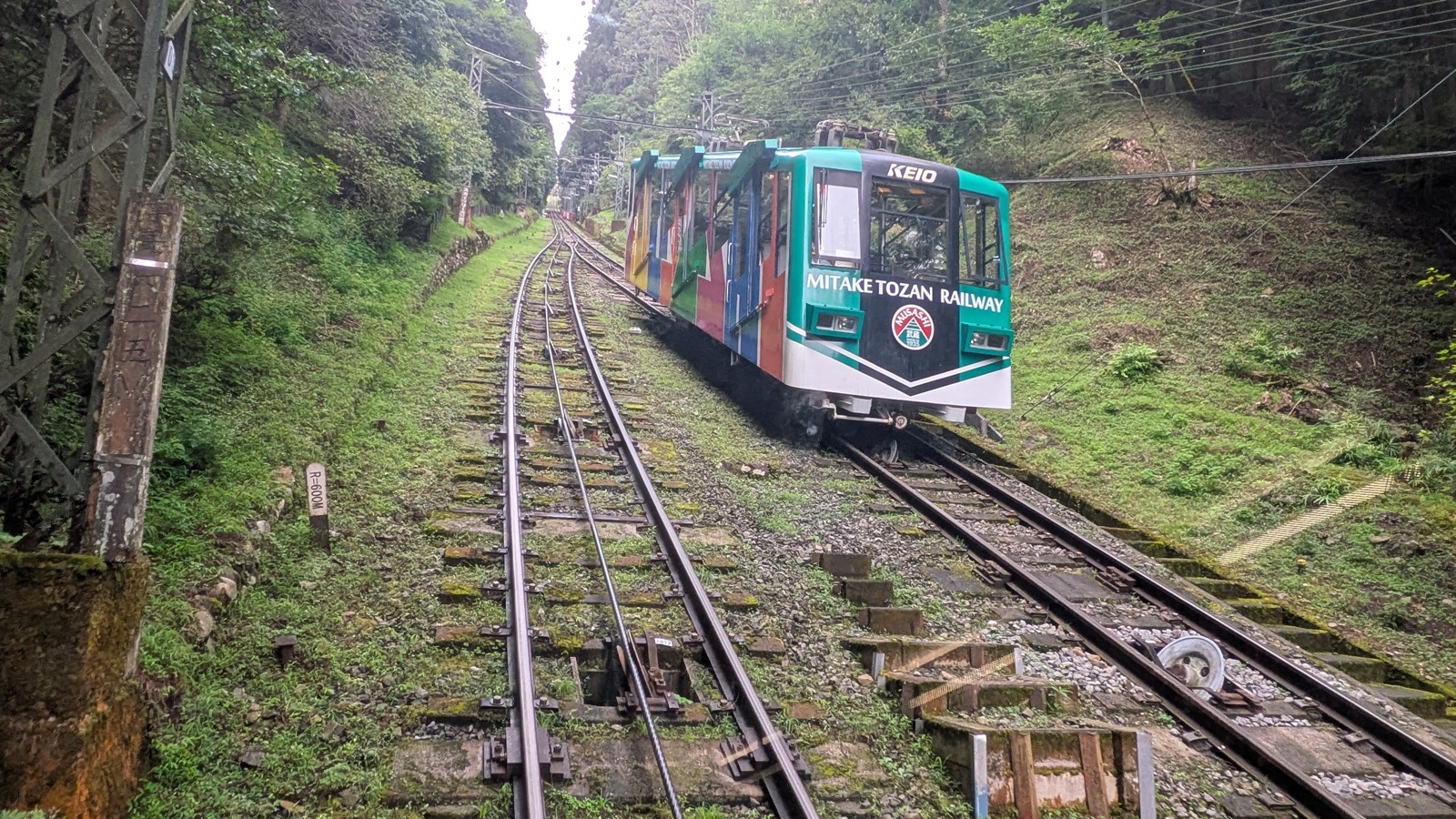
The cable car is 1,107 metres (3,632 ft) long and lifts you 424 metres (1,391 ft). Work those two numbers against each other and the average gradient is about 40 percent. It is steep enough that the carriage is built as a staircase, with the floor cut into steps and the windows leaning over the valley.
Two cars run on one rope, one red and one green, and they pass each other in the middle. That is why the departure times from the top and the bottom are the same.
It is worth knowing what those 424 metres are doing for you. The shrine at the summit of Mount Mitake stands at 929 metres. From Takimoto at 407, that is 522 metres of climbing to the top. The cable car takes 424 of them, which is 81 percent of the ascent, in six minutes, for 600 yen.
What it leaves you is the last 98 metres, and those are the interesting ones: a village, a shrine, and a set of stone steps that nobody carries you up.
What is waiting at 831 metres
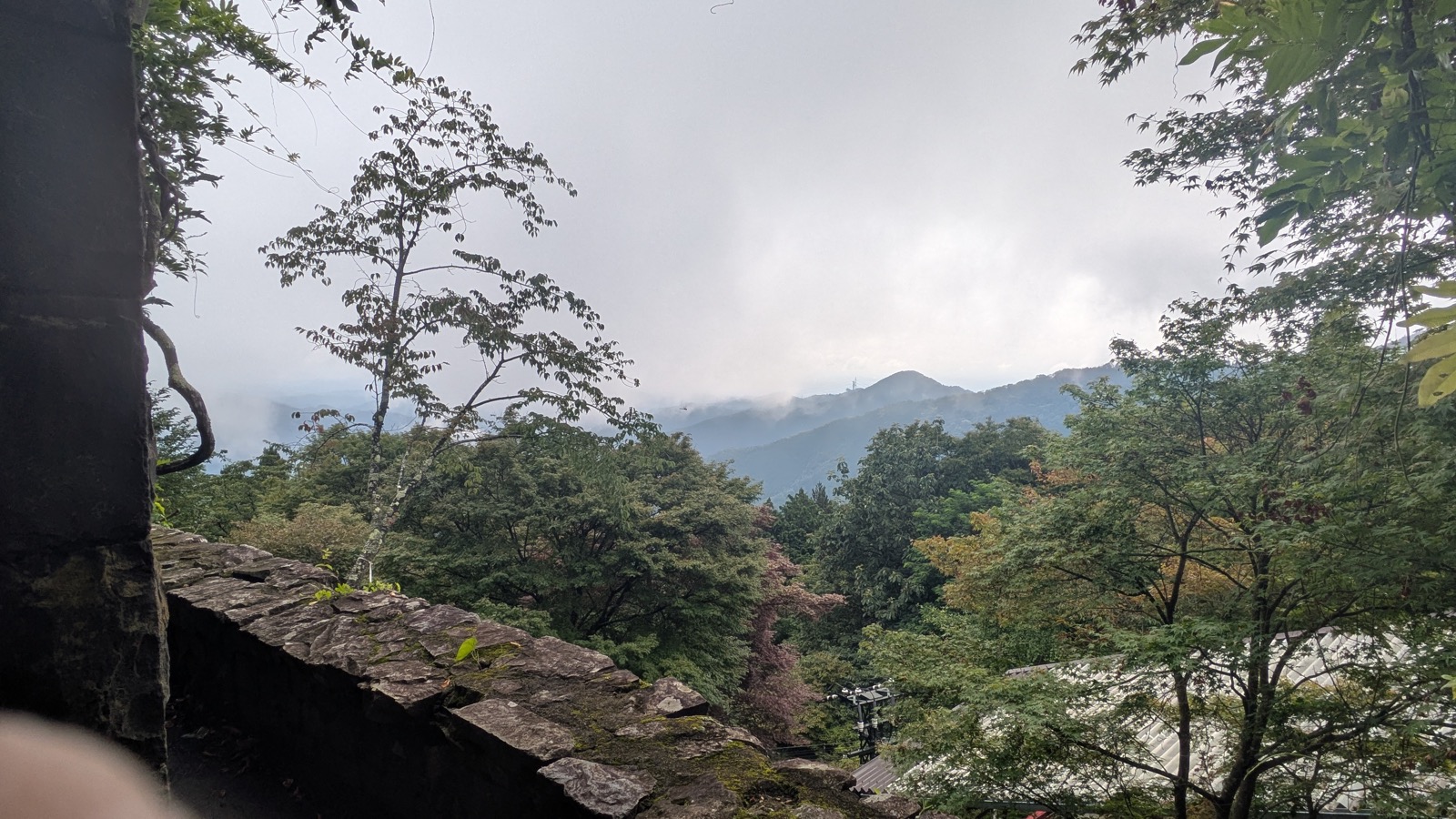
You walk out of the top station onto a paved terrace with a view east over the Kanto plain, and the first thing to understand is that you have arrived somewhere, not at a trailhead.
Within a few minutes of the station there is a village of pilgrim lodges and shops, a visitor centre, drinking water, toilets, and vending machines. Everything else on this mountain is a decision taken from here.
Three things are close enough to mention while you are still standing at the station.
The chairlift. It runs from beside the top cable car station up to a viewpoint, 100 yen single, 190 yen return, 9:00 to 16:10, closed from 12:00 to 13:00. It is short. It is not a way of getting anywhere you cannot walk to in a few minutes.
The wildflower slope. Two minutes from the station is a shaded hillside that is famous in Japan for a small flower called renge-shoma, which blooms in late summer. It is worth the two minutes. It is not worth arriving with the expectation that a hillside will be visibly covered in flowers, because the flowers are small and you have to look for them.
The board with the map on it. The station forecourt has the mountain diagram that every route on this mountain is described from. It is also where you find out that the walking times printed on it are all for places further away than the ones you are about to walk to.
From here the day divides, and that is the point of Mount Mitake. The shrine and the village take about forty minutes. The Rock Garden loop adds an hour and a half. Walking out over Mount Hinode to a hot spring takes the rest of the afternoon and puts you on a different railway line. None of that is decided at the ticket machine, which is exactly why you bought a single.
Where you actually need cash
Very little of this journey needs coins, and the places that do are all at the bottom.
| Cash | IC card | Credit card | |
|---|---|---|---|
| Train to Mitake Station | Yes | Yes | — |
| Bus, 340 yen | Yes, no change given | Yes | No |
| Cable car ticket machine | Yes | No | No |
| Cable car gate | — | Yes | — |
| Shops in the village at the top | Yes | Yes | Yes |
The last row surprises people. The shops in the mountain village take Visa, Mastercard, JCB, American Express, Discover, PayPay, and the transport cards. The common advice that you should carry cash because you are going up a mountain does not describe this mountain.
Carry some anyway. Not because the mountain demands it, but because a fare box that gives no change is a bad place to discover that your card has run out of balance.
Questions people actually ask
How long does it take from central Tokyo?
About two hours and ten minutes, door to top station. Roughly ninety minutes on the train from Shinjuku, then forty from Mitake Station upward including the two waits. By private tour van from a hotel in Tokyo, the drive is listed at about 105 minutes each way (affiliate link).
What does it cost?
Under 2,000 yen one way from Shinjuku. About 1,034 yen for the train, 340 for the bus, 600 for the cable car.
Should I buy a return cable car ticket?
Only if you are staying overnight on the mountain, because a return is valid for two days. It carries no discount, so buying a single leaves you free to walk down or leave over Mount Hinode instead.
What is the first bus, and the first cable car?
On a weekday the first bus leaves Mitake Station at 7:30 and the first cable car at 7:30. At weekends the first bus is 7:12. Take the 7:30 bus on a weekday and you are at the top before 8:00.
What is the last one back?
This is the question to read twice. The last cable car down leaves the top station at 18:30 on every day of the week. On a weekday the last bus from Cable-shita to Mitake Station leaves at 18:21, which is before the last cable car has even come down. The last cable car that connects to a weekday bus is the 18:00.
On Saturdays, Sundays, and holidays there is a later bus, and the last departure was listed at 18:51 in August 2026. Check the timetable at the stop on the day, and if you miss the bus, the road down to Mitake Station is about 45 minutes on foot.
Can I walk instead of taking the bus?
Yes, about 45 minutes along the road. We took the bus, so we cannot describe the walk.
Can I walk up instead of taking the cable car?
Yes. The Omotesando, the old pilgrim path, starts under a stone torii about two minutes from Takimoto Station and climbs to the village. Published figures put it at about ninety minutes. We have not walked it.
Do IC cards work?
Yes, on the train, on the bus, and at the cable car gate. Not in the cable car ticket machines. One card per person at the gate.
Can I bring a dog?
Yes, but not by bus with the dog walking on a lead. The cable car sells pet tickets by weight, 130 yen single for a dog up to 10 kg, 260 yen for a heavier one, and the shrine at the top is set up for dogs in a way that very little English writing mentions. The bus is the broken link: the operator carries only small pets inside a closed carrier, with the contents hidden from view, so a dog walking on a lead does not board. People hiking with a dog drive to the bottom cable car station at Takimoto, which has a car park, then ride up from there.
What about children?
Child fares apply under 12 on the cable car. Under 5, one child travels free with each adult. Under 1, free. The bus charges half fare for children, rounded up to the nearest ten yen.
Are there toilets and water?
Toilets at Mitake Station, at Takimoto, and at the top. Drinking water at the visitor centre in the village above the top station. Vending machines at Mitake Station and in the village.
Is the weekend very different?
Yes, in your favour for connections. The cable car runs about every sixteen minutes instead of every twenty to thirty, and there are twenty-three buses instead of seventeen. During Obon in mid-August the weekend timetable is used on weekdays too.
Affiliate link. This site earns a commission if you book through it, at no extra cost to you. Photo from our own walk.
Where to next
You are at 831 metres with a single ticket in your pocket and the whole day undecided. That is the right way to arrive here.
- Mount Mitake Rock Garden: The Hardest Part Is Optional — a mossy valley loop of about an hour and a half, where the hardest section turns out to be optional
- Musashi Mitake Shrine: A Wolf Deity, Dogs at the Water Basin, and No Instructions Anywhere — the part of the mountain everybody does, and the stone steps the cable car does not save you from
- Mount Hinode and the hot spring at the end of it — the way out that never comes back past the cable car
- How to Ride a Japanese Bus to a Trailhead — the numbered ticket, the fare box that gives no change, how to read a timetable on a pole
- Mount Takao Trail 1: Should You Walk Up or Take the Cable Car? — the same walk-or-ride question on the mountain most visitors go to first
- Mount Takao Cable Car or Chairlift? They Cost the Same — the other place on this site where two prices turn out to be the same number
- Mount Mitake: The Hike You Decide After You Arrive — what waits at the top of the cable car, laid out as three decisions