Some links on this site are affiliate links. If you book through one, Tokyo Trailhead earns a commission at no extra cost to you. It never decides what appears here.
At the foot of Mount Takao, a few minutes from the station, there is a ticket window with two options on the board above it.
One is a cable car. One is a chairlift. They go up the same mountainside, from the same place, to within a few minutes’ walk of each other. And they cost exactly the same: ¥490 one way, ¥980 return, whichever you pick.
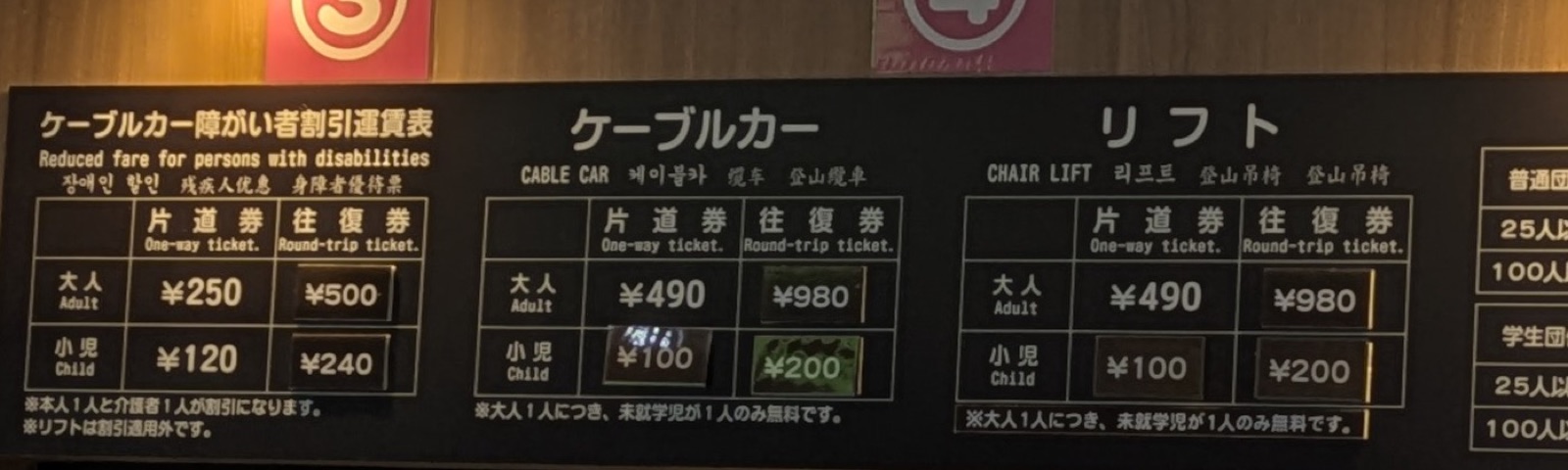
That identical price is the reason this decision confuses people. If one were cheaper, you would know what the trade-off was. Instead you stand at the window with two options, no price signal, and a queue behind you.
So here is the useful thing to know before you get there: the difference is not money, and for some people it is not a choice at all. There is a list of people who are not allowed on the chairlift, it is posted at the boarding gate, and it is not the list you would guess.
This guide is about which one to ride. If you have not decided whether to ride at all, that is a different question and we answered it in the Trail 1 guide.
What this guide covers11 sections
- The short version
- Cable car and chairlift at a glance
- Who cannot ride the chairlift
- Twelve minutes on the chairlift
- Six minutes on the cable car
- The eight o’clock problem, and why the chairlift makes it worse
- Buying a ticket, and the one thing that will surprise you
- Where they leave you, and what to do next
- Questions people actually ask
- One last thing
- Where to next
The short version
Start here: some people cannot ride the chairlift. The notice at the boarding gate rules out anyone elderly or unsteady on their feet, anyone pregnant, anyone who has been drinking, and anyone unwell. It also asks people afraid of heights, and children riding without an adult, to think twice. If that includes you or anyone in your group, the decision is made: take the cable car. Full detail below, because this is the part no English guide carries.
If everyone in your group can ride either, choose by what you want from the twelve minutes.
| Cable car | Chairlift | |
|---|---|---|
| What it is | An enclosed railway carriage | An open two-seat chair on a cable |
| Time up | About 6 minutes | About 12 minutes |
| Weather | Fine in anything | A flat slatted canopy overhead — shade, not shelter |
| Runs from | 8:00 | 9:00 |
| Best for | Anyone at all, in any weather, in a hurry | A slow, quiet, open-air ride on a fine day |
The chairlift is the better ride and the worse transport. Twelve minutes in the open with your feet hanging over the trees beats six minutes in a carriage — on a dry, still day, if you are steady on your feet and not in a rush. Change any one of those conditions and the cable car wins.
Two practical traps. The chairlift does not start until 9:00, an hour after the cable car, which collides with the advice to start early to avoid crowds. And no dogs, cats or other small animals are allowed on the chairlift at all.
One good surprise. A return ticket lets you come down on either of them, so you are not locked in by the ticket you bought. The sign says so in English.
Affiliate link. This site earns a commission if you book through it, at no extra cost to you. Photo from our own walk.
Cable car and chairlift at a glance
| Operator | Takao Tozan Railway (高尾登山電鉄) |
|---|---|
| Where | Kiyotaki, a few minutes on foot from Takaosanguchi Station. The two ticket gates are side by side |
| Adult fare | ¥490 one way / ¥980 return — identical for both |
| Child fare | Substantially cheaper, but the sources disagree: the operator’s website lists ¥250 one way / ¥500 return, while the board at the ticket window read ¥100 / ¥200 when we visited in July 2026. Read the board on the day |
| Reduced fare | A disability discount exists — ¥250 one way / ¥500 return for an adult, covering the holder plus one carer. The sign notes in English that this applies to the cable car only |
| Return tickets | Valid on either service for the descent |
| Payment | Cash, IC cards (Suica, PASMO and the rest), contactless credit cards, and TAMa-GO QR tickets. Note the sticker at the window: charge your IC card before you buy, not at the machine |
| Cable car | About 6 minutes, every 15 minutes, from 8:00. Maximum gradient 31°18′ — the steepest of any cable railway in Japan |
| Chairlift | About 12 minutes, two-seat chairs, from 9:00. Closes 16:30 in the May–November season, 16:00 December–April |
| Not allowed on the chairlift | Dogs, cats and other small animals — no exceptions |
| Where they leave you | Both put you partway up, a short walk apart, with the summit still about 45 minutes above on Trail 1 |
⚠️ Do not plan around a last departure you read anywhere, including here. The cable car’s final run moves with the season and with events — the operator’s general figures run from 17:15 to 18:30, and on the day we checked in late July the sign said 21:15. The chairlift is stricter and finishes much earlier. Check the operator’s site for the day you are going, and if you are coming down late, come down on the cable car.
One number worth sitting with. The cable car climbs at a maximum gradient of 31 degrees 18 minutes — the steepest cable railway in the country. It is worth knowing before you board, because the sensation near the top is not subtle: the carriage floor is stepped, and the slope outside the window stops looking like a hillside and starts looking like a wall.
Who cannot ride the chairlift
There is a standing sign at the foot of the steps up to the chairlift platform. The heading is in red: 下記に該当するお客様は リフトに ご乗車できません — if any of the following applies to you, you cannot ride the chairlift. Below it, four categories with pictograms.
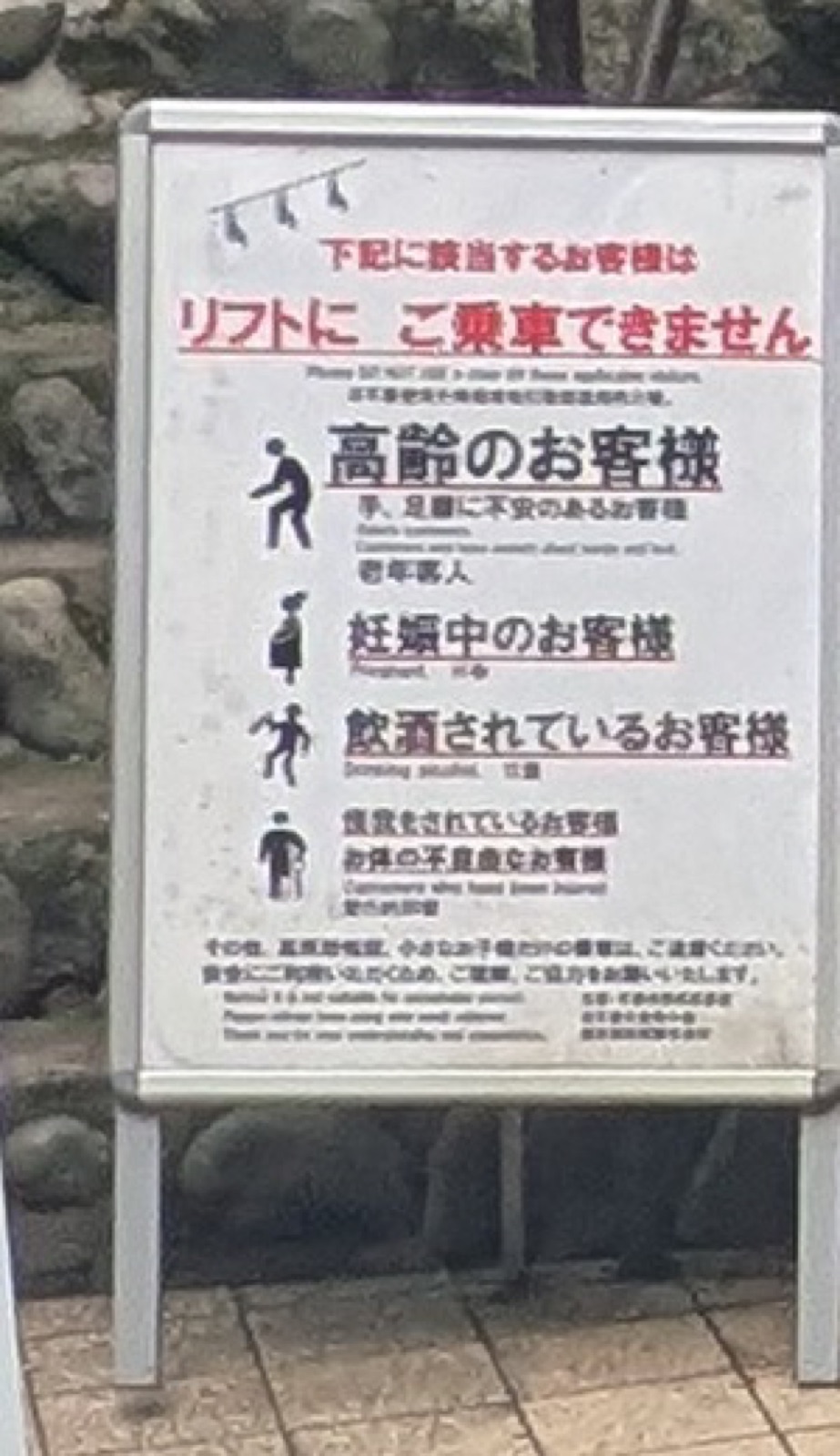
Here they are in plain English:
- Elderly passengers — and the line beneath widens this a long way: anyone unsteady in the hands, legs or lower back.
- Anyone pregnant.
- Anyone who has been drinking.
- Anyone who is unwell, or who has a physical disability.
A further line asks two more groups to refrain rather than forbidding them: anyone afraid of heights, and small children riding without an adult.
The sign is translated. That is not the same as being usable. It carries English as well as Chinese. But the English has been through machine translation and come out unusable. The line under Elderly passengers reads, in full:
Customers with knee unsteady about hands and foot.
Nobody can work out from that whether it applies to them. That is the entire reason the list above exists.
Notice what is not on the sign. No weight limit. No height limit. Nothing about luggage or large backpacks. Every restriction is about steadiness and judgement — which makes sense the moment you see the thing you are boarding.
And one item is a flat ban rather than a request: dogs, cats and other small animals cannot go on the chairlift, and there is a second sign saying so. That ban is specific to the chairlift; if you are travelling with an animal, ask at the ticket window rather than assuming the cable car is fine.
If one person in your group cannot ride
You do not all have to make the same choice, and you do not have to give up the chairlift for the group.
Both services cost the same, both leave from the same place, and their upper stations are only a few minutes’ walk apart. So one person can ride the cable car while the rest take the chairlift, and you meet at the top. Return tickets are valid on either service for the way down, so nobody is committed by what they bought.
Twelve minutes on the chairlift
The chairlift is a two-seat chair on a cable: a slatted seat, a bar across the front, a rail for your feet, and open air on every side. It takes about 12 minutes to the top.
About that roof. English write-ups tend to call this an open chairlift with no cover, and that is not quite right. Fixed high on the hanger arm above each chair is a flat, slatted board.
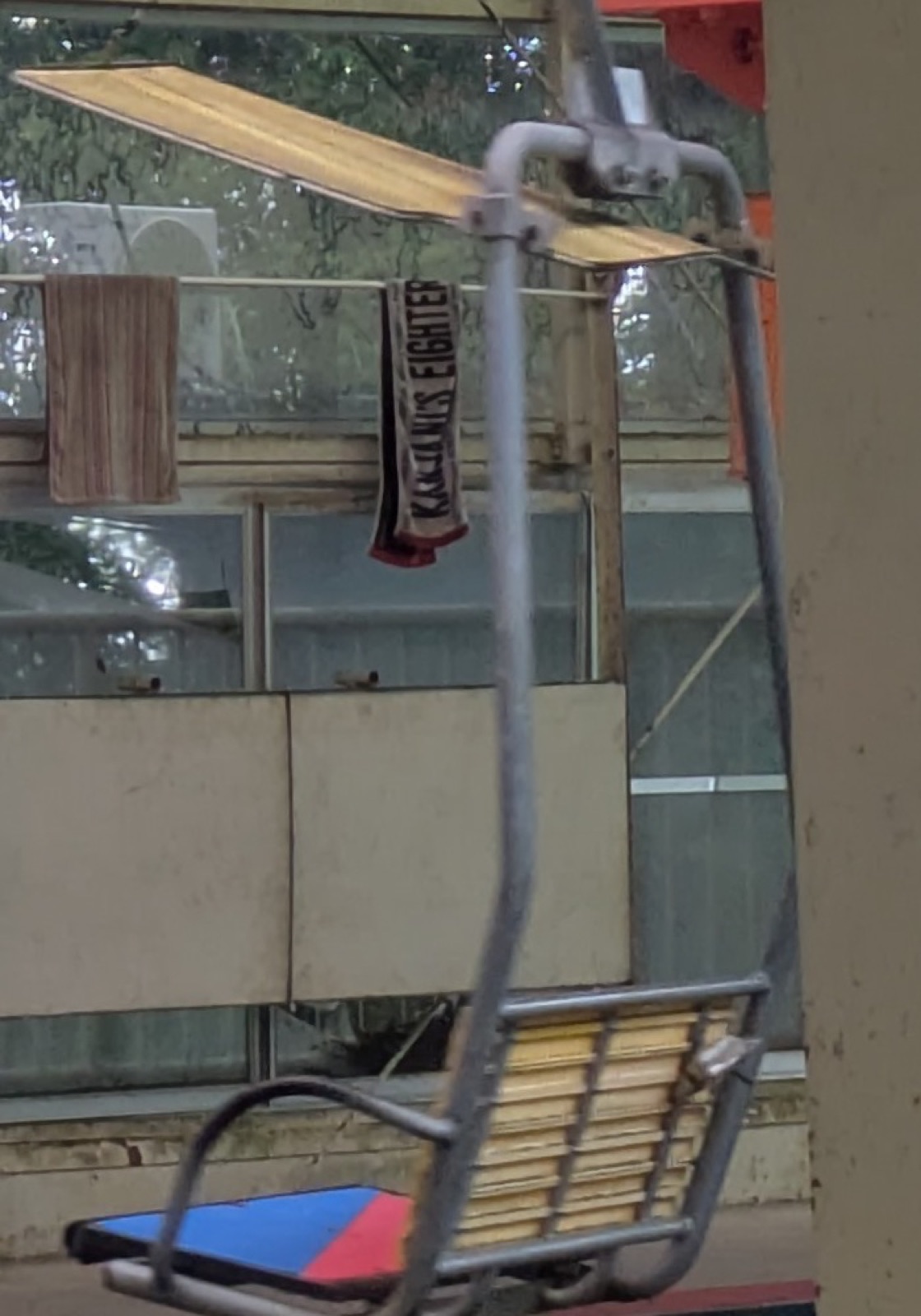
Call it a sunshade rather than a roof. On a hot, bright day it is genuinely welcome — twelve minutes of direct overhead sun is a long time. In rain it is close to useless, because rain on a mountainside does not fall straight down. If the forecast is wet, this is the moment to buy a cable car ticket instead.
There is nowhere to put a large backpack except on your lap or between your feet. Worth knowing before you are holding it at the loading line.
Getting on
Boarding is managed by staff, and the useful thing to know is that you wait until you are told.
There is a yellow banner at the loading area reading 止まって! STOP, and a paper sign beside it that says: please wait here until a member of staff shows you through. You stand at the line, a staff member brings you forward at the right moment, and you sit as the chair arrives behind you. If you have used a ski lift anywhere in the world, this will be familiar. If you have not, the only thing you need to do is not walk forward on your own.
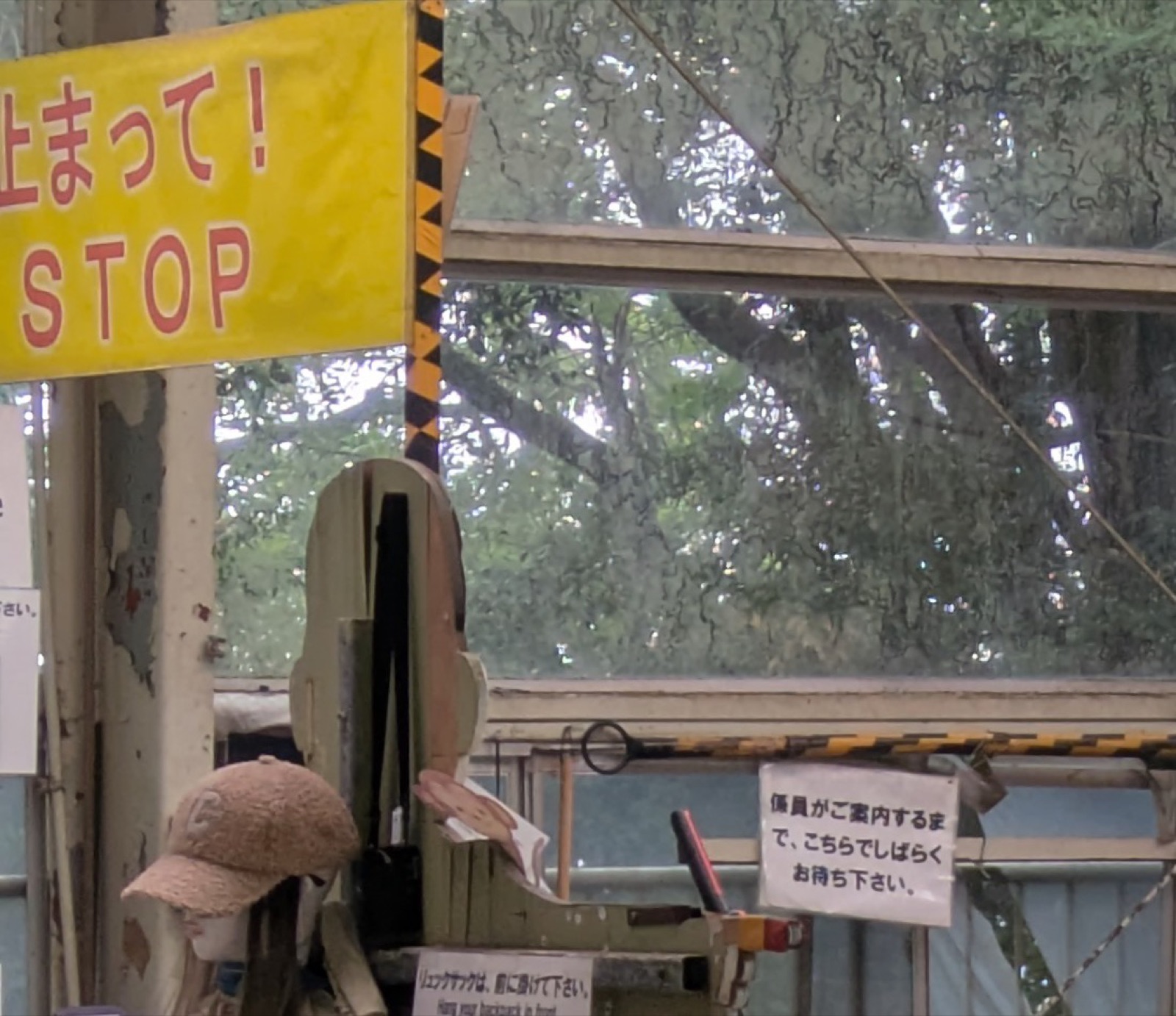
That paper sign, incidentally, is Japanese only. The yellow one says STOP in English. The mountain is consistent about this: the word that needs no explanation gets translated, and the sentence that would actually help you does not.
What the twelve minutes are like
Quiet, and open. There is no glass between you and the trees, which matters more than it sounds if you want photographs — the cable car has windows, and windows have reflections. You are above the canopy of a wooded hillside with your feet hanging, moving slowly enough to look at things properly.
It is the better of the two rides, and it is the one to take if the day is dry and you are not in a hurry.
Six minutes on the cable car
The cable car is an enclosed railway carriage on rails, running every 15 minutes from 8:00, and it takes about six minutes.
It has one specification worth knowing before you board: a maximum gradient of 31 degrees and 18 minutes — the steepest of any cable railway in Japan.
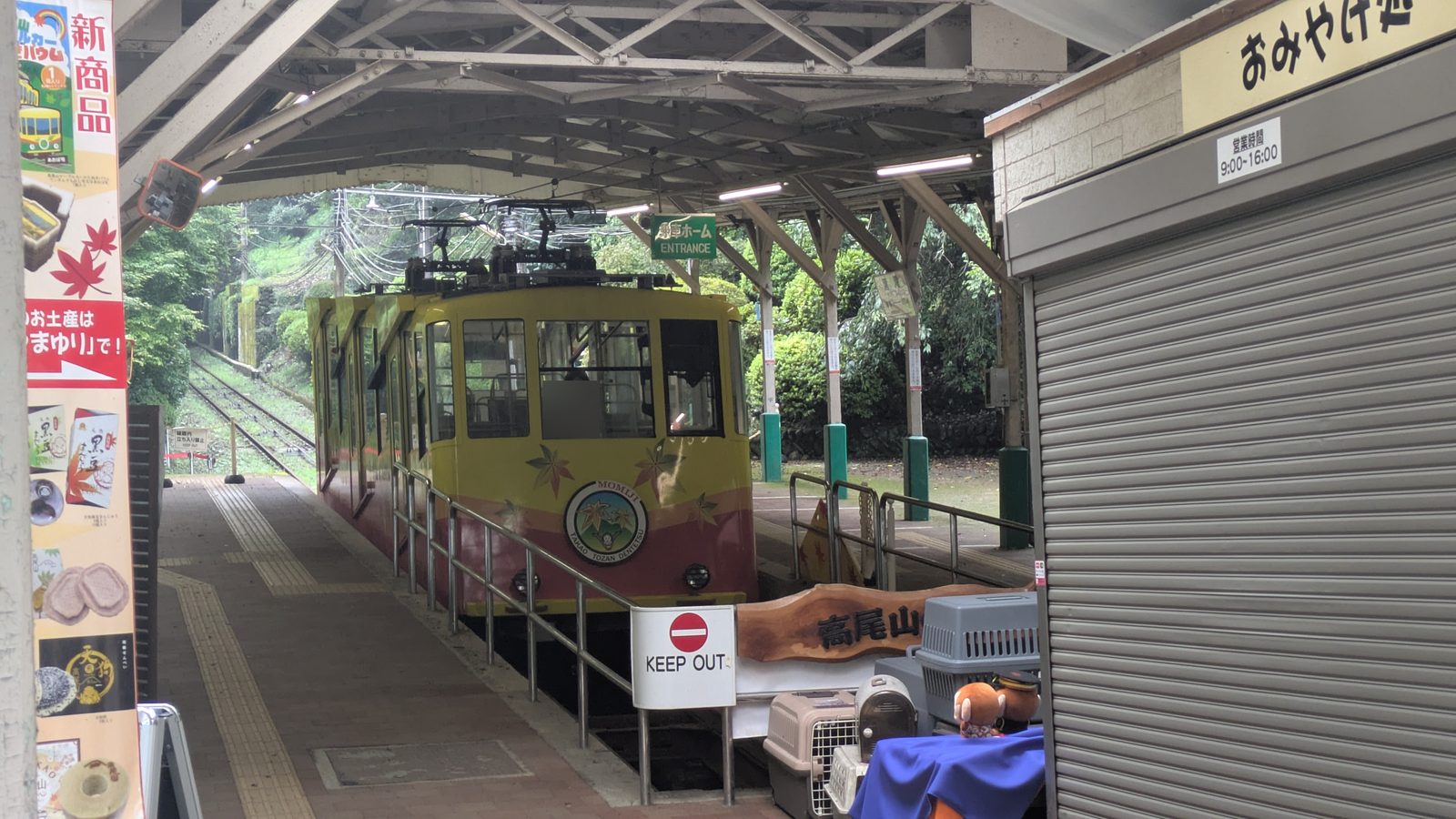
That number is not trivia. Near the top it is something you feel and see. The floor inside the carriage is built as a series of steps rather than a flat surface, and out of the window the hillside stops reading as a slope and starts reading as a wall. Stand at the downhill end of the carriage on the way up and you are looking down the length of it at a genuinely startling angle.
What the cable car is better at:
- Any weather. You are inside. Rain, wind and heat are somebody else’s problem.
- Speed. Six minutes against twelve.
- Anyone at all. None of the chairlift’s restrictions apply. If someone in your group is elderly, pregnant, unsteady or simply nervous, this is the one that works.
- Starting early. It runs from 8:00, an hour before the chairlift.
- The reduced fare. The disability discount — ¥250 one way for an adult, covering the holder plus one carer — applies to the cable car only. The sign says so in English.
What it is worse at: the ride itself. It is a short trip inside a box with other people, and you spend it looking through glass. That is a completely reasonable trade for six minutes, if six minutes is what you want.
The eight o’clock problem, and why the chairlift makes it worse
The standard advice for Mount Takao is to be walking before eight, because the crowds are the thing that spoils this mountain. We give that advice ourselves, in the route guide.
The lifts do not cooperate with it. The cable car’s first car is at 8:00. The chairlift does not start until 9:00.
So the honest position is this: you can beat the crowds, or you can ride up, but not both. The Trail 1 guide works through what that costs you on foot.
If it is specifically the chairlift you want, the conflict is an hour worse, and there is no way around it. By 9:00 the mountain has been filling for an hour, and the queue at the loading line is part of what you are buying.
Two ways out, both fine:
- Walk up, ride down. A return ticket is valid on either service for the descent, so you can start early on foot and still get the ride. This also puts the ride where it works best — as the reward at the end rather than a shortcut at the start.
- Give up on early and enjoy the queue. On a weekday outside the peak seasons this is a much smaller problem than it sounds.
What does not work is planning a 7:30 start and a chairlift ride. One of those has to go.
Buying a ticket, and the one thing that will surprise you
The ticket office is a window with numbered gates — the cable car and the chairlift each have their own — and a fare board above it in five languages. You can pay with cash, an IC card, a contactless credit card, or a TAMa-GO QR ticket.
And then there is a sign at the chairlift approach that inverts what most visitors to Japan have learned about how to pay for things.
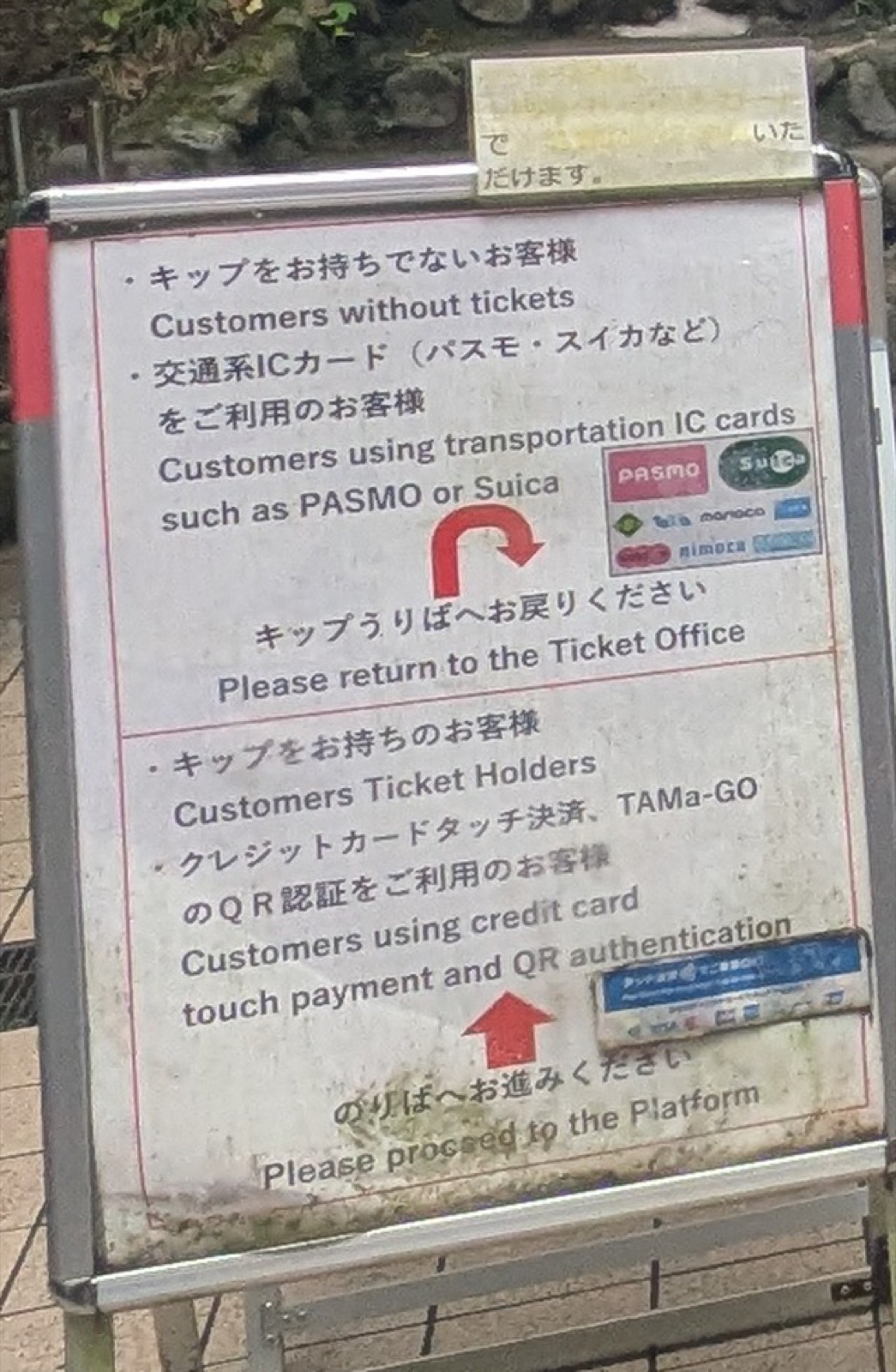
It divides people into two groups:
Go back to the ticket office if you have no ticket, or if you intend to pay with a transport IC card — Suica, PASMO and the rest.
Go straight to the platform if you already have a ticket, or if you are paying by contactless credit card or TAMa-GO QR.
Read that twice, because it is the opposite of the usual rule. Everywhere else in Tokyo, a Suica is the fast path and a foreign credit card is the awkward one. Here, your contactless Visa or Mastercard lets you walk straight past the ticket office, and your Suica sends you back to queue.
There is a second, related trap on a sticker at the window: charge your IC card before you buy. You cannot top it up at the machine. If your Suica is short of ¥490 you will find that out at the front of the queue.

Two more things worth knowing at the window:
- Buy a return if there is any chance you will ride down, because a return is valid on either service for the descent. Going up on the chairlift and down on the cable car — or the reverse — costs nothing extra and is the best use of the two systems.
- The disability discount is for the cable car only, at ¥250 one way for an adult, covering the holder and one carer. The sign states this in English.
On the guided version of this day, the ticket question is settled for you. One small-group guided day on Mount Takao rides the cable car or chairlift halfway up, then walks to the summit with an English-speaking guide.
Affiliate link · Small group of up to 7 · About 8 hours · Free cancellation up to 24 hours before
Where they leave you, and what to do next
Neither service takes you to the summit. This surprises people, so it is worth being blunt about it: both put you partway up, and the summit is still about 45 minutes of walking above.
The two upper stations sit at almost the same height and a few minutes apart on foot — the cable car station at 472 m, the chairlift station at 462 m. Takaosanguchi Station, where you started, is at 190 m; the summit is 599 m. So the ride has done a little over two-thirds of the day’s climbing for you. The Trail 1 guide works through exactly which two-thirds — the short version being that it is the least interesting part.
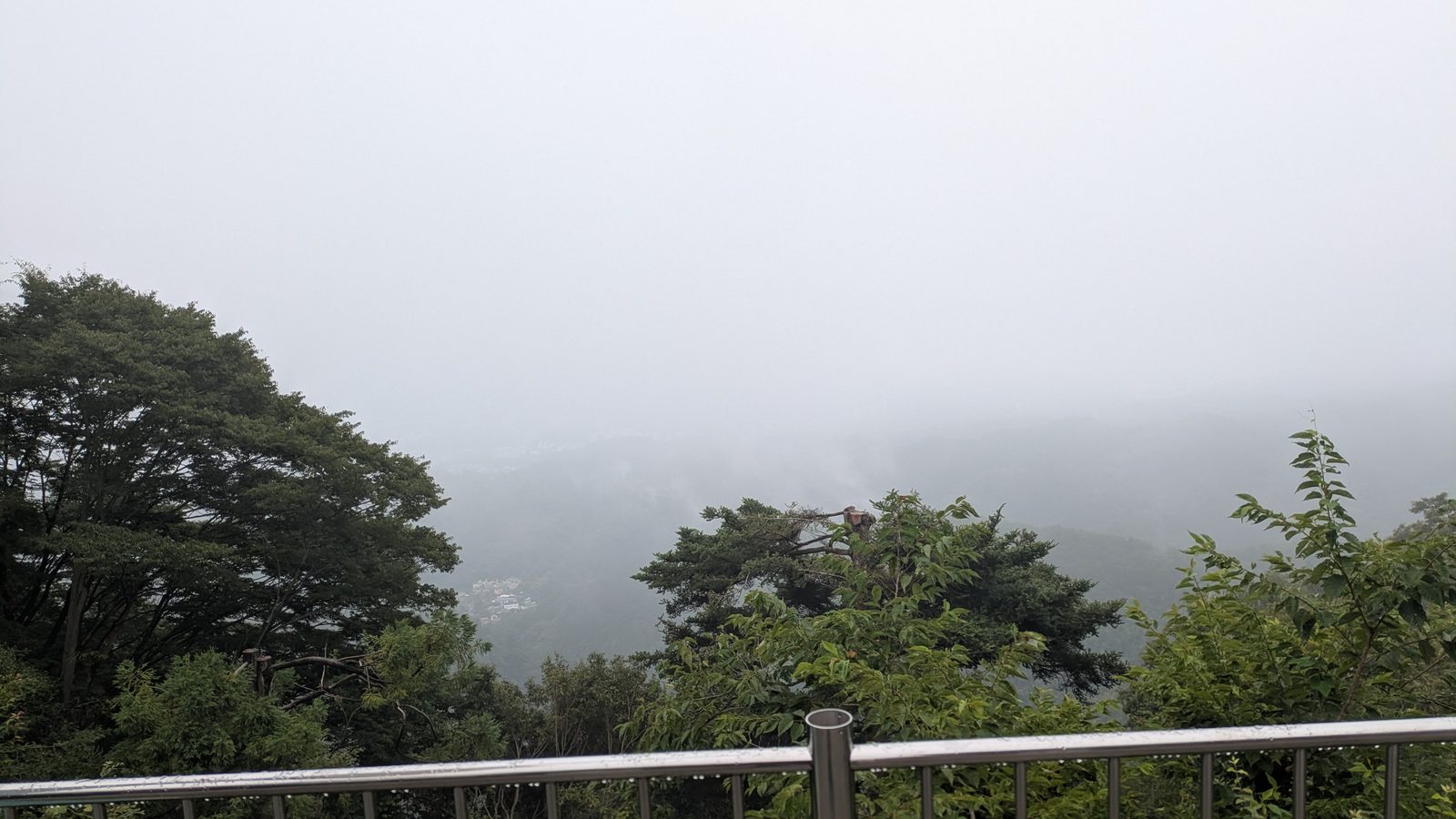
Straight off the cable car there is a viewing terrace, and on a clear day it looks out over the whole plain toward Tokyo, with the Skytree visible if the air is good.
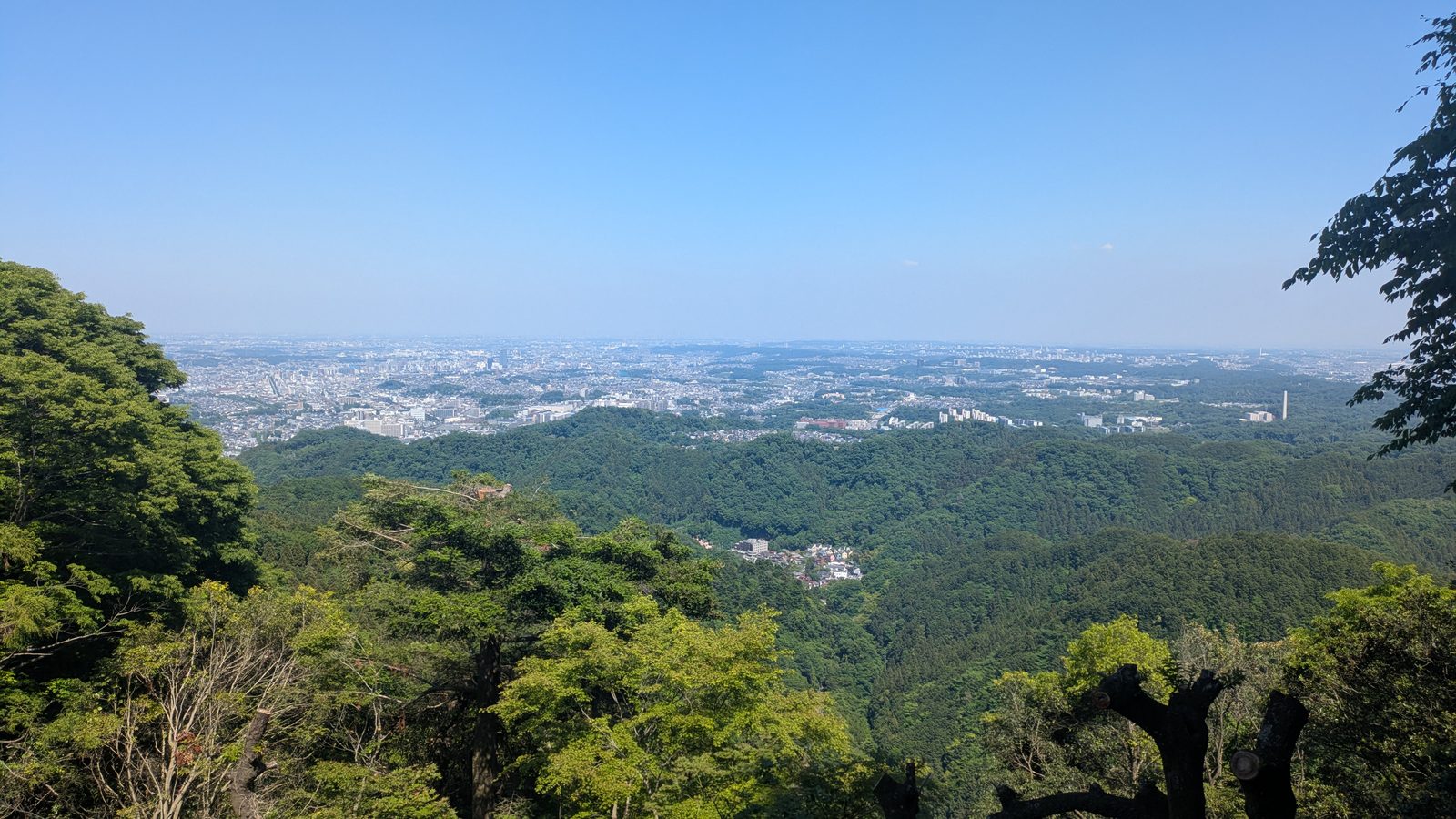
On a less clear day it looks like this, which is not a rare event on this mountain:
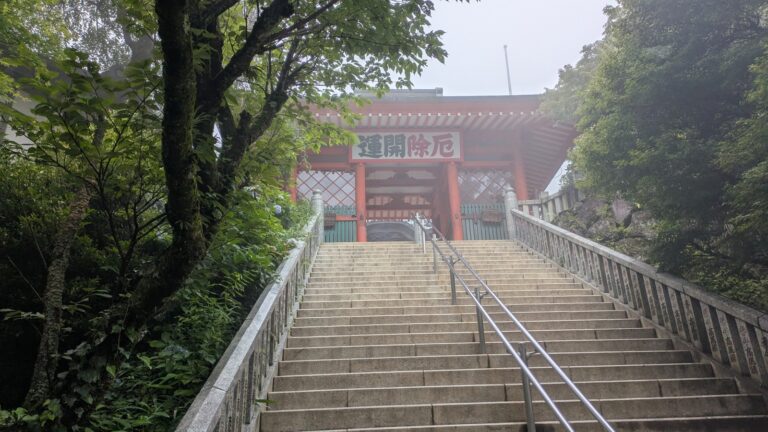
From the upper stations, Trail 1 continues up as a paved path through the souvenir shops and then through Yakuo-in, the mountain’s temple — which you cannot walk around, and which has a set of stone steps in the middle of it. If you are riding up because stairs are difficult, that is the thing to know before you commit: our Yakuo-in guide covers the temple itself, and the Trail 1 guide covers why the steps above the cable car are the reason a pushchair or wheelchair cannot reach the summit this way.
Questions people actually ask
Is the Mount Takao cable car or the chairlift better?
They cost the same, so it is not a value question. The chairlift is the better ride — twelve minutes in the open air. The cable car is the better transport — six minutes, enclosed, running in any weather and from an hour earlier. And some people are not permitted on the chairlift at all.
How much is the Mount Takao cable car?
¥490 one way, ¥980 return for an adult, and the chairlift is exactly the same. Children pay much less; the operator’s site lists ¥250 one way while the board at the window read ¥100 in July 2026, so check the board on the day.
Who cannot ride the Mount Takao chairlift?
The sign at the boarding point rules out elderly passengers and anyone unsteady in the hands, legs or lower back; anyone pregnant; anyone who has been drinking; and anyone unwell or with a physical disability. It also asks people afraid of heights, and children unaccompanied by an adult, to refrain. Dogs, cats and other small animals are banned outright.
Does the Mount Takao chairlift have a roof?
Each chair has a flat slatted canopy fixed above it. It is a sunshade — good against overhead sun, close to useless against rain, which on a hillside arrives at an angle.
Can I pay for the Mount Takao cable car with Suica?
Yes, but you must buy a ticket at the ticket office rather than tapping at the platform, and you cannot charge your card at the machine — top it up before you get there. A contactless credit card, by contrast, lets you go straight to the platform.
What time does the cable car start and finish?
First car at 8:00, then every 15 minutes. The chairlift runs from 9:00 and closes at 16:30 in the May–November season, 16:00 from December to April. The cable car’s last departure moves with the season and with events, so check the operator’s site for your date — and if you are coming down late, come down on the cable car.
Can I go up on one and come down on the other?
Yes. A return ticket is valid on either service for the descent, at no extra cost. It is the best way to use them.
Does the cable car go to the summit of Mount Takao?
No. It leaves you at 472 m, with the summit at 599 m and about 45 minutes of paved walking still to go — including the steps through Yakuo-in temple, which cannot be avoided.
How steep is the Mount Takao cable car?
A maximum gradient of 31 degrees 18 minutes, the steepest of any cable railway in Japan. The carriage floor is stepped rather than flat, and near the top the slope outside stops looking like a hillside.
One last thing
Two ways up, same price, side by side. That symmetry is what makes the decision feel harder than it is.
It comes down to a single question: is today a good day to sit outside for twelve minutes? If it is dry, if nobody in your group is on the list at the boarding gate, and if you are not trying to beat the crowds — take the chairlift, and put your feet over the trees.
Every other day of the year, take the cable car. It is six minutes up the steepest cable railway in Japan, and there is nothing second-best about it.
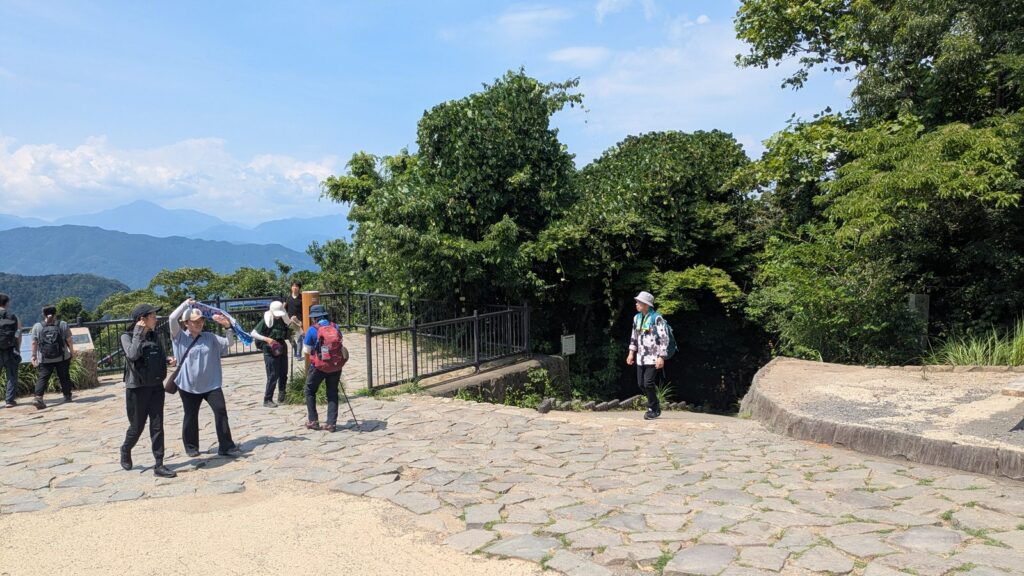
Affiliate link. This site earns a commission if you book through it, at no extra cost to you. Photo from our own walk.
Where to next
- Whether to ride at all, and what the ride skips → Mount Takao Trail 1: Should You Walk Up or Take the Cable Car?
- Choosing between all the routes → Mount Takao: Which Trail Should You Take?
- The temple above the upper station → Yakuo-in Temple, Mount Takao: What to Do as You Walk Through
- The quiet route, if you would rather walk → Mount Takao’s Inariyama Trail
- The hot spring at the bottom → Keio Takaosan Onsen: The Rules That Can Turn You Away
- The wettest way up on foot → Mount Takao Trail 6: The Stream Is the Path
- The day when riding down is the kind choice → Mount Takao and Lake Sagami: the traverse
- The same arithmetic on another mountain → How to Get to Mount Mitake: The Bus, the Cable Car, and the One-Way Ticket
- The autumn queue, and when walking is faster → Mount Takao in Autumn: There Is No Wrong Week