Some links on this site are affiliate links. If you book through one, Tokyo Trailhead earns a commission at no extra cost to you. It never decides what appears here.
The doors of the cable car open at 831 metres (2,726 ft), and the path in front of you is a paved lane with a hedge on one side and telephone poles running along it.
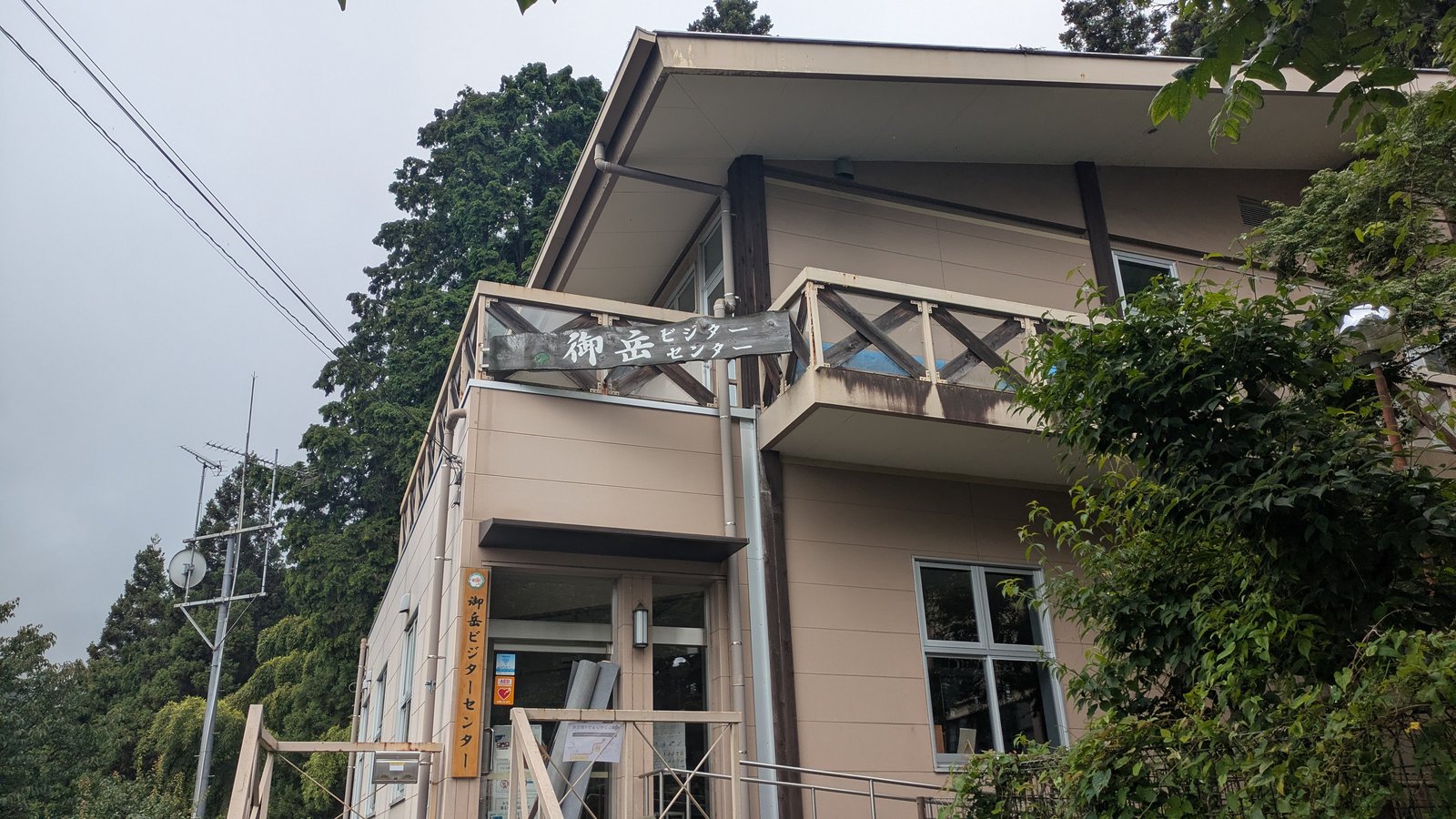
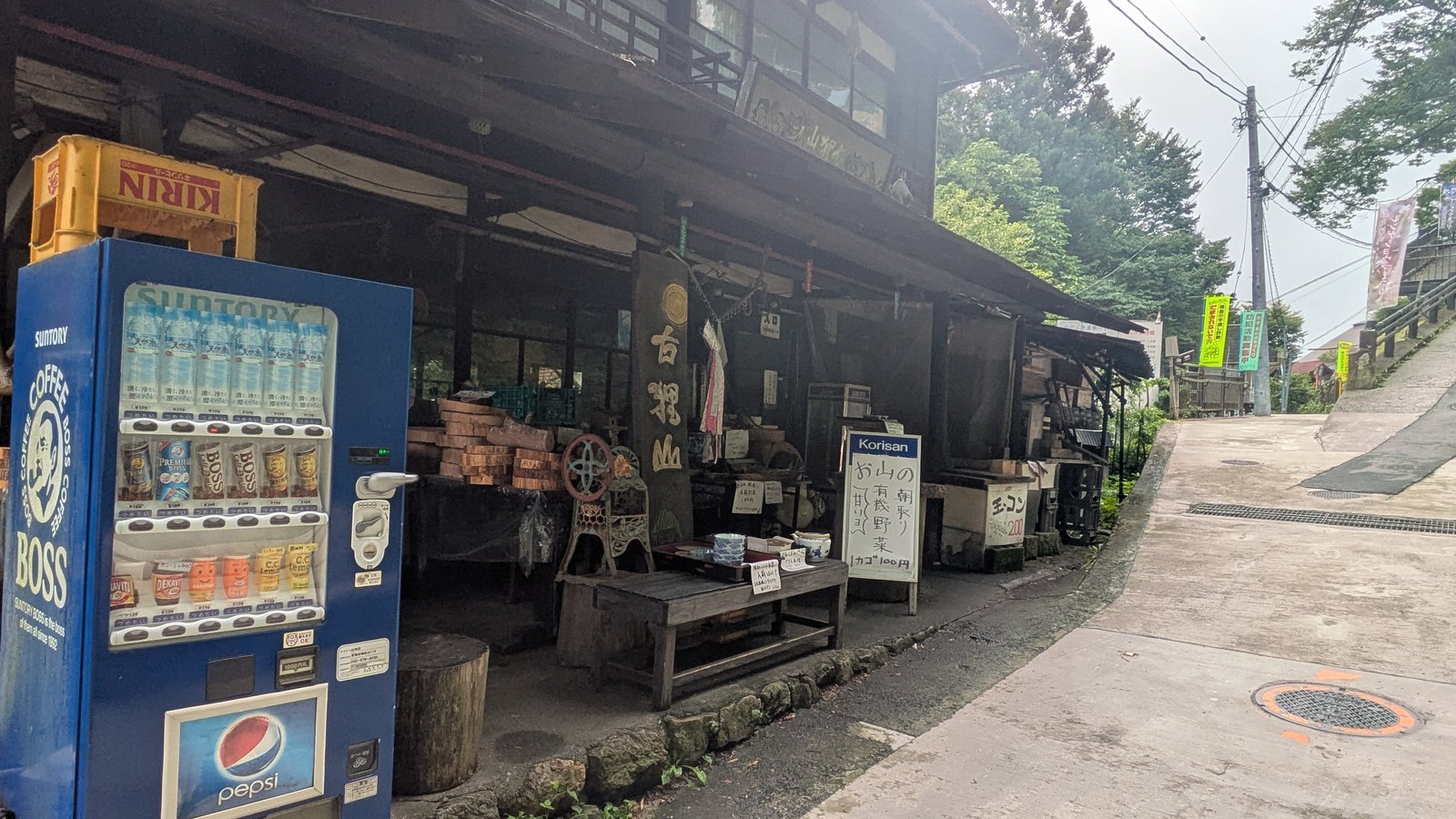
There are houses here. About fifty buildings sit along this ridge, some of them family homes, most of them shukubo, the pilgrim lodgings that have taken in visitors for centuries. There is a visitor centre, vending machines, a shop that takes six kinds of credit card, and a postal address. People live at 869 metres and go to work down the cable car.
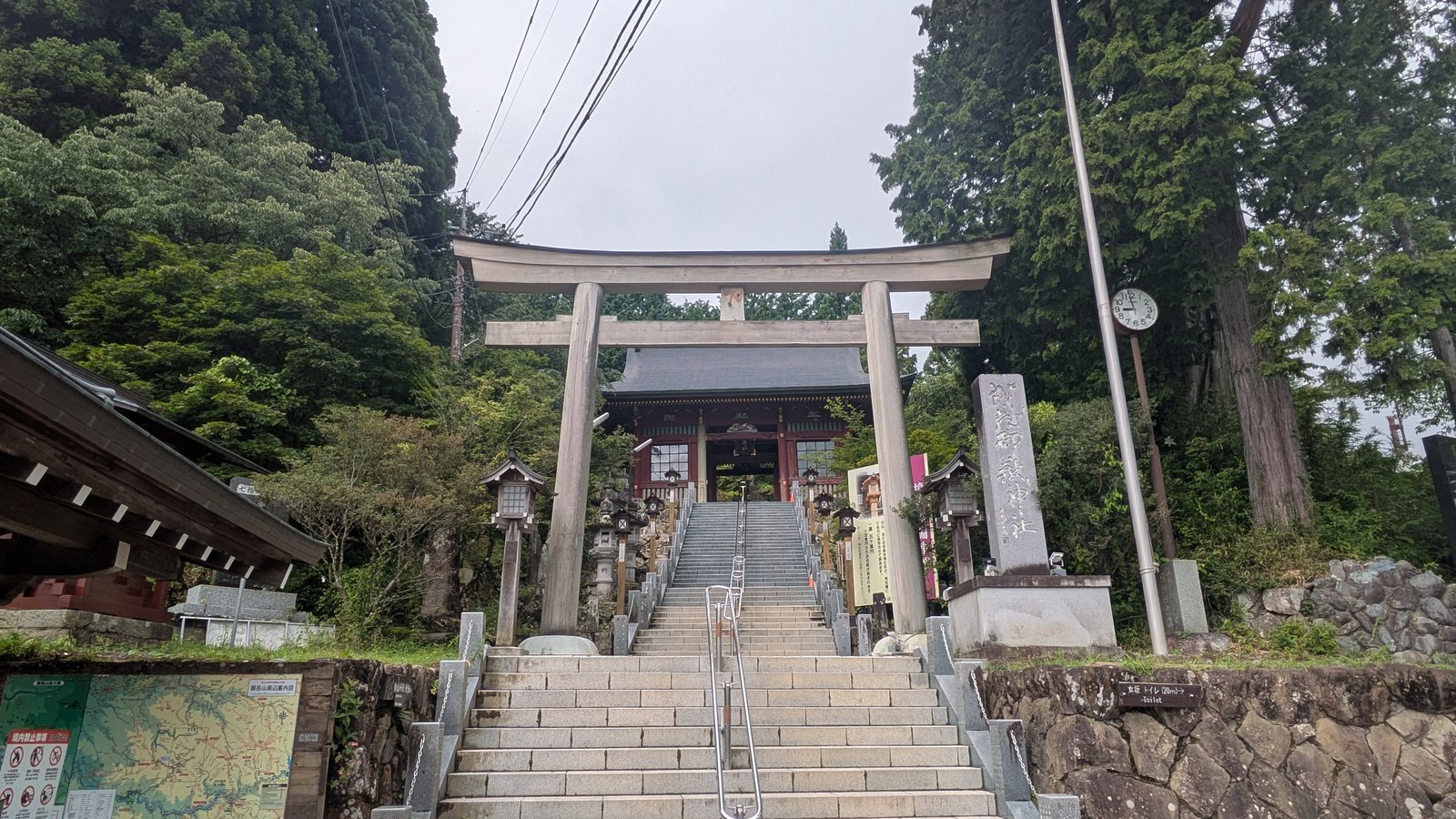
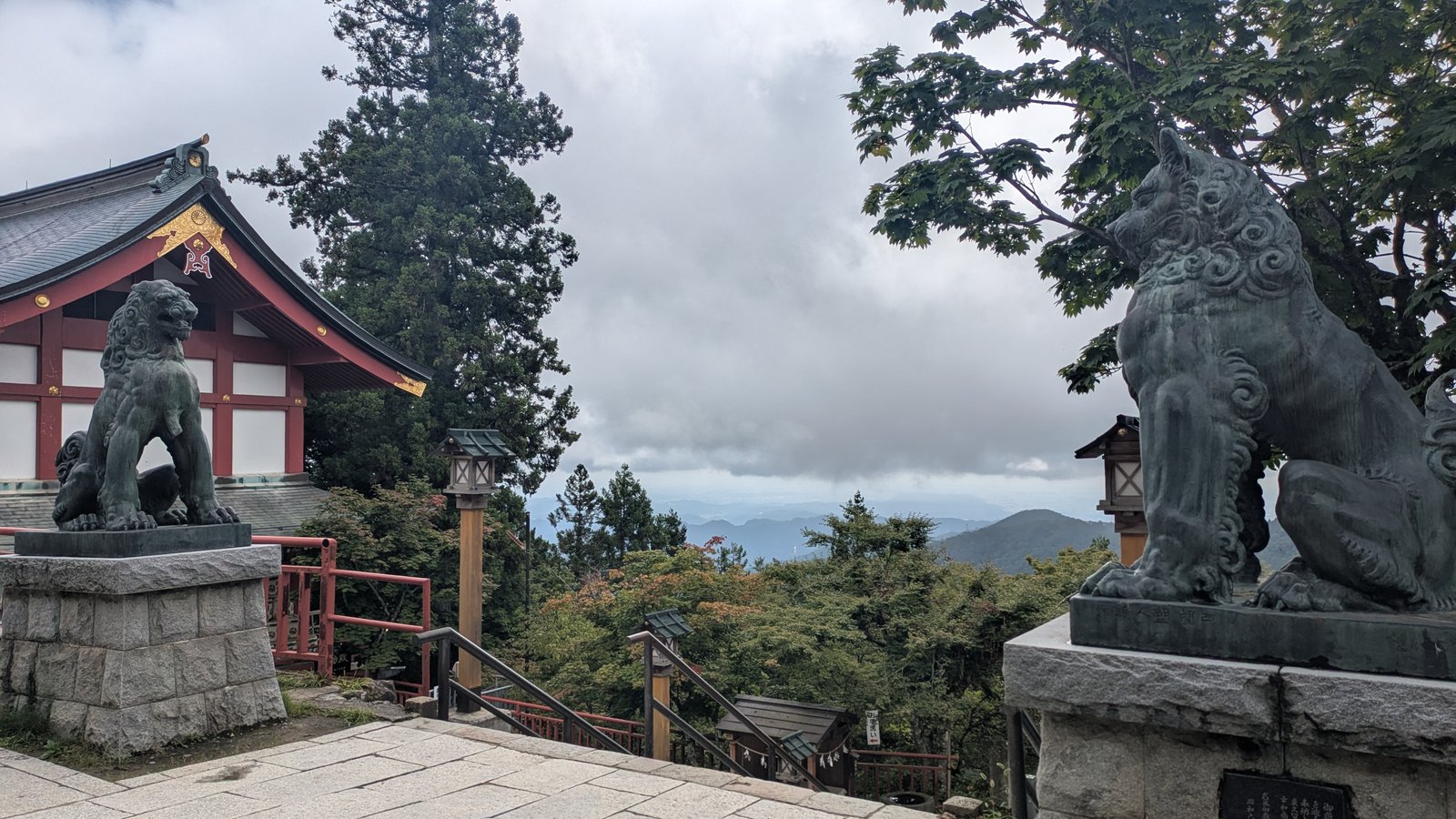
Twenty-five minutes of walking above the station, at 929 metres (3,048 ft), the lane ends at a flight of stone steps, and at the top of those steps is Musashi Mitake Shrine.
The deity enshrined there is a wolf.
That single fact explains something you would otherwise find very strange about this place. At the pavilion where visitors rinse their hands before praying, there is a second basin down at ground level, with a bowl in it, and the sign above it says that water is for your dog. The ticket machine at the bottom of the mountain has a button for pets. The shrine performs blessings for dogs, at a set price, with no reservation needed.
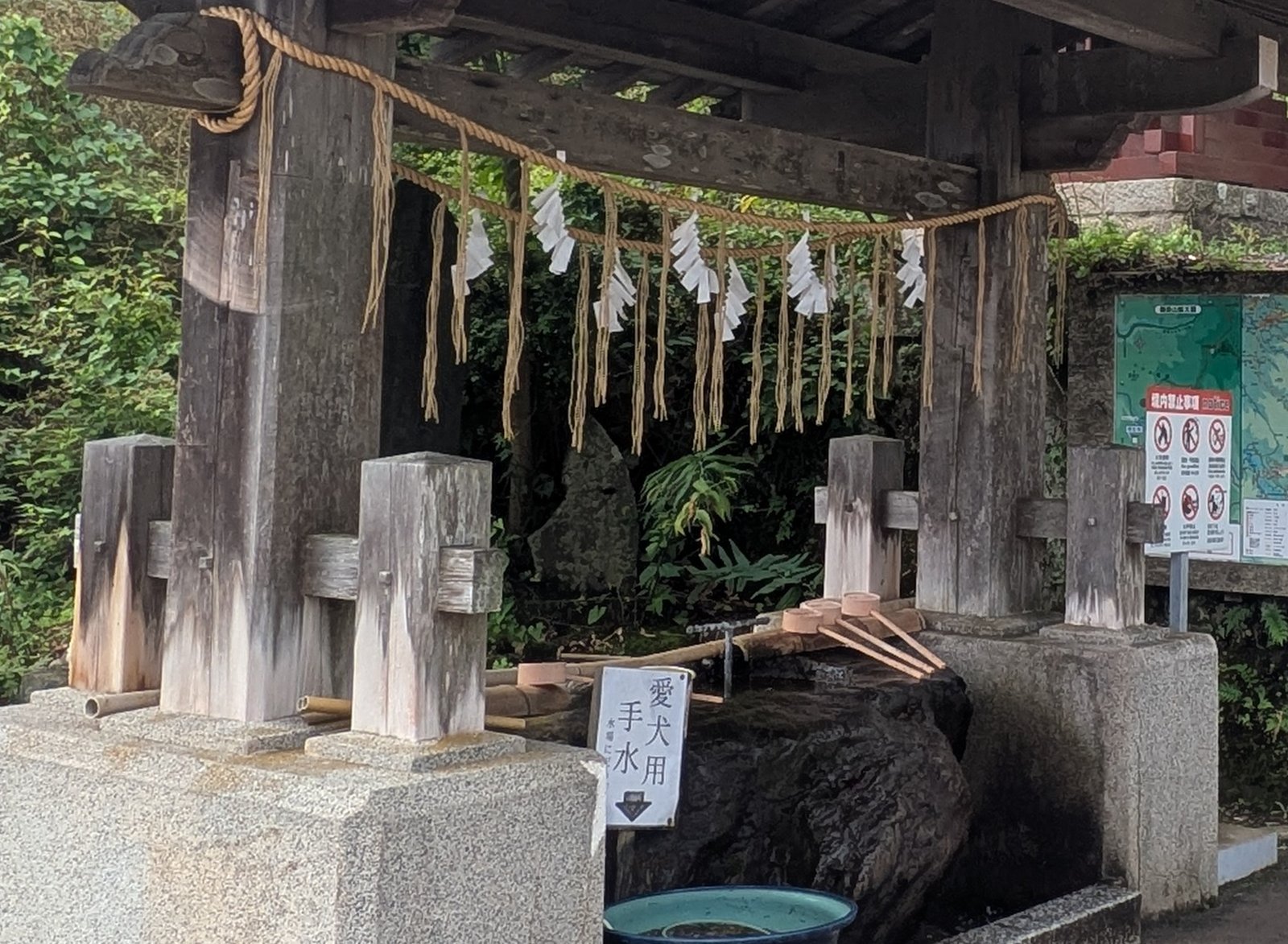
And here is the part nobody prepares you for. Standing in front of the worship hall is a beautiful bronze-coloured panel in English that tells you the shrine has two thousand years of history, that a wolf deity is venerated here, that the hall was turned forty-five degrees in the seventeenth century so it would face the capital of the shogun.
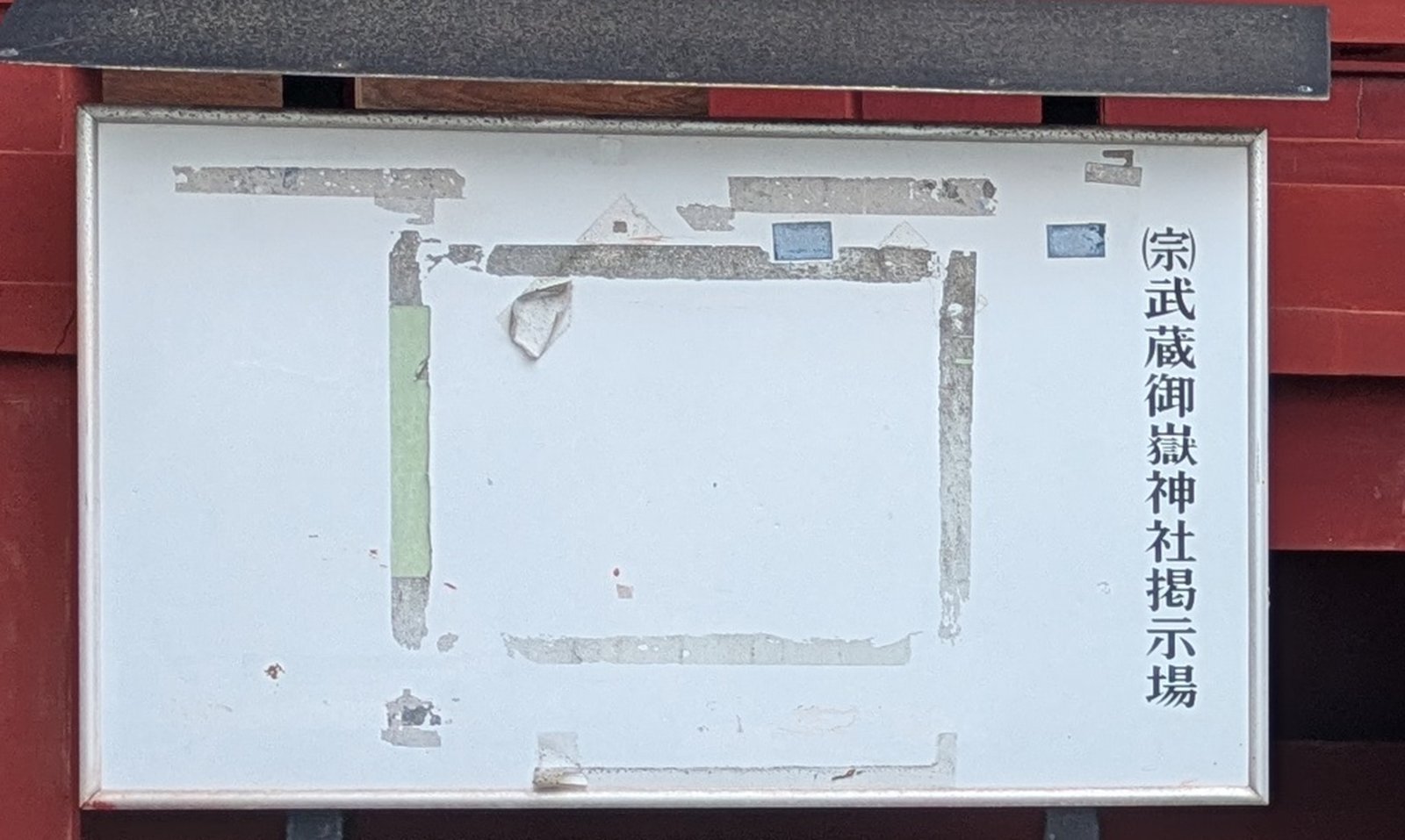
Standing right next to it is the notice board of the shrine itself. It is empty. Just tape marks on white.
Nowhere at this shrine, in any language, is there a sign telling you what to actually do. Not at the torii. Not at the water basin. Not at the steps. Not at the hall.
So this article is the sign. Here is the mountain, the village, the wolf, the dogs, and the twenty seconds of ritual that nobody is going to explain to you on the day.
Affiliate link. This site earns a commission if you book through it, at no extra cost to you. Photo from our own walk.
What this guide covers11 sections
- A ridge with a postal address
- Where the water runs out
- The last climb is a staircase
- The deity of this mountain is a wolf
- Which is why dogs come here
- Nobody posts the rules
- What to do, from the torii to the hall
- What is on the counter, and what it costs
- The view, and the junction under it
- Questions people actually ask
- Where to next
A ridge with a postal address
The walk from the cable car station to the shrine hall covers 98 metres (322 ft) of climb and takes about twenty-five minutes at an unhurried pace. Almost all of it is on tarmac.
| Point | Height | Time on a weekday in August 2026 |
|---|---|---|
| Mitakesan Station, top of the cable car | 831 m / 2,726 ft | 08:28 |
| The village lane, shops and lodgings | about 869 m / 2,851 ft | 08:48 |
| Mitake Visitor Center | 875 m / 2,871 ft | 08:49 |
| Torii and water basin | 915 m / 3,002 ft | 08:58 |
| Foot of the stone steps | 932 m / 3,058 ft | 09:01 |
| Worship hall | 929 m / 3,048 ft (posted) | 09:06 |
Thirty-eight minutes passed on the day, which included a ten-minute detour to a flower meadow near the station. Take that out and the honest figure for the walk is twenty-five minutes.
The thing worth understanding about this stretch is that it is not a trail. It is a road through a settlement. The lane is wide enough for a small vehicle, it is lined with hedges and stone walls, and the buildings on either side are places where somebody is at home. Guests stay in these lodgings overnight, which is the part most day visitors never register: Mount Mitake is not only a day trip. You can sleep on the ridge, eat a shojin dinner, and be at the shrine at dawn with nobody else on the steps.
For a first visit, though, what matters is simpler. This village is the last place on the mountain with a shop, a tap, a toilet, and a vending machine. Everything after the shrine is forest.
Where the water runs out
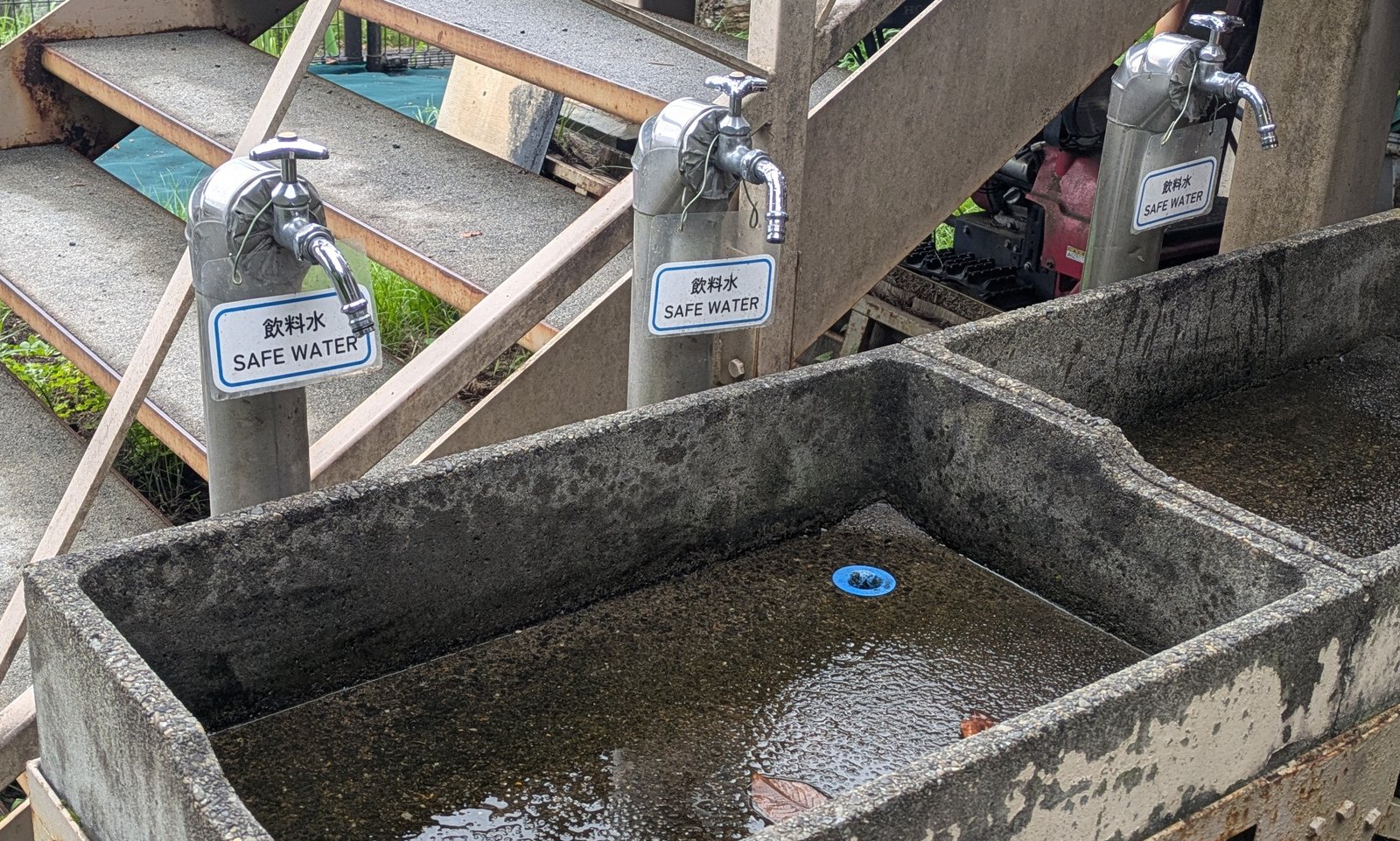
Beside the visitor centre, under an external staircase, there are three taps over a concrete trough. Each one carries a small blue sign.
飲料水 / SAFE WATER.
The water is free, it is drinkable, and it is labelled in English. Fill everything you are carrying here. From this point the Rock Garden circuit has toilets but no shop and no reliable tap, and the traverse to Hinodeyama has neither.
The visitor centre itself opens at 09:00 and closes on Mondays, so on an early start you may walk past a locked door. The taps are outside and always there.
Toilets are signed from the water basin at the torii. There are more of them out on the Rock Garden circuit, at the rest hut and at the Oku-no-in path junction, but the village is where you should assume the last comfortable one is.
Then the part that surprises most people who have read older guidebooks. The shop in the village is fully cashless. The sticker panel by the till lists Visa, Mastercard, JCB, American Express, Diners Club, Discover, PayPay, d払い, au PAY, plus every transport IC card and the contactless wallets that ride on them.
This is now the second mountain on this site where the standard advice fails. The rule people repeat is that the higher you go in Japan the more you need cash. One ridge west of Mount Takao, the teahouse on Kobotoke-Shiroyama takes contactless cards, QR payment, and transport IC, while the shops on Mount Takao itself are still cash. Here at 869 metres a village shop takes six card networks.
What decides it is who runs the place, not how high it is. Carry a reserve of coins by all means, because vending machines and the shrine counter are a different matter, but do not plan your day around finding an ATM.

The last climb is a staircase
The cable car took 424 metres of ascent off your legs in six minutes. The mountain gives a small part of it back at the end, and it does so as a staircase.
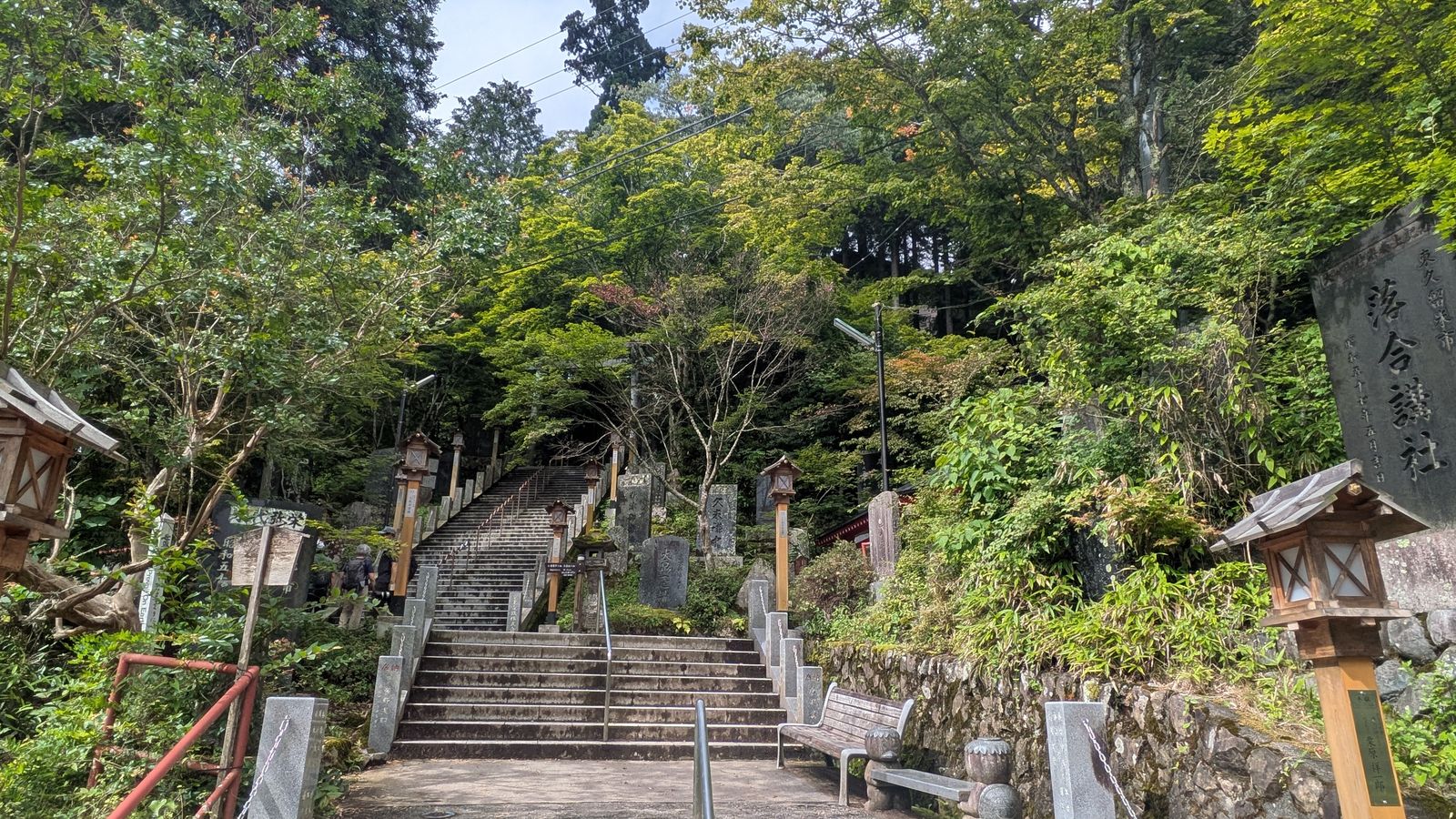
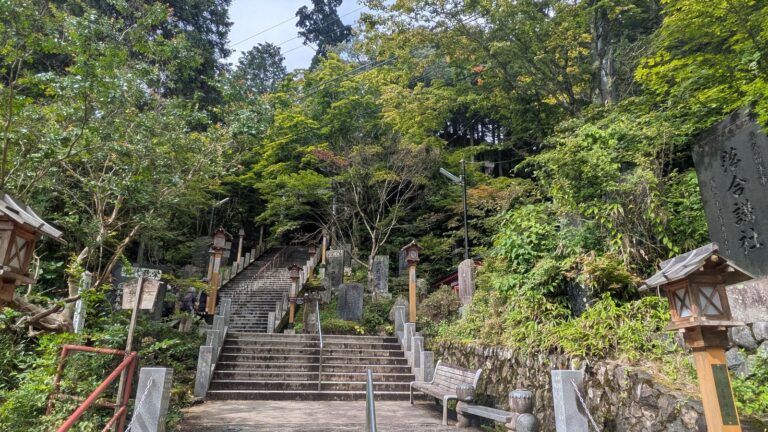
From the torii the lane turns up into a long flight of stone steps, stone lanterns standing at intervals on both sides, cedar and broadleaf trees closing over the top of it. It is the classic approach to a mountain shrine, and it is genuinely the steepest sustained thing on the whole village side of the mountain.
It is also short. Ninety-eight metres of climb separate the cable car station from the hall, and most of that is spread across the gentle lane. The steps themselves take a few minutes.
Two practical notes. First, the surface is old stone, worn smooth in places, and it stays damp under the trees long after rain has stopped. The same warning applies here as in the Rock Garden: the day being dry does not mean the ground is. Second, there is a handrail up the middle for part of the climb, and a bench at the bottom, which is more useful than it sounds if you are travelling with someone who needs to break the ascent.
This is the pattern that keeps repeating on mountains with cable cars, and it is worth saying plainly. The machine carries you to the shrine. It does not carry you into it.
The deity of this mountain is a wolf
The bronze panel in front of the worship hall was put there by a national programme for multilingual interpretation, and it is a good piece of work. It explains, in clear English, that this has been a site of pilgrimage and ascetic mountain training for around two thousand years, and that the deities venerated here include Okuchimagami, described on the panel as “a wolf deity”, alongside Zao Gongen, the central figure of Shugendo.
The story behind that goes back further than the shrine buildings. A legendary warrior lost his way in these mountains in the first century, and a white wolf appeared and led him out. The wolf became a guardian: a deity against misfortune, against theft, against the things that come at a household from outside. Ordinary people stopped using the formal name and started calling the wolf deity Oinu-sama, which is affectionate, and which uses the everyday word for dog.
There is an outer shrine to the wolf deity at the rear of the complex, and a separate hall of worship for it near the main precinct.
If you have visited a lot of shrines in Japan, you will have met foxes at Inari shrines and deer at Kasuga. The wolf is rarer. The Japanese wolf has been extinct since the early twentieth century, and the mountain shrines that kept faith with it are concentrated in this range plus the ridges of Chichibu to the west.
Which brings us to the dogs.
Which is why dogs come here
Because the deity is a wolf, and because the affectionate name for that deity is the everyday word for dog, this became a mountain where people bring their dogs to pray. Not as a novelty. As the point.
The mountain is built for it, in ways you notice one at a time.
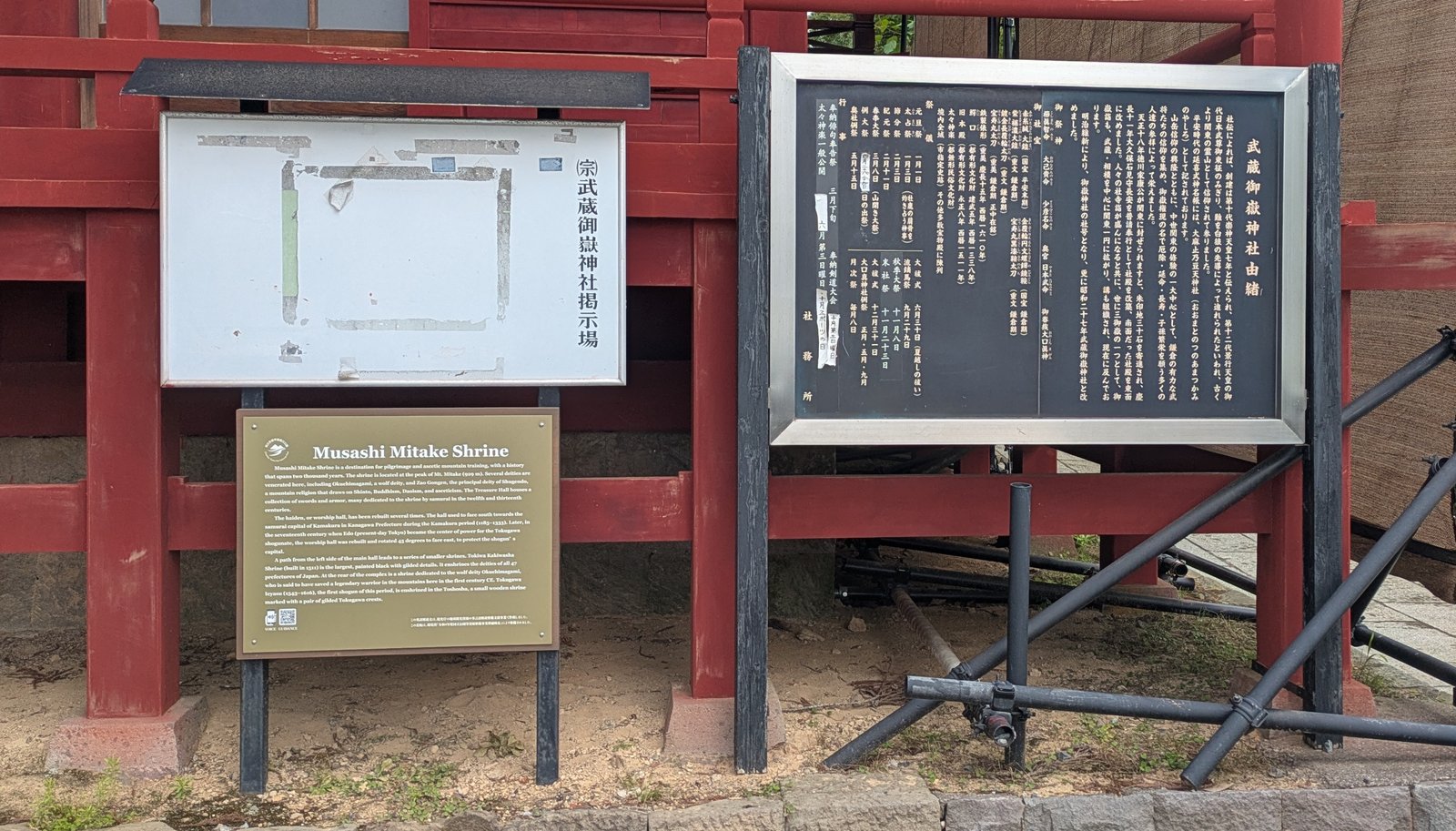
At the water basin. Under the roof of the temizuya, where visitors rinse their hands, there is a wooden ladle rack for people and, at ground level, a second stone basin with a bowl in it. The paper sign above it reads 愛犬用手水: purification water for your dog. It is not an afterthought tucked around the corner. It is part of the structure.
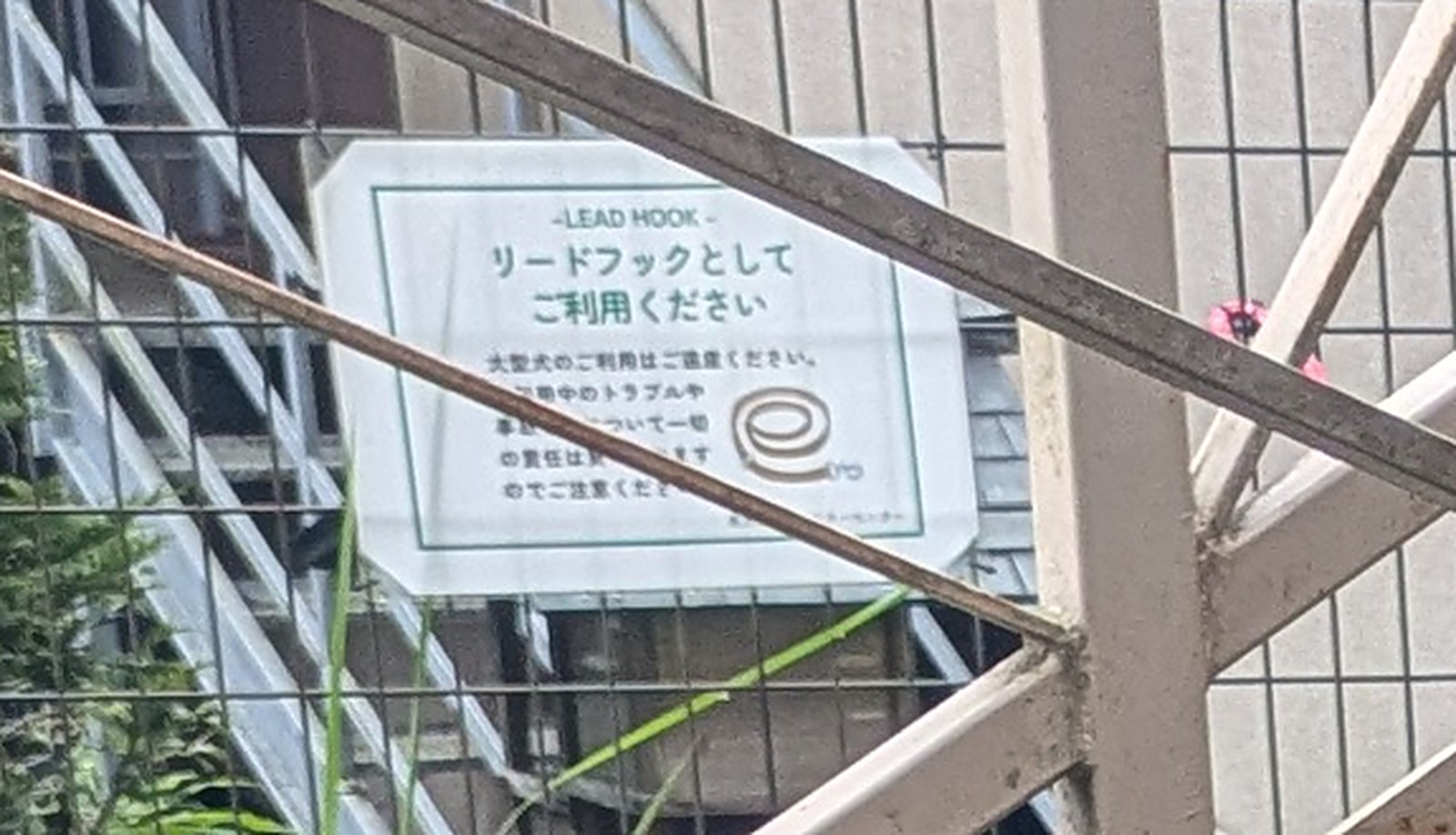
At the visitor centre. Beside the drinking taps there is a metal ring on the fence with a sign headed LEAD HOOK, so you can tie up while you fill a bottle.
At the cable car. The ticket machine at Takimoto has a button for pets. A dog of 10 kg (22 lb) or under travels for 130 yen one way, a larger dog for 260 yen, and with a pet ticket the dog rides in the carriage with you. No carrier is required.
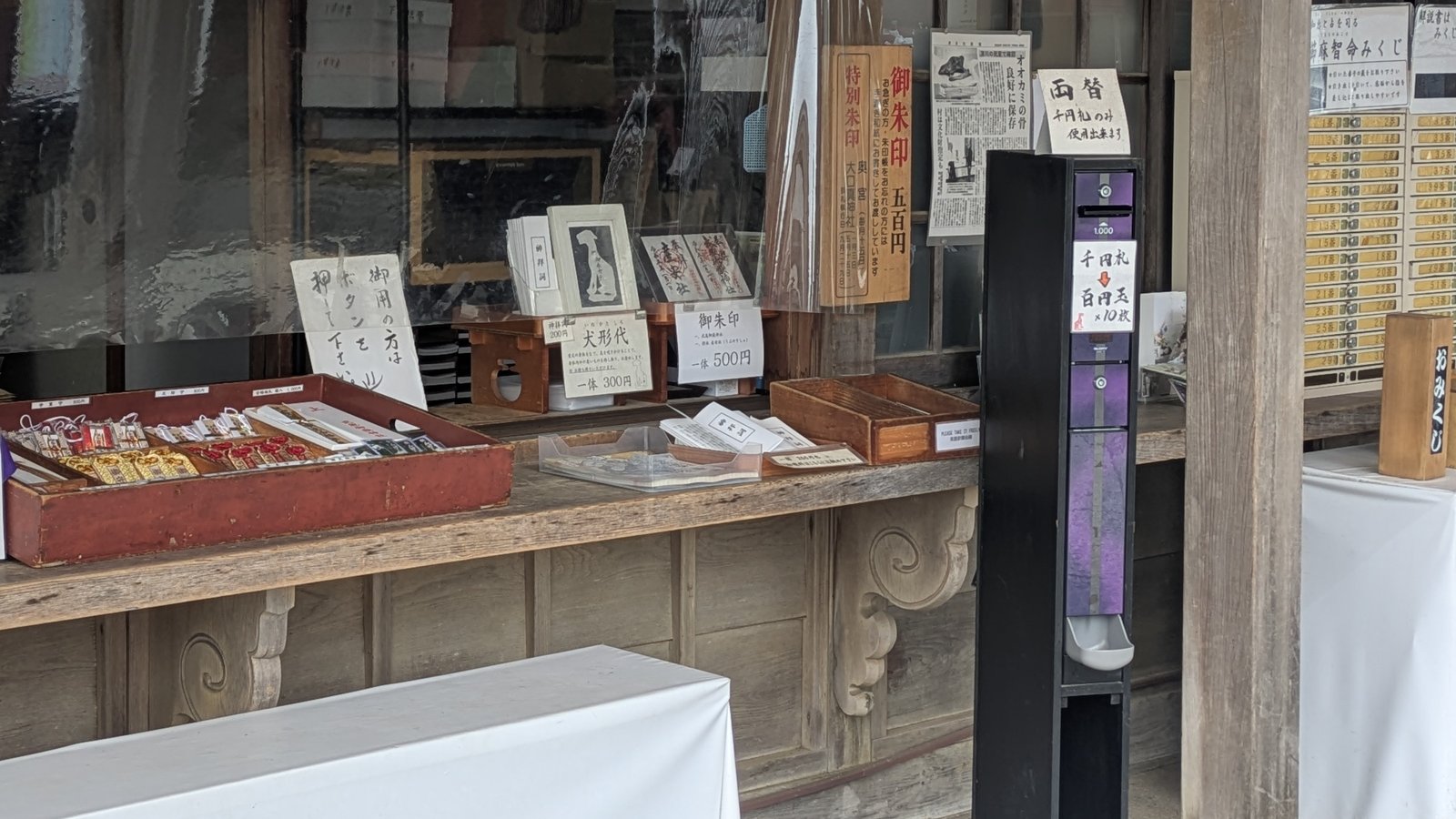
At the counter. The shrine sells an inu-katashiro, a paper dog form, for 300 yen. You stroke your dog with it and breathe on it, and it carries away what should not stay. Behind the counter there is a shelf labelled as books relating to Oinu-sama.
As a service. The shrine performs blessings for dogs at an outdoor hall of worship for the wolf deity, from 09:00 to about 15:30, no reservation needed, from 3,000 yen per dog. The shrine asks owners to keep in mind that other visitors may be uneasy around dogs, and it advises against bringing a dog during the first three days of the new year.
And at the torii, propped against the stonework, there are two more boards. One sets out the rules for dogs. The other shows three colour-coded walking routes for dogs on the mountain.
Both of them are in Japanese only.
One gap to plan around. The bus from Mitake Station does not work the way the cable car does. Buses in Tokyo carry small animals only inside a fully enclosed carrier, so a dog walking on a lead does not board. People who come with a dog drive to Takimoto, park at the bottom station, and start from the cable car. If you are travelling to Japan without a car, the honest answer is that the dog part of this mountain is built for people who live here.
Nobody posts the rules
Now stand in front of the worship hall and look at the two boards side by side.
On the left, the English panel: two thousand years of history, the wolf deity, the treasure hall of swords and armour dedicated by samurai in the twelfth century, the hall rebuilt in the seventeenth century and rotated forty-five degrees to face the capital of the shogunate. There is even a QR code for audio guidance.
On the right, the notice board of the shrine itself, in a wooden frame, under its own little roof. Blank. A few strips of tape where paper used to be.
Everything about this mountain is in that photograph.
Walk it backwards and check. At the torii: no sign about how to enter. At the water basin: one sign, and it is for dogs. On the steps: nothing. At the hall: history in English, and no instruction in any language about bowing, clapping, coins, or photography. The rules that do exist on paper, the ones for dogs, are posted in Japanese only. Even the LEAD HOOK sign is split down the middle, the heading in English, the conditions underneath it in Japanese: no large dogs, use at your own risk.
The shrine website is the same. It has a multilingual section. It has pages on history, on the annual festivals, on the blessings it performs. It does not have a page telling you how to worship.
This is the formula that has come up on every mountain covered on this site, and Mount Mitake states it more cleanly than anywhere else so far. The English is attached to what a place is. It is not attached to what you do there.
That is not neglect. The panel was funded to interpret a cultural asset, and it interprets it well. The shrine, meanwhile, is a working shrine on a ridge where people live, and a working shrine does not put up instructions for the same reason a neighbourhood does not label its own front doors. Everybody here already knows.
You are the person who does not. So here it is.
Affiliate link. This site earns a commission if you book through it, at no extra cost to you. Photo from our own walk.
What to do, from the torii to the hall
First, the thing that takes the pressure off. Nobody is checking. There is no attendant watching the water basin, no queue etiquette to get wrong, and no version of this that offends anybody. Japanese visitors vary in what they do, and plenty of them skip steps. What follows is what most people do, drawn from the guidance published by the Association of Shinto Shrines, mapped onto the actual layout of this shrine.
At the torii. A small bow before you pass under it. Walk to one side rather than straight up the middle, since the centre is traditionally the path of the deity. On these steps that is easy, because there is a handrail up the middle anyway.
At the water basin, the temizuya. The whole sequence is about fifteen seconds, and it is one scoop of water for all of it.
- Take the ladle in your right hand, fill it, rinse your left hand.
- Swap hands, rinse your right hand.
- Back to the right hand, pour a little water into your cupped left palm, rinse your mouth from that palm, then spill it out beside the basin. The ladle does not touch your lips.
- Tip the ladle upright so the last of the water runs down the handle, then set it back where you found it.
At this particular basin, remember the lower stone bowl is for dogs. Use the ladles above it.
At the hall. Coins into the offertory box first, any amount, a five-yen coin is traditional and nothing about it is required. Then the standard form: two bows, two claps, one bow. Bow deeply twice, clap twice at chest height, hold your hands together for whatever you want to say, then bow once more.
Photography. People photograph the buildings, the steps, and the view constantly. What is worth avoiding is pointing a camera into the inner hall itself, and photographing other people at prayer.
What none of this needs. You do not need to be Shinto. You do not need to buy anything. You do not need to know the name of the deity. Turning up, washing your hands, and bowing twice is a complete visit.
If you would rather hear the story of the wolf from someone standing beside you, one private Mitake day tour walks up to the hall with an English-speaking guide, then continues down into the Rock Garden.
Affiliate link · Pickup inside the 23 wards · About 10 hours · Free cancellation up to 24 hours before
What is on the counter, and what it costs
The counter to the left of the hall is where the shrine hands out amulets and seals, and every card on it is handwritten in Japanese. Prices from a weekday in August 2026:
| Goshuin, the calligraphic seal | 500 yen |
| Omikuji, paper fortune | 200 yen |
| Inu-katashiro, paper dog form | 300 yen |
| Amulet for children | 500 yen |
| Amulet for health and long life | 800 yen |
| Amulet for safety in the mountains | 800 yen |
Two notes for a first visit. The seal is issued for this shrine and for Ubuyasu-sha, a subordinate shrine on the small hill near the cable car station, so it is worth deciding which you want before you reach the front. And there is a note-changing machine on the counter that accepts 1,000 yen notes only, which tells you what the shrine expects you to be carrying. The village shop takes six card networks. Assume the shrine counter takes coins.
The amulet for safety in the mountains is the one worth pausing on. It is not sold as a souvenir of a mountain. It is sold to people who are about to walk onto one, at the last building before the forest, on a mountain whose deity has been guarding travellers on these ridges since the first century. Whatever you believe, the object has a job.
The view, and the junction under it
Turn around at the top of the steps. The ridge falls away east, and on a clear morning the ranges stack up one behind another with the Kanto plain showing through the gap.
This is the summit of Mount Mitake, at 929 metres. There is no summit marker to photograph, no cairn, no trig point. The shrine is the summit. That is unusual enough to be worth saying out loud, because visitors coming for a peak sometimes walk right through the top of the mountain looking for it.
Then walk back down the steps, and about two hundred metres along, the choices start.
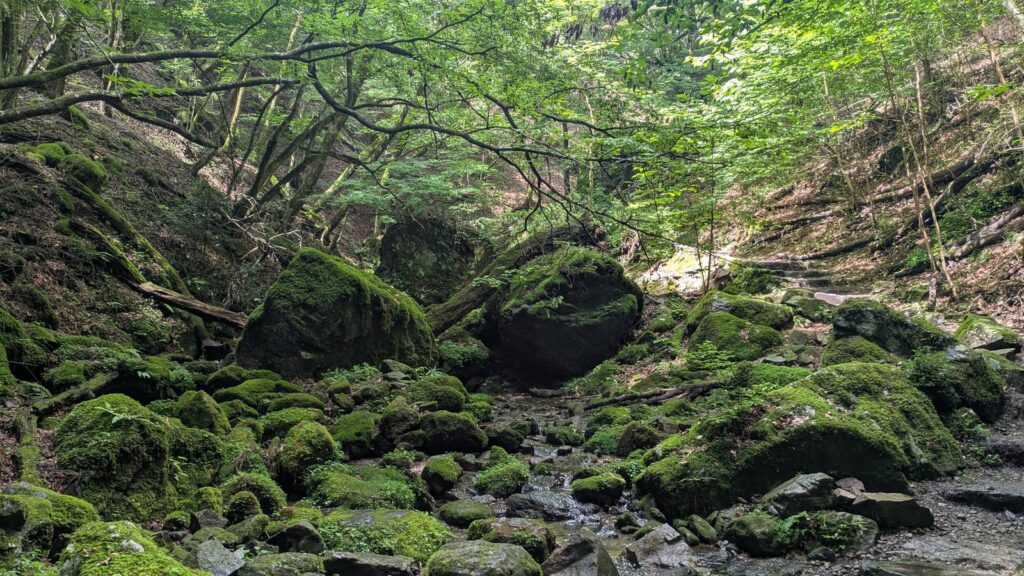
- Nagaodaira, a few minutes west, is the junction with benches, picnic tables, and the English interpretation boards. It is the gateway to the Rock Garden circuit, one hour thirty-four minutes on the day, and the biggest single decision of a day on this mountain.
- Hinodeyama, south-east, is the traverse that ends at a hot spring and a different railway station, adding roughly two and a half hours.
- Or back to the cable car, which is a twenty-minute walk downhill through the village.
You do not have to decide any of this at the shrine. Every option is still open at the junction, which is the reason this mountain rewards arriving without a plan.
Questions people actually ask
Can I bring a dog? Yes, and this is one of the few mountains in the Tokyo area built for it. The cable car sells a pet ticket, 130 yen one way for a dog of 10 kg or under, and no carrier is needed. The catch is the bus: a dog on a lead cannot ride it, so dog owners drive to the bottom station at Takimoto.
Is there an entrance fee for the shrine? No. The precinct is free to enter. The treasure hall is separate.
How long from the cable car to the shrine? About twenty-five minutes on tarmac, 98 metres of climb, ending with a flight of stone steps.
Do I have to do the bowing and clapping? No. Nothing is posted, nobody is checking, and looking at the buildings is a perfectly normal way to visit.
Where is the last toilet, water, and shop? The village, before the torii. Free drinking water at the visitor centre taps, marked SAFE WATER.
Is the shop cash only? The opposite. It takes six card networks, three QR wallets, and transport IC. Bring coins for the shrine counter, though.
Can I stay overnight? Yes. The lodgings on this ridge are shukubo, and they take guests. Book direct.
Is this the volcano I read about? No. Mitake in Tokyo is not Ontake, the volcano on the border of Nagano and Gifu. The characters look similar in English transliteration. Local signage here uses “Mt. Mitake” throughout.
Affiliate link. This site earns a commission if you book through it, at no extra cost to you. Photo from our own walk.
Where to next
- How to Get to Mount Mitake — station to 831 metres, with the bus, the cable car, and the reason to buy a single ticket
- How to Ride a Japanese Bus to a Trailhead — the mountain bus works backwards from a city bus
- The Mount Mitake Rock Garden — the big decision at the junction below the shrine
- Yakuoin, the temple on Mount Takao — the other mountain sanctuary near central Tokyo, where the gap in the signage falls somewhere else
- Mount Mitake in one day — the shrine is the first tier of a menu, and here is the rest of it