Some links on this site are affiliate links. If you book through one, Tokyo Trailhead earns a commission at no extra cost to you. It never decides what appears here.
You are reading this in August or September, and you are trying to do something that cannot be done. You are trying to book a flight against a date that nobody has published yet.
The question is reasonable. Mount Takao in autumn is one of the few things near Tokyo that carries three stars in the Michelin Green Guide, the maples turn a colour that photographs badly and looks absurd in person, and there is a festival. So you search for the date, and every English article gives you the same sentence: mid November to early December. Then it tells you about the festival, and the three stars, and it stops.
We went and checked what is actually published, on the day of writing. The official festival page for Mount Takao still shows last year’s dates. Not this year’s, not a provisional range. Last year’s. The mountain’s own leaf report, the one that tells you what has actually turned, does not begin until the season begins.
So you have a decision to make in September about a mountain that will not answer you until late October.
This article is about how to make that decision anyway. The short version is that you have been asking the wrong question, and the right question has an answer you can act on today.
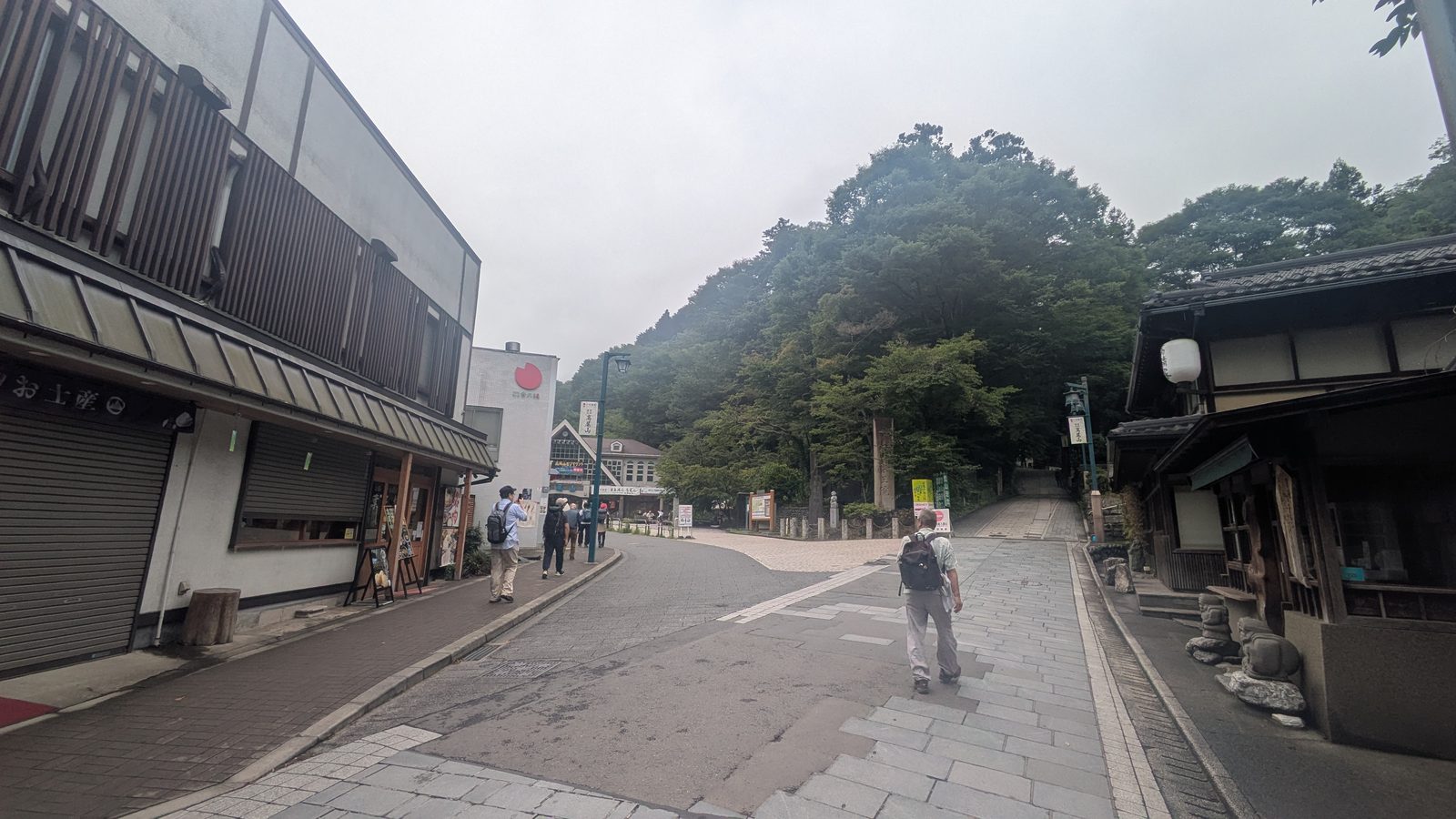
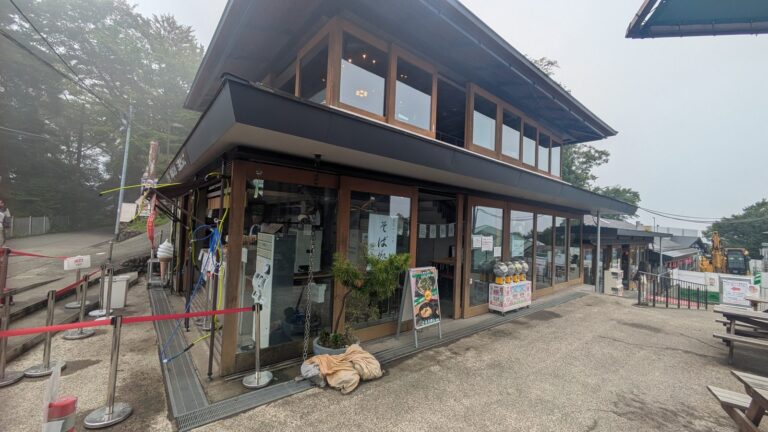
Affiliate link. This site earns a commission if you book through it, at no extra cost to you. Photo from our own walk.
What this guide covers11 sections
- The dates are not published yet, and that is normal
- The mountain does not turn all at once
- So there is no wrong week
- The day I walked it
- The crowd is not on the mountain. It is at the machine.
- Where the colour is this week is published. In Japanese.
- Which trail for which week
- What the mountain does not tell you
- Questions people actually ask
- The one thing to take away
- Where to next
The dates are not published yet, and that is normal
Here is what exists right now, and what does not.
The Mount Takao Autumn Leaves Festival is organised locally, and its official page currently lists a season that ran from 25 October to 14 December last year, with the fire ritual on the opening day, a lantern-lit extension of the cable car timetable on weekend evenings, and the small things festivals have. That page will be updated at some point in the autumn. It has not been updated yet.
Foliage forecasts behave the same way. They are produced from summer and early autumn temperatures, they are published from around October, and they are revised. Nobody issues a useful one in August, because the information they are made of has not happened yet.
None of this is a failure of Japanese tourism information. It is the honest consequence of the thing you are asking about being weather. But it collides badly with how a trip to Japan gets booked, which is months early, on fixed dates, with a flight that does not care what the maples decided.
Most English writing about Mount Takao in autumn quietly ignores that collision. It gives you a two-week window and lets you assume that inside the window you are fine and outside it you have missed it.
That assumption is wrong in a useful way.
The mountain does not turn all at once
Mount Takao is 599 metres high. That number is well enough known here that the museum at the foot of the mountain is named after it.
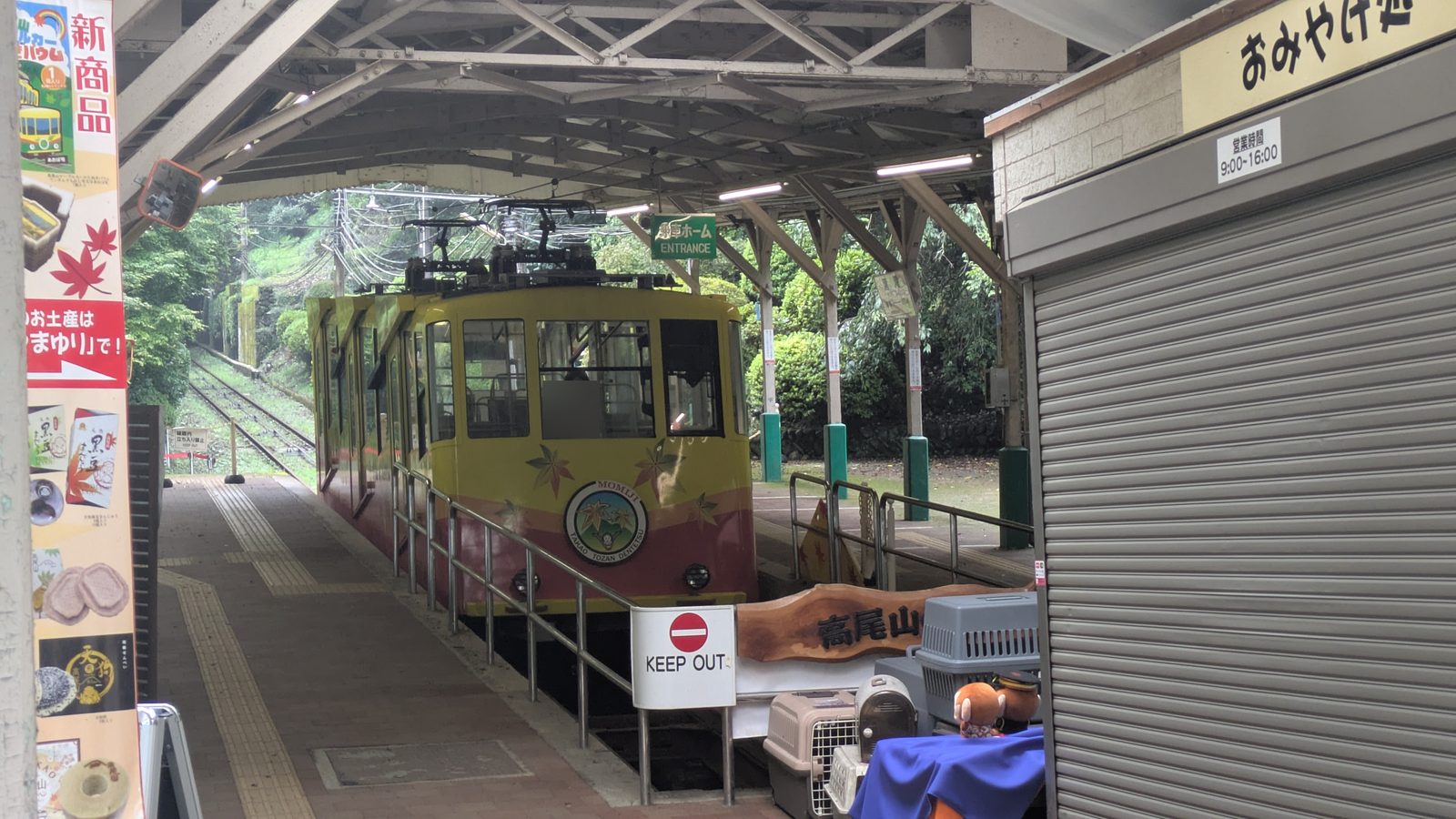
You do not start at sea level, but you start a long way below the top, and the cable car that covers part of the gap climbs at a maximum gradient of thirty-one degrees and eighteen minutes, which its operator states is the steepest of any cable car in Japan. Six minutes of that, and you are still not at the summit. That is the shape of the mountain: a real vertical distance, folded into a short train ride from Shinjuku.
Now look at how the people who run that cable car report the autumn colour.
They do not publish one status for the mountain. They publish three, separately, and they update them through the season: the summit area, the section along the cable car line, and the base area. On one December day we checked, the summit was recorded as bare, the section along the line as beginning to drop, and the base as bare.
Read that as a piece of evidence rather than as a weather report. The operator publishes three separate statuses because the three are never the same at the same time. If the mountain turned all at once, one line would do.
The colour arrives at the top first and works downward. That is not a Japanese peculiarity, it is what altitude does to a deciduous forest, and it is the reason the season on this mountain is measured in weeks rather than in days.
So there is no wrong week
This is the part that changes your booking.
If you are inside the broad season, you are not going to arrive and find a bare mountain and a wasted day. What changes between the second week of November and the first week of December is not *whether* there is colour.
It is *where the colour is*.
Which means the question you have been trying to answer, which day is the peak, is the wrong question, and it is wrong in a way that was never going to resolve. Nobody can tell you in September. The mountain will not know until October. Your flight is already booked.
The question you can answer is this one:
Given the week I am actually coming, how high up the mountain do I need to go?
That one has a real answer, it can be checked a few days before you go rather than a few months, and it converts the whole problem from a gamble into a route choice. Everything below is about making that route choice well.
And there is a second thing that nobody tells you, which we found out the hard way.
The day I walked it
I went up Mount Takao once in the autumn, on a day I had chosen for no better reason than that I was free.
I had expected it to be busy. It was busier than I expected. The thing I remember is not the trail and not the summit. It is the crowd standing at the bottom of the cable car, waiting to get on it, in a queue whose end I could see and whose duration I could not.
That is the specific discomfort worth naming, because it is the one you will feel too. There is no board at the cable car station telling you that the wait is forty minutes. There is a line of people, and there is you, doing arithmetic you do not have the numbers for. You do not know whether you are about to lose twenty minutes or ninety. You cannot see the front. Nothing about the queue tells you what it costs.
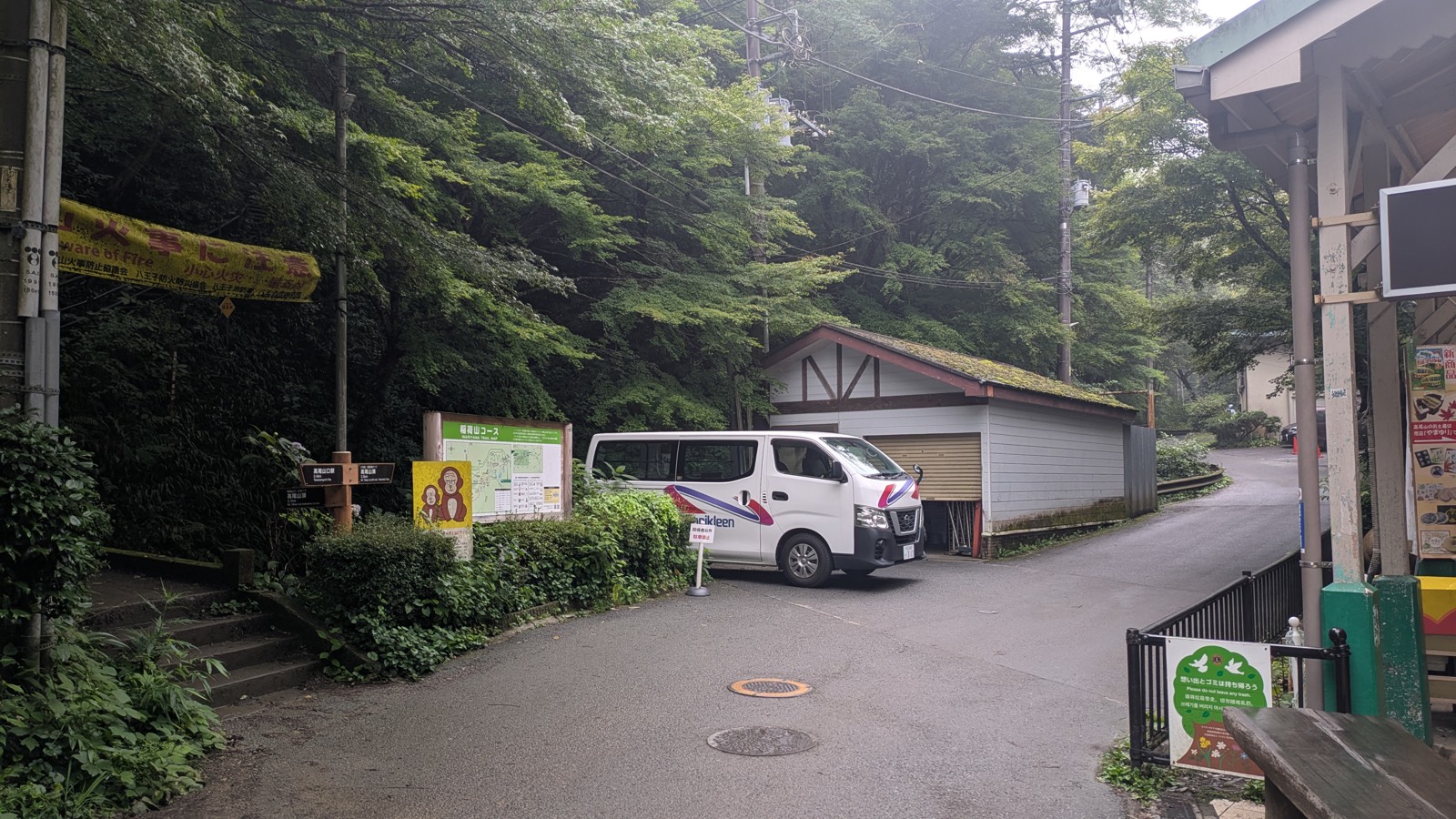
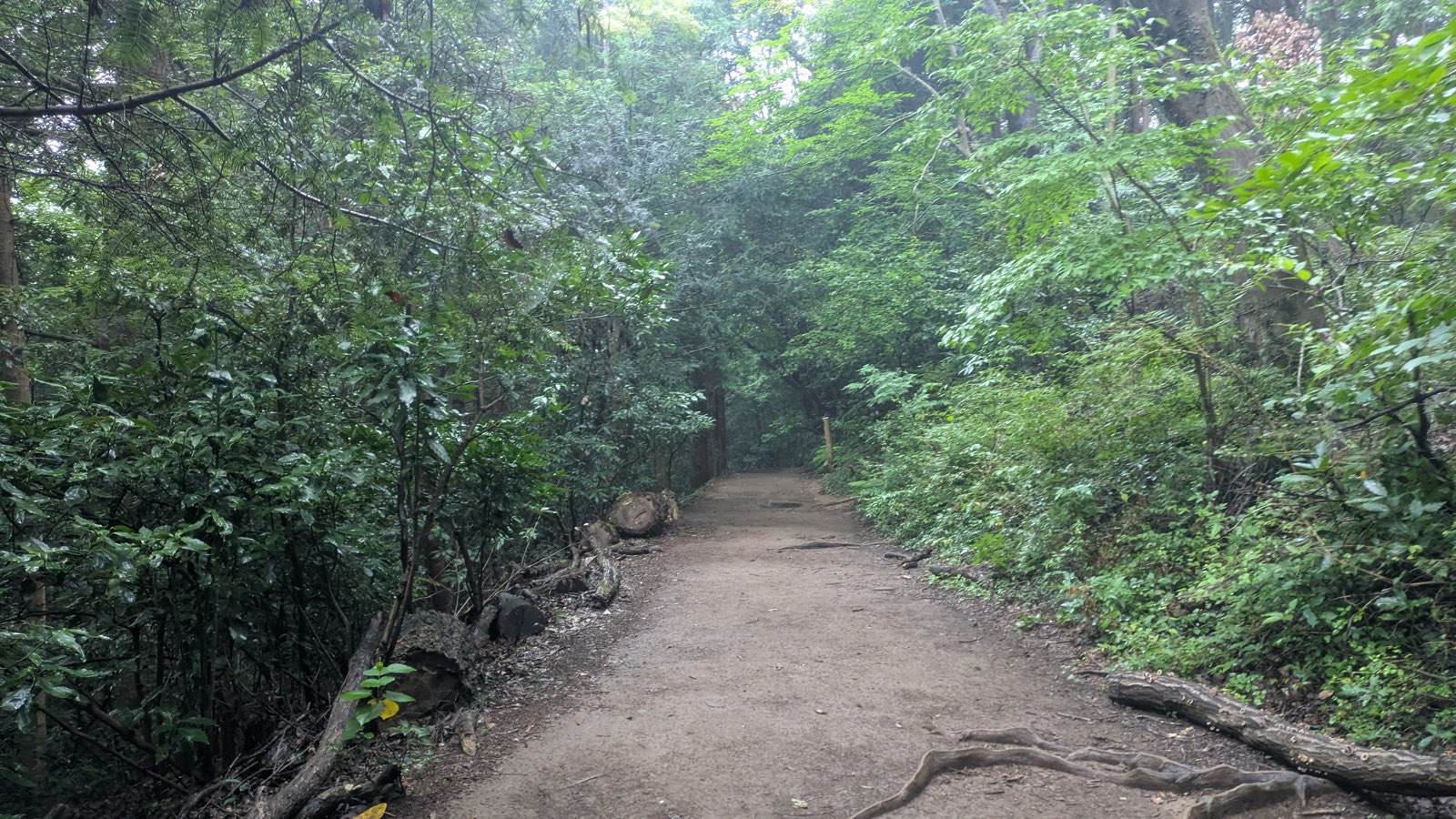
I did not join it. I walked up the Inariyama trail instead.
And the trail was not empty. There were people on it, a steady line of them, the way there always is on a good autumn Saturday.
But it never stopped. Not once. Nobody in front of me stood still, nobody bunched at a narrow section, nobody was waiting for anything. I walked at my own pace from the trailhead to the summit and the only thing that slowed me down was the hill.
I walked back down as well.
I want to be careful here, because this is a single day and I am one person, and the point of this website is that we tell you what we actually saw. I do not know what that queue was doing an hour later. I did not time it. I never went back and asked.
What I know is the comparison, and the comparison is the whole article: at the same hour, on the same mountain, the machine had a queue and the mountain did not.
The crowd is not on the mountain. It is at the machine.
Once you have seen that, the arithmetic falls out of it, and the arithmetic is what makes this actionable.
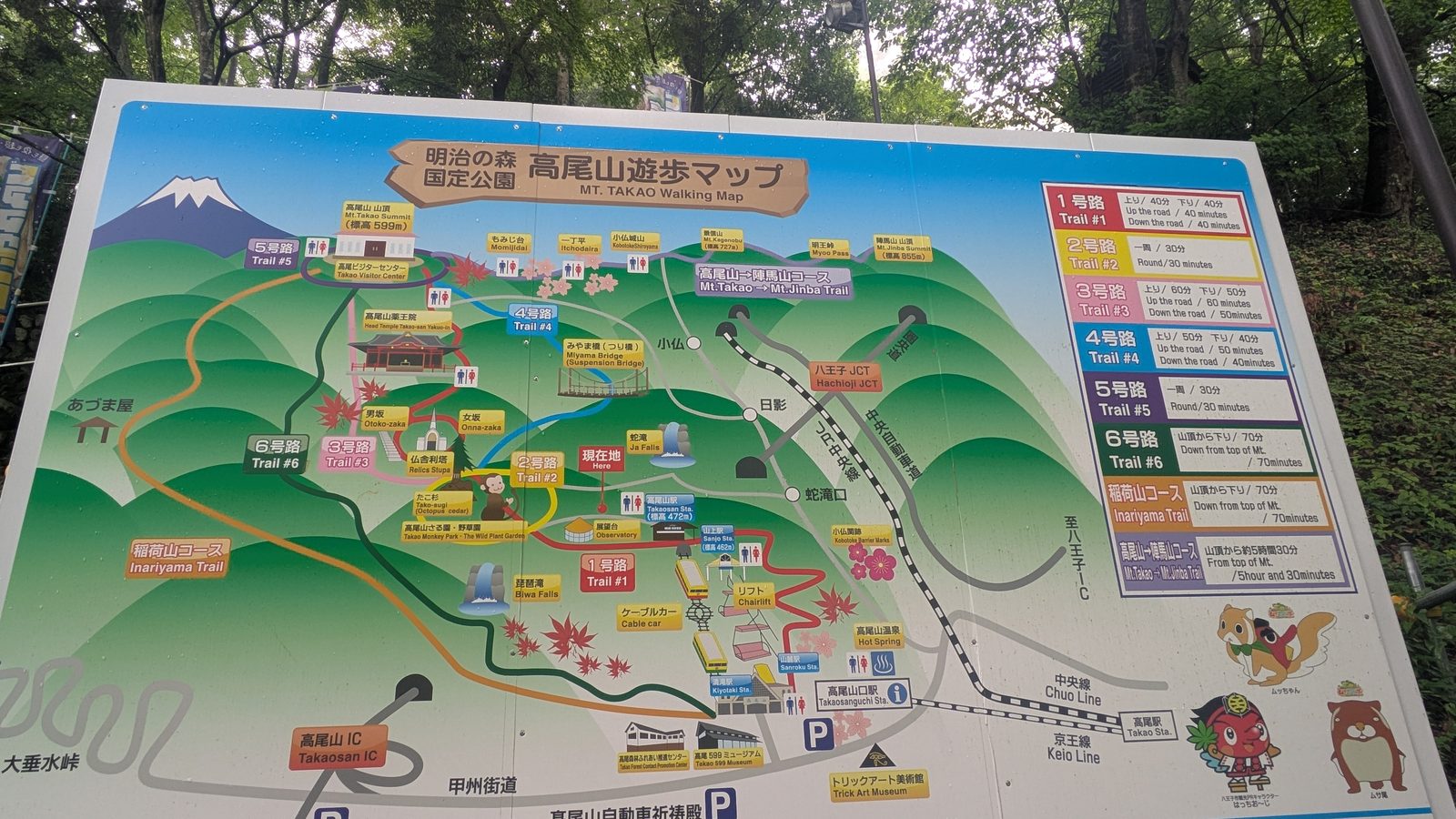
The cable car does not take you to the summit. It takes you to a station partway up, and from that station it is roughly a forty-five minute walk along Trail 1 to the top. The ride itself is about six minutes. The chairlift is about twelve.
The Inariyama trail goes from the trailhead near the station to the summit in about eighty to a hundred minutes.
Put those side by side and you get a number that no guide gives you:
| Time to the summit | |
|---|---|
| Cable car, no queue | about 6 min ride + about 45 min walk |
| Inariyama trail, on foot | about 80 to 100 min |
The cable car’s advantage over walking is roughly half an hour. So a thirty-five minute queue erases it completely, and you still have to do the forty-five minute walk at the end.
And you cannot measure the queue. That is the part that matters. You are not choosing between a known fast option and a known slow one. You are choosing between an unknown and a known. On the busiest weekends of the year, at the busiest hours of the day, the unknown is the one with the crowd standing in it.
There is one move that removes the entire question, and it is not clever: get to Takaosanguchi station before eight in the morning. Early is better. At that hour the queue has not formed, the trails are close to empty, the temple is open to visitors, and you will be coming down past the crowd that is only then going up.
The cost of doing that is real and we will not pretend otherwise. The shops and the noodle places at the foot of the mountain are not open yet, and part of the pleasure of Takao is grilled dango and a bowl of soba. You are trading the market for the mountain. In November, when the daylight is short and the crowd is at its worst, we think that is a good trade.
Where the colour is this week is published. In Japanese.
So you know how high to go. Now you need to know how high the colour is, in the week you are actually there.
That information exists. It is updated through the season. It is on the cable car operator’s own site, split into the three areas we described, and it is free.
It is also entirely in Japanese, and nobody translates it.
This is the pattern this whole website exists to describe. In Japan, English is attached to the question *what is this*, and it stops before the question *what should I do*. The museum has English. The trail signs have English. The three-line report that would actually shape your day does not.
You have two ways through it, and they are both legitimate.
The first is to read it yourself. You do not need Japanese to do this. The page is a short list of areas with a status beside each one, and there are only a handful of statuses that ever appear: not yet, beginning, close to peak, at its peak, past its peak, bare. A phone camera translation handles it in about fifteen seconds. Check it three or four days before you go, see which of the three bands is at its peak, and pick your route to match. We tell you exactly how to match them in the next section.
The second is to hand the question to somebody who already knows the answer. This is the option we would have dismissed a year ago, and we no longer do, for a specific reason: a guide who works this mountain through the season does not need the report. They were here last week. They know which stretch of the trail is doing something right now and which one you would walk past, and they know it at a resolution the three-line report does not have.
That is worth saying plainly, because it is the honest case for a tour on a mountain that needs no tour. We have written eight articles proving you can do Mount Takao with no arrangement at all, and we stand behind every one of them. Nothing about autumn changes the walking. What changes is that in this one season, there is a question with a moving answer, and somebody who is on the mountain every week knows it and you do not.
We will also tell you what a tour does *not* do, because we checked. It does not get you past the cable car queue. Of the guided Mount Takao products we looked at, only one expensive private option advertises skipping the line at all. A tour is not the answer to the crowd. The eight o’clock start is the answer to the crowd. A tour is the answer to *where is the colour today*, and those are two different problems that most articles smear together.
If you want the guided version, there are two worth knowing about, and they are not equivalent.
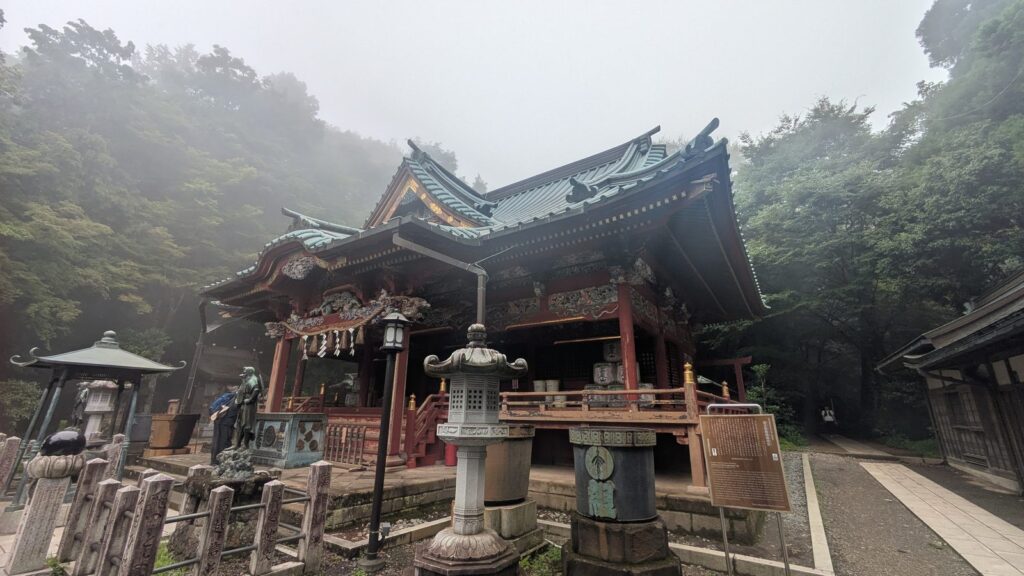
The one with a track record is a full-day small-group tour of Mount Takao with a guide, currently around 120 US dollars, running about eight hours, capped at seven people, rated 5.0 from more than a hundred reviews. It is not sold as an autumn product. It is sold as a day on Mount Takao with somebody who knows it: the 599 museum, the temple, the summit, a bowl of Hachioji ramen, the monkey park, and a hot spring at the end. The cable car or chairlift ticket is paid separately on the day, around five hundred yen. In the autumn, the thing you are buying is the guide’s current knowledge of the mountain.
The one with autumn in its name is a twelve-hour foliage day trip that pairs Mount Takao in the morning with Showa Kinen Park and its avenue of golden ginkgo in the afternoon, from about 67 US dollars, run in English, Chinese and Korean, with an optional evening illumination paid separately on site. We are going to be straight about this one, because the name makes it sound like the obvious choice. On Mount Takao itself, its own description says you get free time to explore at your own pace, which means the guide is running the day rather than reading the maples for you. If your priority is the ginkgo avenue at Showa Kinen Park, which is genuinely one of the best autumn sights in Tokyo and is not on a mountain at all, it is good value. If your priority is somebody telling you where the colour is on Takao, it is not the product that does that.
Affiliate link. This site earns a commission if you book through it, at no extra cost to you. Photo from our own walk.
Which trail for which week
Here is the matching. This is the part to screenshot.
If the summit band is at its peak, which in an ordinary year means roughly the middle of November, the colour is above the cable car station and the walk is worth doing on its own terms. Go up the Inariyama trail. It is a ridge path through trees, it is the quietest of the main routes, it is the one we walked on that autumn day and did not stop once, and it delivers you to the summit and the open ground just beyond it, which is where the maples are doing their work. This is the week when the mountain rewards going all the way up.
If the band along the cable car line is at its peak, you are in the middle of the season and almost anything works. Trail 1 walks straight through it, which makes this the one week where the paved route is the scenic one rather than the practical one.
If the base area is at its peak, which in an ordinary year means early December, something quietly excellent happens. You do not need the summit at all. The colour is at the bottom of the mountain, around the cable car station at the foot and the approach, which means the best of the day is available to somebody who never climbs anything. And you get two things for free with it.
The first is that the crowd has gone. The heaviest weekends of the Mount Takao autumn are in the second half of November. By early December the mountain has emptied out and the thing you were dreading is simply not there any more.
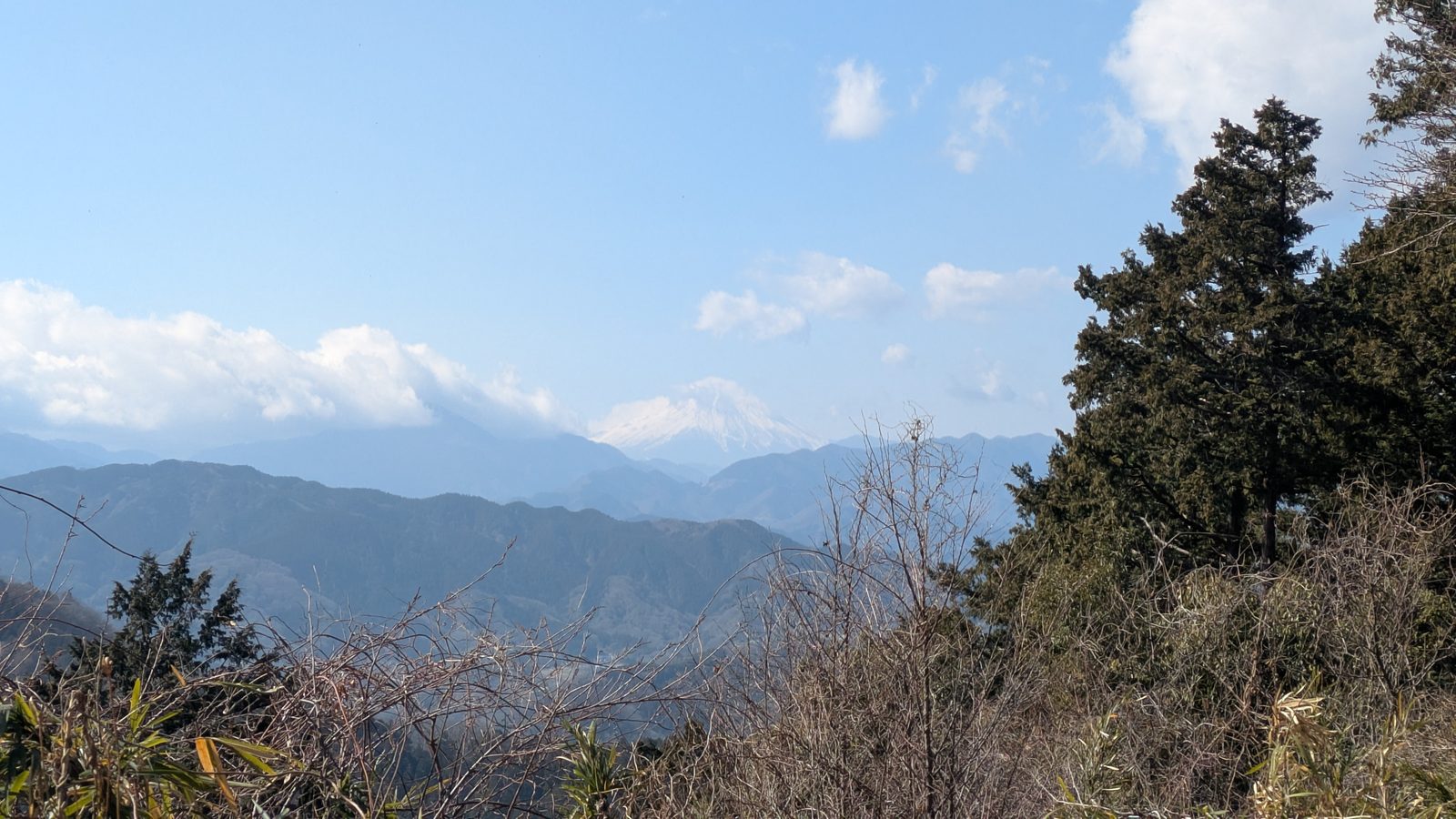
The second is the view. Mount Fuji is not reliably visible from the summit of Mount Takao in warm weather; haze eats it, and a clear sky is no guarantee. It gets better as the air gets colder. An early December visit is the version of this trip where the leaves at the bottom and the mountain on the horizon are both plausible on the same day.
We would go so far as to say this: if your dates are flexible and you are choosing between the third weekend of November and the first weekend of December, take December. You will read almost nothing in English that tells you that.
What the mountain does not tell you
A short list of things that are true in every season and matter more in this one.
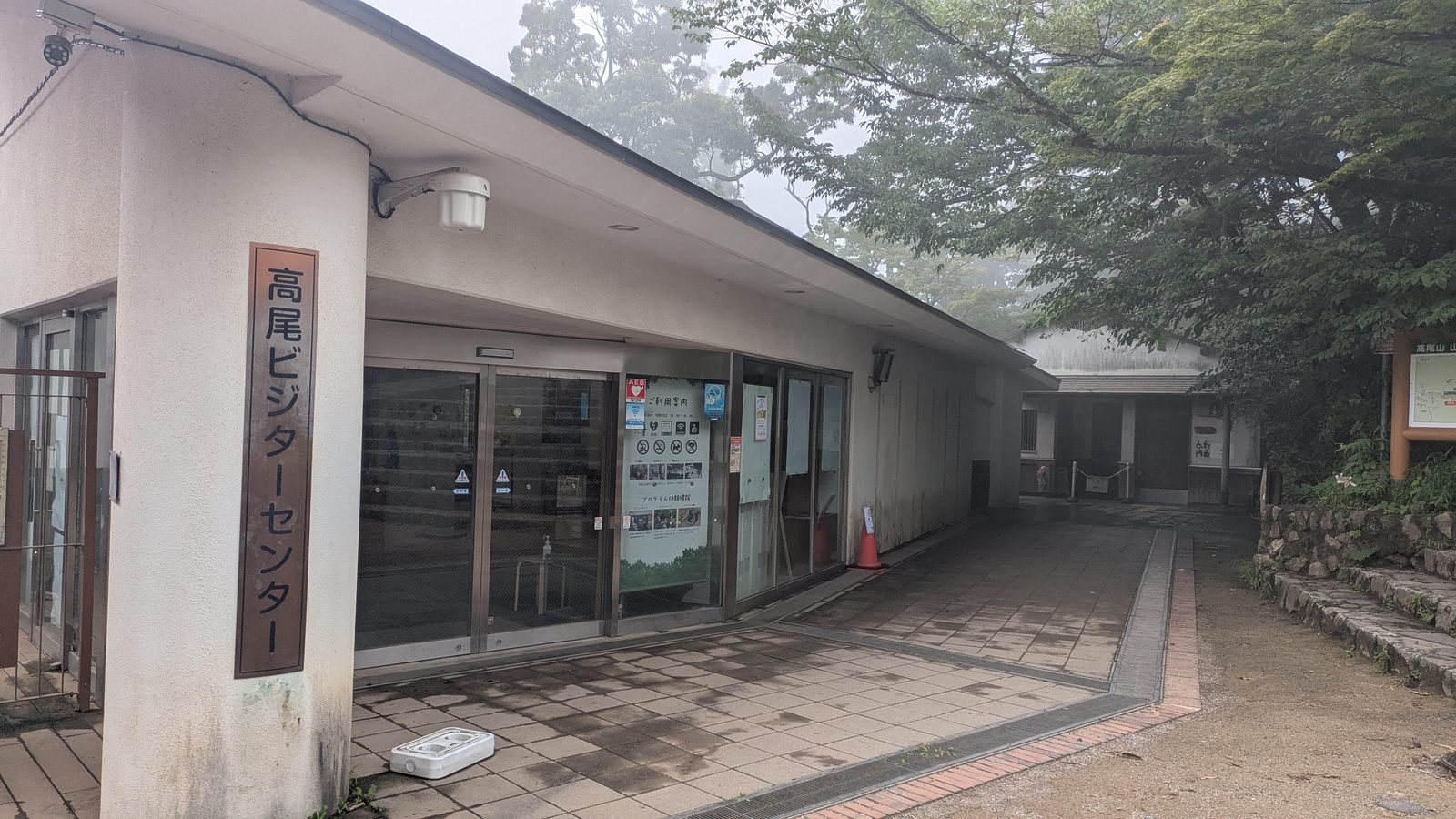
Trail 6 is sometimes made one-way uphill. The section from Biwa Falls up to the junction with Trail 5 is narrow, and when the mountain is busy the Tokyo Metropolitan Government’s visitor centre at the summit announces a period during which it may only be walked upward, to stop people meeting head-on in a place where they cannot pass. It is announced for autumn and for the spring holidays, and the exact dates change every year. Check before you plan a descent that way.
There is no toilet on the Inariyama trail or on Trail 6. There are toilets at Takaosanguchi station, at the cable car station, at the temple, and at the summit, and they are clean. All of those are on the Trail 1 side of the mountain. Go before you start.
Bring cash. The vending machines, the shops and the temple at Mount Takao are cash only. Central Tokyo has trained you out of carrying any. The mountain has not caught up.
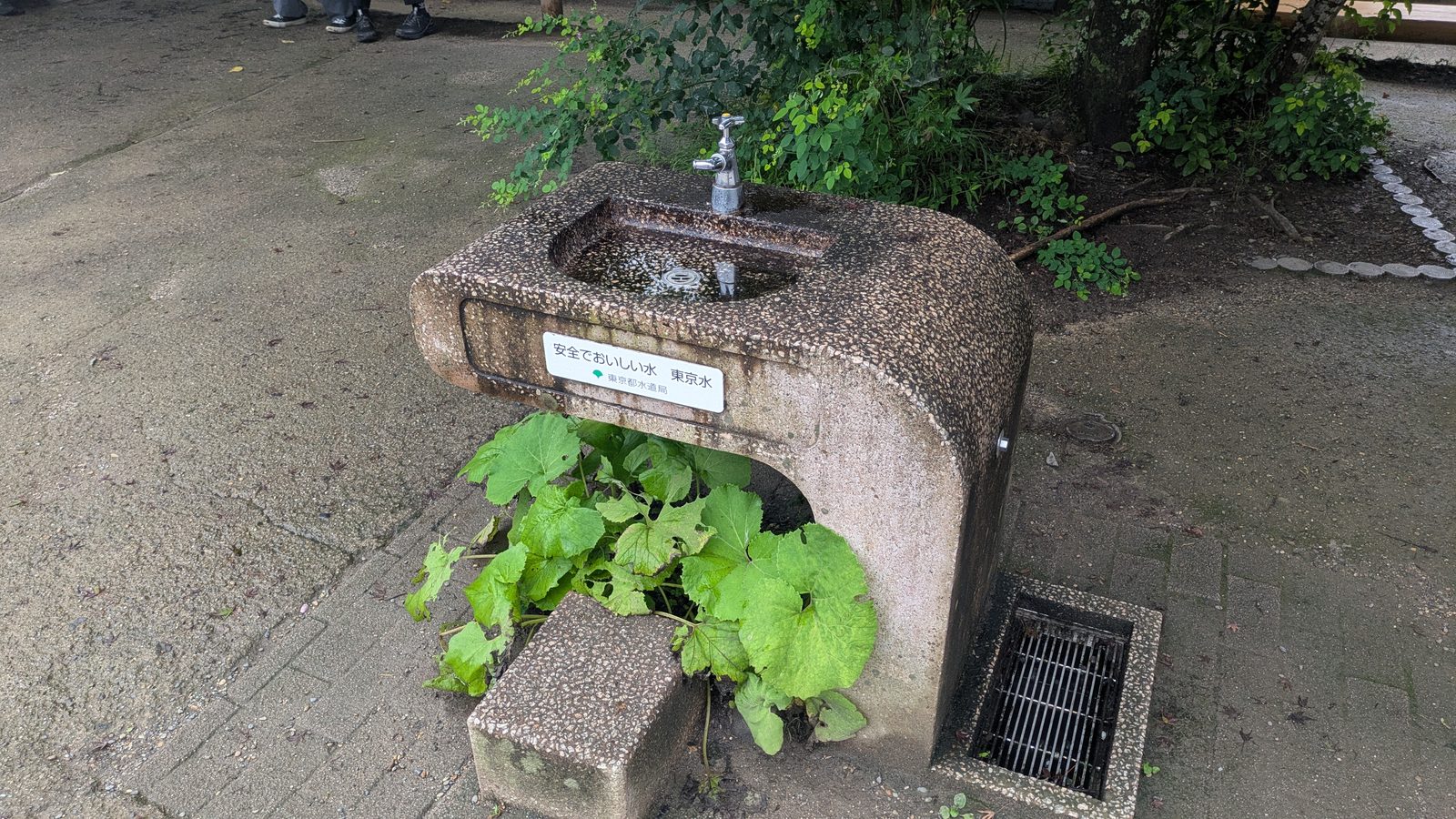
The tap water is drinkable and free. There are taps at Takaosanguchi station and at the summit. If you are coming from a country where this is not true, this is worth knowing before you buy four bottles.
Shoes matter more than you think, and it is not about the mud. Trail 1 is paved the whole way, and it is the hardest of the routes, because paving is not the same as flat. The Inariyama trail is soil and tree roots, easier underfoot, and slippery after rain. Heels and sandals are wrong for both. What you want is a sole with grip, not a particular category of shoe.
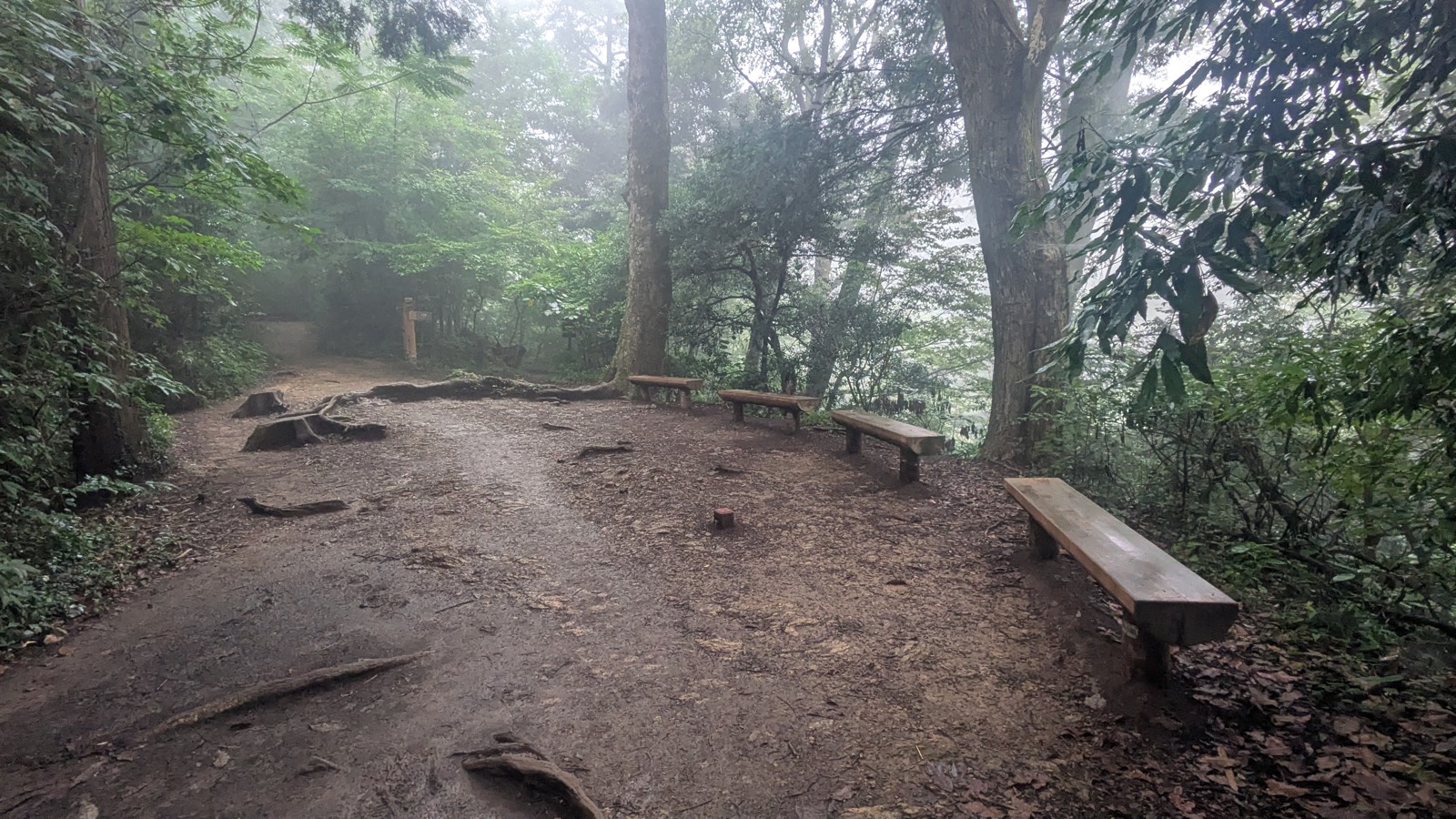
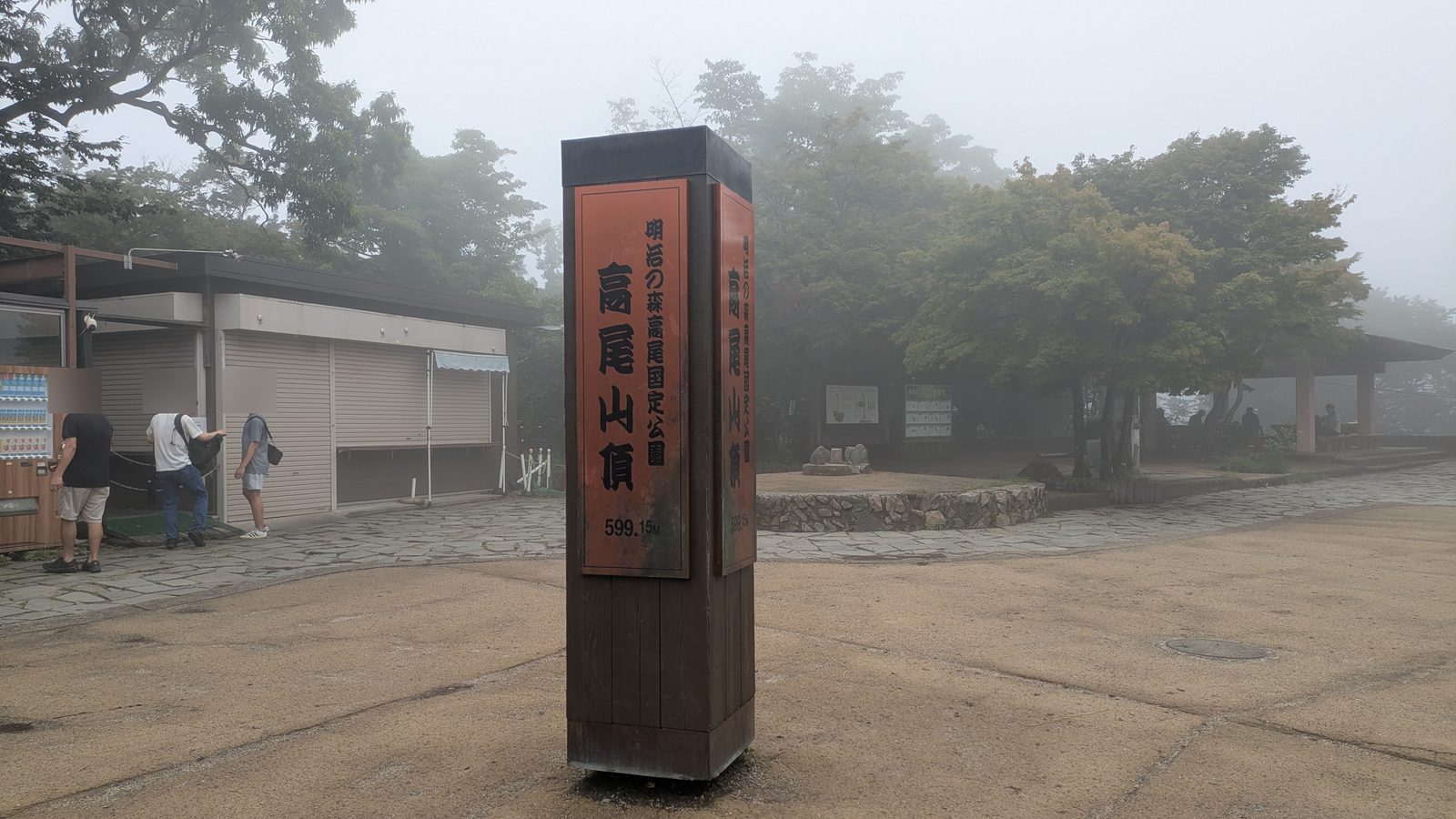
The summit will be crowded even if the trail was not. Everyone converges on the same flat piece of ground. Walk five more minutes past it to Momijidai and most of it falls away.
Questions people actually ask
Have I missed it if I come in the first week of December? Almost certainly not. That is when the base area tends to be at its best, and it is the quietest and clearest week of the season. See the section above.
Is the cable car worth it in autumn? It is a good ride and the terrace at the top station has a genuine view. It is not a way to save time on a busy autumn weekend, because the queue is unpredictable and the walk from the top station to the summit is still about forty-five minutes. Ride it because you want to ride it, not to be fast.
What time should I arrive? Before eight at Takaosanguchi, if you can. Earlier is better. This single decision does more for your day than any other one in this article.
Can I see Mount Fuji and the autumn leaves on the same day? In November, sometimes. In early December, more often, because cold air is clearer. Neither is a promise. Treat Fuji as a bonus and the leaves as the reason you came.
Do I need to book anything? No. There is no permit, no reservation and no ticket to arrange for the mountain itself. You tap an IC card at Shinjuku and you go. The only things anyone books here are guided tours, and those are optional.
Which trail if I only do one? Inariyama, for the reasons above, unless the base band is the one that has turned, in which case walk the approach and Trail 1 and enjoy an easy day.
The one thing to take away
You cannot choose the day the leaves peak. You were never going to be able to. The festival dates are not out, the forecast does not exist yet, and the mountain will make its own decision in late October regardless of what your flight says.
What you can choose is what time you arrive and how far up you walk. Get there before eight. Check which of the three bands has turned, a few days out, in Japanese, with your phone camera. Walk the Inariyama trail if the colour is high and the approach if it is low. And if the honest answer is that you would rather have somebody who was on this mountain last week make that call for you, that is a real reason to hand it over, and now you know which product actually does it.
The leaves will take care of the date.
You take care of the hour and the trail.
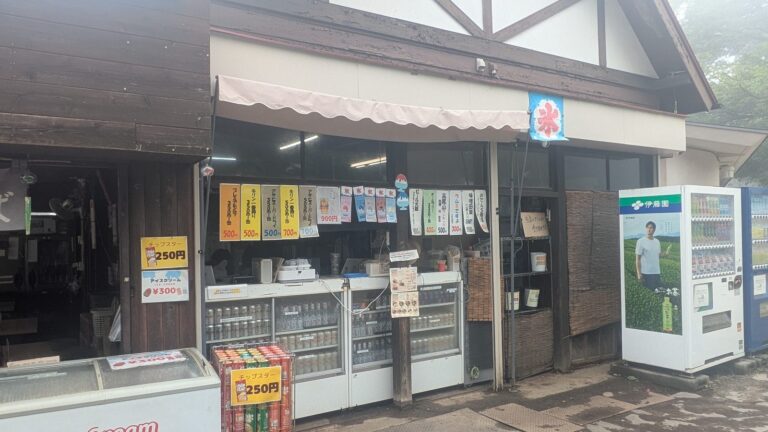
Affiliate link. This site earns a commission if you book through it, at no extra cost to you. Photo from our own walk.
Where to next
- Which trail should you take up Mount Takao — all eight routes compared, with the timings used above.
- The Inariyama trail, step by step — the route this article keeps sending you to.
- The cable car, the chairlift, and what each one costs — for the week you decide to ride it anyway.
- The hot spring by the station, and its rules — how to end a cold December walk.
- Shinjuku Gyoen — ten minutes on foot from Shinjuku Station, for a day when the mountain is too far. Its maples turn after the Chrysanthemum Exhibition in early November. Check the day first, because it closes on Mondays.