Some links on this site are affiliate links. If you book through one, Tokyo Trailhead earns a commission at no extra cost to you. It never decides what appears here.
At the Fifth Station there is a gate. You show a QR code, somebody hands you a wooden tag together with a wristband, and you walk through. The whole thing takes less than a minute of actual transaction.
That is the part everybody writes about. It is also the part that will cause you no trouble at all.
The rule that decides the shape of your climb is one line further down the same official page, and it is not about money. From two in the afternoon until three the next morning, the gate is shut. Hut guests are the exception.
Read that twice, because it quietly rewrites the question you thought you were answering. You thought a mountain hut was a decision about comfort: whether you want a few hours lying down before the summit push, whether you are willing to pay for a bunk in a room with fifty other people. It is not that any more. A hut booking is now the thing that allows you to be on the mountain at night at all.
This article is about that, and about the practical shape it gives to the weeks before you travel. It is not a description of the climb itself. We measured that separately, hour by hour, in Is climbing Mount Fuji worth it?. It is also not a comparison of doing it yourself against booking a guided package, which is its own article. This one covers the system: what it demands, in what order, by when.
Everything below applies to the Yoshida Trail, which is the route reached by coach from Shinjuku, and the route most first-time climbers take.
What this guide covers9 sections
- What the 2026 system actually is
- The rule that decides your day is the gate, not the fee
- Two systems, two calendars
- What actually happens at the gate
- So do you need a hut booking?
- If you are reading this in July, with the huts already full
- The decision table
- Questions people actually ask
- The mountain sells out before the trail does
What the 2026 system actually is
Four numbers from the official climbing website, and then we can move on to what they do.
| Rule | What the official site says |
|---|---|
| Entry toll | 4,000 yen per person, per climb |
| Gate closed | From 14:00 until 03:00 the next morning. Hut guests excepted |
| Daily cap | 4,000 climbers. Hut guests excepted here too |
| Season | 1 July to 10 September, with the note that the opening can be delayed by weather or by snow that has not melted |
Booking ahead is recommended rather than required: you can pay on the day at the Fifth Station. One detail is worth keeping, because it is the reason the tag in your hand exists at all — the wooden tag goes only to people who booked in advance.
That is the entire framework. Almost every English article about Mount Fuji in 2026 stops here, with the numbers laid out in a table much the same as the one above, and that is the problem. The numbers are the easy part. What they do to your calendar is the hard part.
The rule that decides your day is the gate, not the fee
Here is the thing the fee cannot do to you: nothing. Four thousand yen is a fixed, survivable cost, payable on the day if you forget. It cannot ruin a plan.
The gate can.
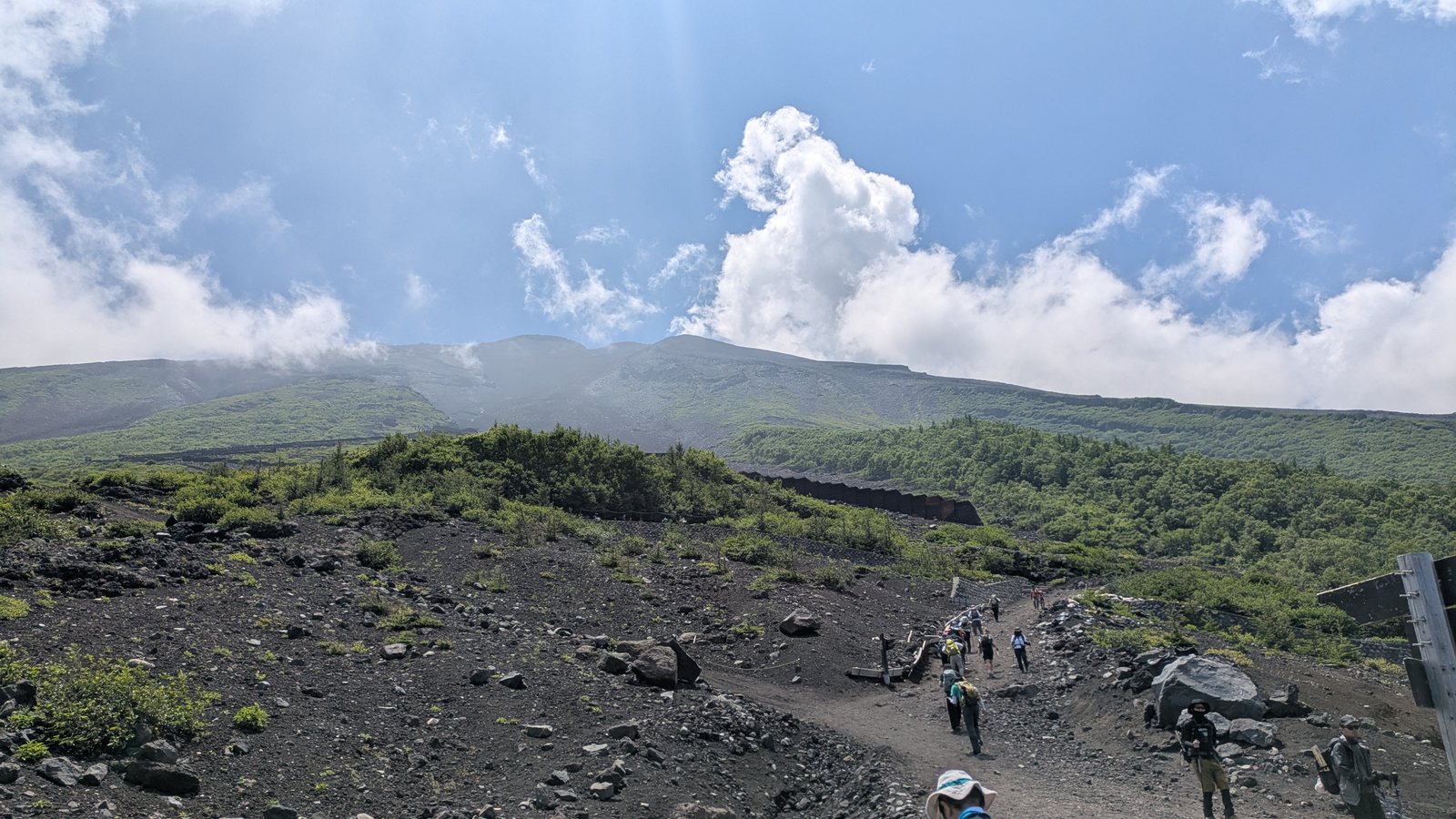
Consider what a night climb on this mountain actually is. You are aiming to stand on the rim for sunrise, which in the climbing season falls at somewhere around half past four in the morning. Working backwards from that through the walking time above the huts, you are moving in the dark, in the small hours, on the upper mountain.
Now put the closure against it. From two in the afternoon until three in the morning, nobody passes the gate at the Fifth Station unless they hold a hut booking.
So there are exactly two ways to be above that gate in the dark. You went up before two in the afternoon and stayed up, which in practice means a hut. Or you have a hut booking, which exempts you. There is no third way, and the way that used to exist — arrive in the evening, walk through the night, come down in the morning, sleep nowhere — is the one the closure was written to end.
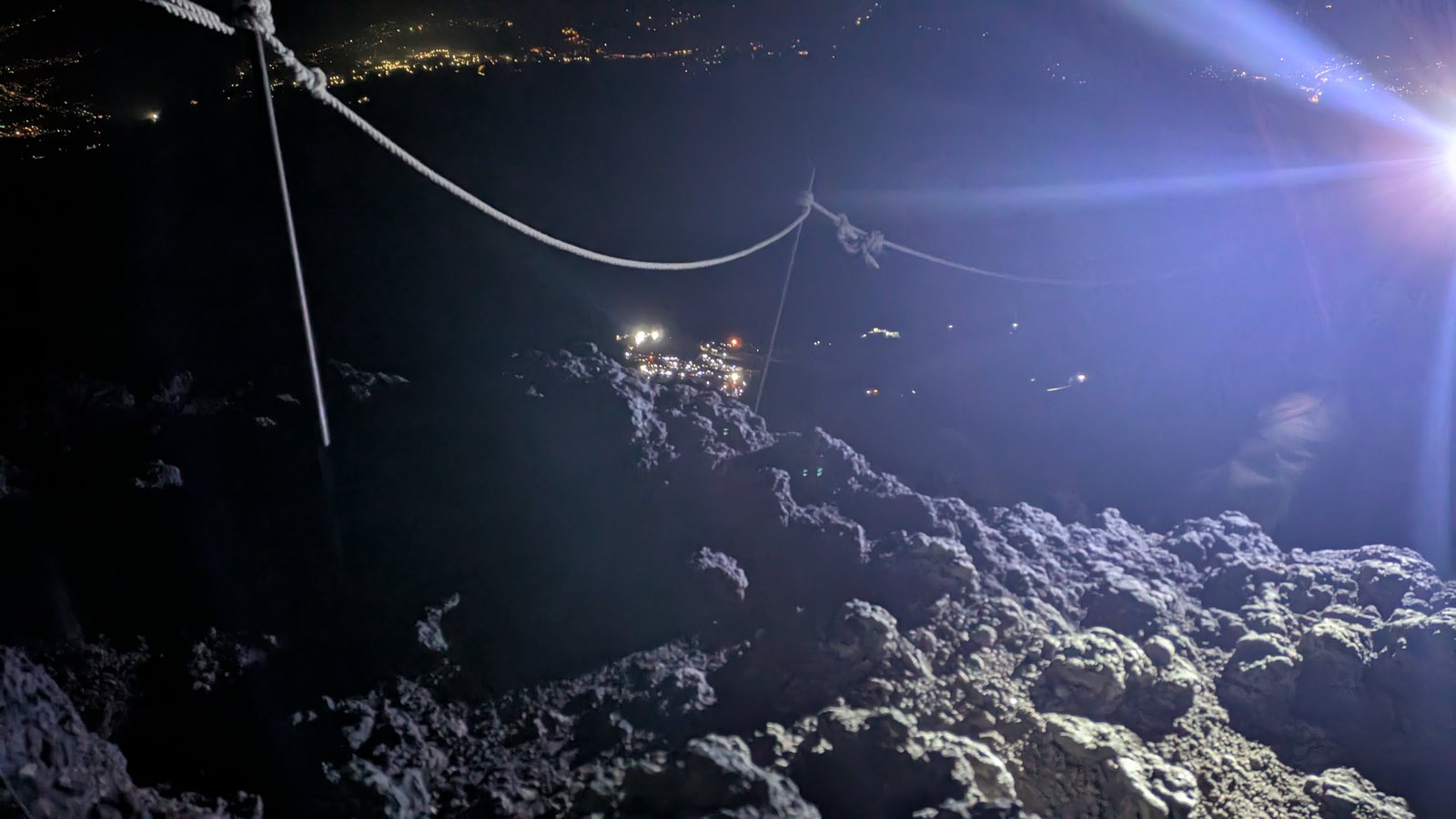
I can put times on this from my own climb, because I recorded all of them. I left the hut at six minutes past eleven at night. I was on the summit at twenty-five past two in the morning. The sun came up at twenty to five.
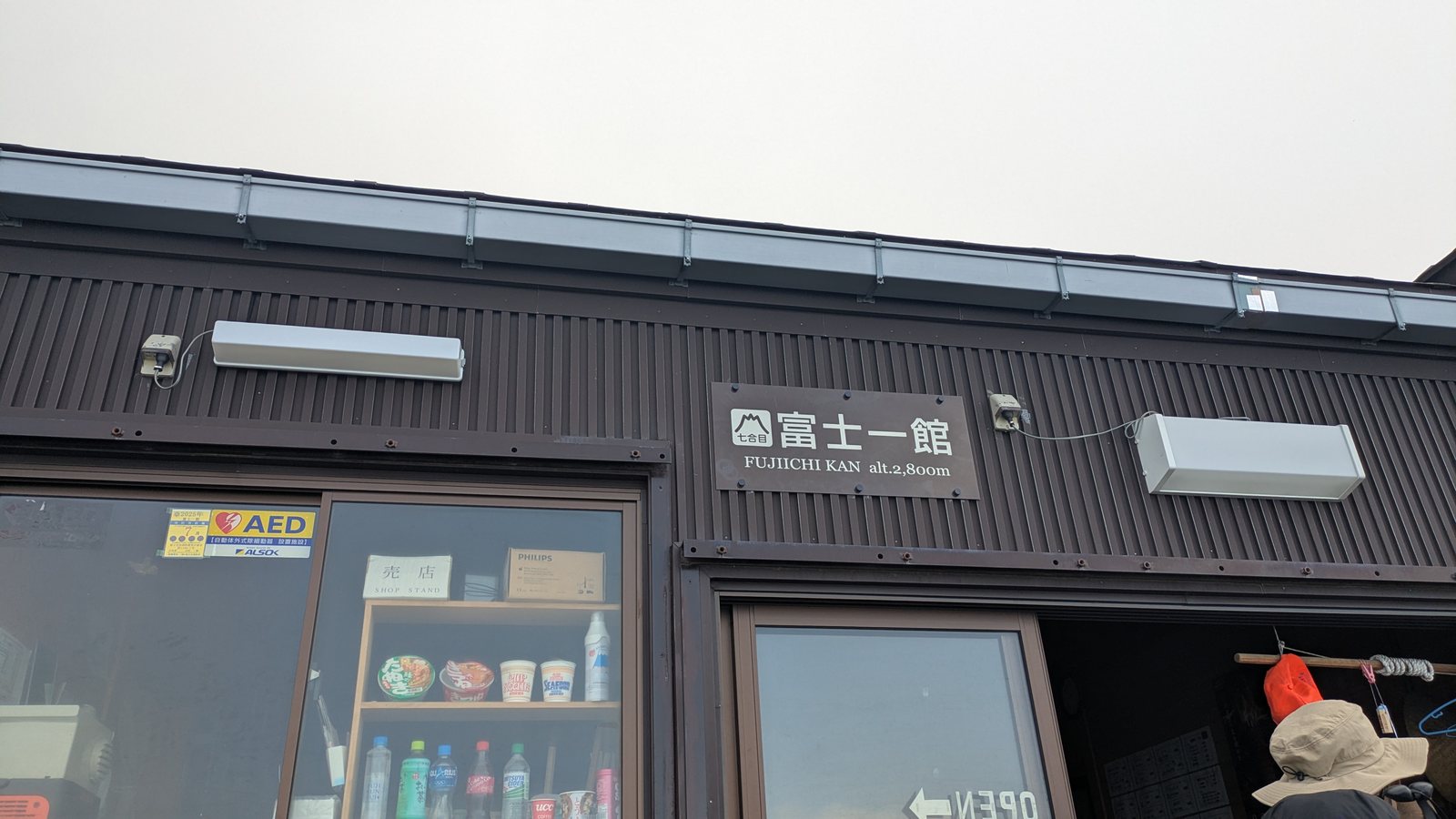
Line those three times up against the closure. Every one of them falls inside the hours when the gate at the Fifth Station is shut. The walk that produced that sunrise began four hours before the gate reopened, and it began at 2,800 metres, in a hut I had paid to lie down in, roughly 500 metres of climbing above the gate itself. Without that booking, none of it was available to me. The sunrise I had travelled for would have happened while I was somewhere below a closed door.
The hut, in other words, was not what made the night comfortable. Nothing about it was comfortable, which is a story told in full in the other article. The hut was what made the night legal.
Two systems, two calendars
The second thing the official page does not tell you is which of your bookings is actually urgent.
They are separate transactions. The entry reservation is one system. The hut is a different system entirely, run by the hut itself, on its own calendar. A hut booking exempts you from the cap and from the night closure, but it does not pay your entry toll, and paying your toll does not hold you a bunk.
Given that, most people assume the toll is the thing to sort out first, because it is the one with the official website and the daily cap attached to it. That is backwards, and I did it the other way around without having thought it through: I booked the hut first, and the entry reservation afterwards.
That instinct turns out to be correct, and here is the arithmetic behind it. The toll has a cap of four thousand people a day for the whole mountain. A hut has perhaps a hundred futons. For the 2026 season the hut I ended up in opened its bookings on 17 May. By July, the choice was gone: not the choice of whether to climb, but the choice of which hut, at what altitude, on what date. Some hut somewhere might still have space. The one at the height you wanted, on the night you wanted, did not.
So the deadline that governs your Mount Fuji plan is not set by the prefecture. It is set by roughly a hundred futons at three thousand metres, and it falls in May.
This is the single most useful sentence in this article, so let it be blunt: if you are reading this in spring and you want a sunrise from the rim, book the hut this week. The toll can wait. It cannot sell out from under you in the same way, and you can pay it on the day if it comes to that.
What actually happens at the gate
Some of this is small, and all of it is the sort of thing that no official page tells you.
I had booked in advance. I had the QR code on my phone. What I did not have was a fast lane. You queue. There is a line at the Fifth Station, and a counter, and a person who deals with you one at a time. Advance booking makes the transaction at the counter short. It does not remove the counter.
Then you are handed two things: a wooden tag, and a wristband. The official page mentions only the tag. I have seen no English source that mentions either accurately, so to be precise about it: two objects, one of them wearable.
And then the part that told me what the whole system is:
Nobody asked to see either of them again. Not once, on the way up, at the hut, on the summit, or on the way down.
That is not a complaint, and it is certainly not advice. It is the clearest possible statement of what has been built here. This is not a permit that you carry and produce, the way a national park backcountry permit works in some other countries. The control point is the door. The tag and the band are proof that you came through it. Which is exactly why the closure at two in the afternoon is enforceable at all: it does not require anybody to patrol a volcano in the dark. It requires one gate, and somebody to close it.
So do you need a hut booking?
Three shapes of climb, and the system answers each one differently.
You book a hut. You are outside the daily cap. You are outside the night closure. You can start walking at eleven at night if that is what your plan needs, which is what mine needed. You pay the toll on top of the hut, and you accept that the hut is a place to lie down rather than a place to sleep.
You climb in daylight, up and down. You need the toll reservation, nothing more. Your climb has to begin after three in the morning and you have to be through the gate before two in the afternoon, which for an ordinary pace is not a constraint at all — it is simply a normal early start. You will not see the sunrise from anywhere near the top. You will also not spend a night at three thousand metres listening to fifty strangers breathe.
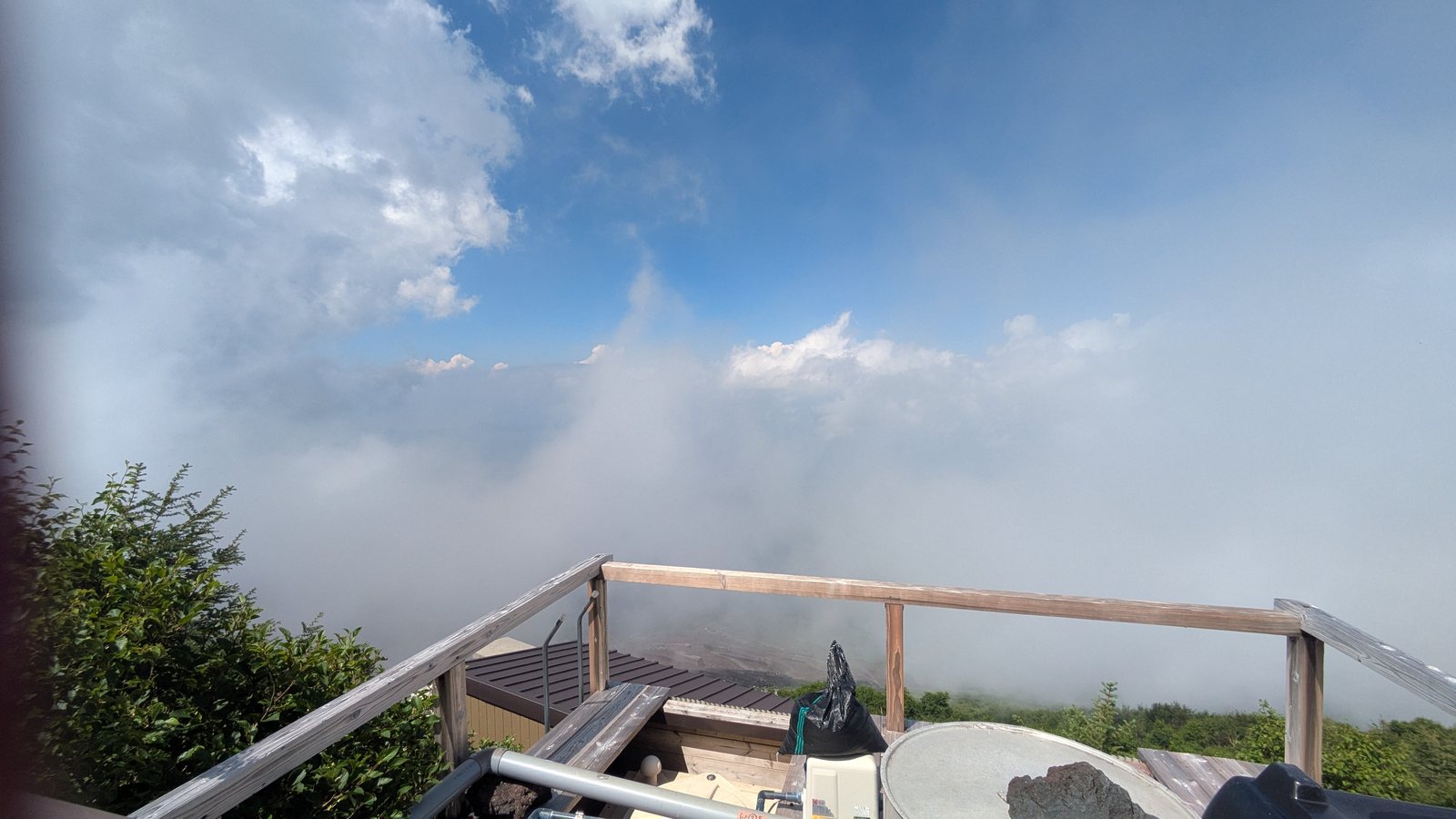
You climb through the night without a hut. The system does not allow it. This is the shape of climb that a lot of older English articles still describe warmly, under a name it no longer earns, and it is the reason the closure exists.
Which means the romantic question and the logistical question have collapsed into one. Asking whether you want to see the sunrise from the summit is now the same as asking whether you are willing to book a hut in May. They are not two decisions. They have not been two decisions since the gate went in.
If you are reading this in July, with the huts already full
This is the situation most people are actually in, so it deserves an answer rather than a shrug.
Take the daylight climb seriously. It is a real climb of a real mountain, it needs only the entry reservation, and it removes the single worst part of the whole experience, which is trying to sleep at 2,800 metres in the early evening. You give up the summit sunrise. You keep the summit.
Watch for cancellations, but do not build a plan on them. Huts do release space. They release it unpredictably, and you cannot buy a coach seat, a hut night and a week of holiday around a maybe.
Take a lower hut rather than no hut. A booking at any altitude restores your night access, which is the thing the system is actually rationing. It costs you extra hours of walking in the dark, and there is a full argument about where to sleep on the mountain in the other article, but a low hut beats a fine mountain you are not allowed onto at night.
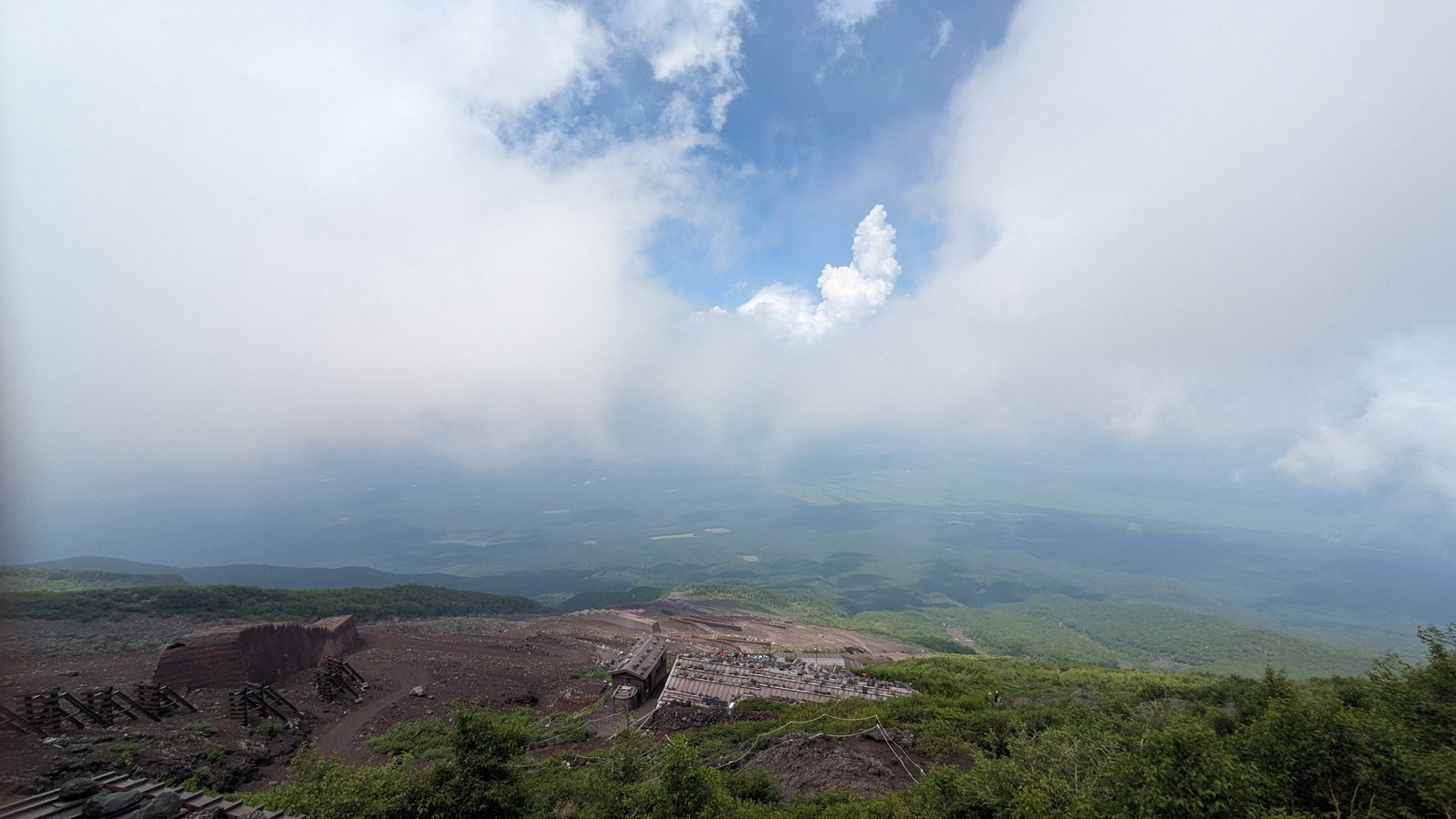
Look at guided departures before you give up on the summit sunrise. This is the one situation where a package earns its price properly. Operators hold their own allocations of hut space, which means a guided place can still exist on a date where the huts have stopped taking individual bookings. That is not a guarantee, and the only way to know is to open the specific departure and look at what it includes. What you would be buying is not fitness, not navigation, not company. You would be buying a bed that you can no longer buy yourself. We set that trade out in full, with our own timings against two published itineraries, in Mount Fuji alone or on a guided tour, and the climbs with the hut night included are listed here. That is an affiliate link, so this site earns a commission if you book through it, at no extra cost to you.
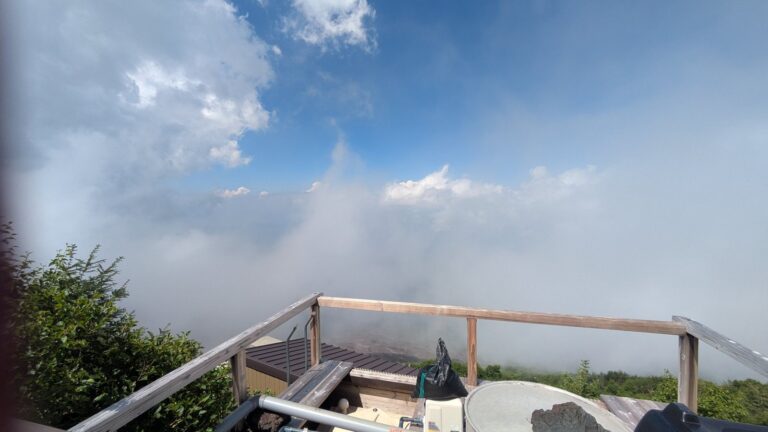
Affiliate link. This site earns a commission if you book through it, at no extra cost to you. Photo from our own climb.
Or move Mount Fuji to another year. The season is ten weeks long and the huts sell out in May, which means this mountain rewards planning far more than it rewards enthusiasm. If the dates do not work, they do not work, and Japan is not short of mountains you can walk up next Tuesday with no permit at all. That comparison is its own article, and the honest summary of it is that the two are not substitutes for each other.
The decision table
| If you want | What you must book | What sets your deadline |
|---|---|---|
| Sunrise from the summit | Entry reservation plus a hut | The hut. Bookings for mine opened on 17 May |
| A daylight climb, up and down | Entry reservation | The daily cap of 4,000, on the day itself |
| A night climb with no hut | — | Not permitted under the current rules |
| To hand the paperwork to somebody else | A guided package | The operator, months ahead |
That last row is a real option rather than a joke, and we compared it honestly against doing it alone in Mount Fuji alone or on a guided tour. The short version: what you buy is not fitness or navigation. What you buy is somebody else holding the hut booking. If that is the trade you want, guided climbs with the hut included are listed here. That is an affiliate link, so this site earns a commission if you book through it, at no extra cost to you.
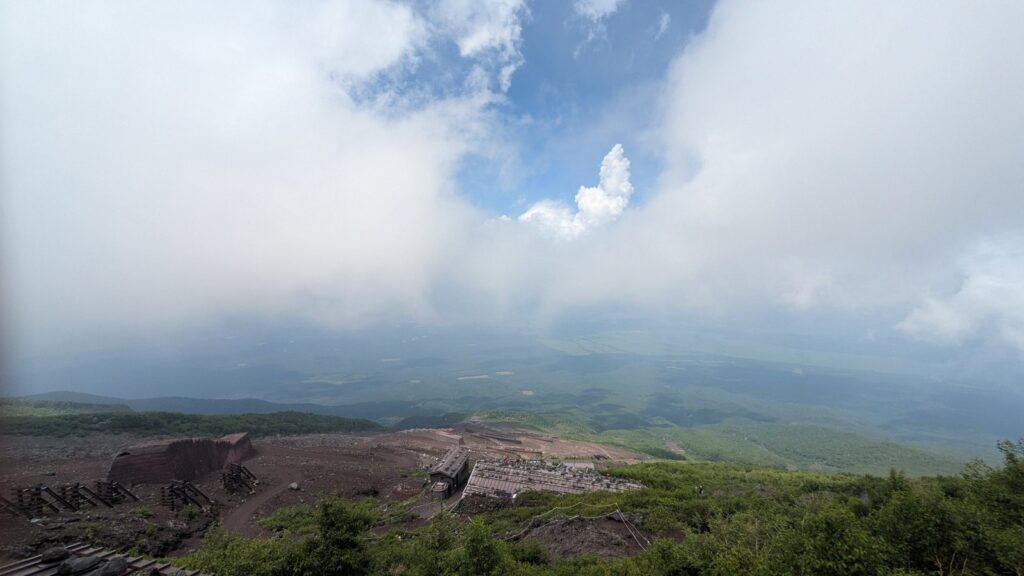
Affiliate link. This site earns a commission if you book through it, at no extra cost to you. Photo from our own climb.
Questions people actually ask
Can I book on the day? Yes. Same-day payment at the Fifth Station is possible, and the official site recommends booking ahead rather than requiring it. Two things to weigh: the daily cap of four thousand, and the fact that the wooden tag goes only to advance bookers.
What does the 4,000 yen cover? It is the entry toll for the trail, charged once per person per climb. It is not accommodation, it is not transport to the Fifth Station, it is not the cable of any kind. Your hut is billed by your hut.
Does a hut booking include the toll? No. They are separate transactions in separate systems. The hut exempts you from the cap and from the night closure. It does not pay your toll.
Why do I get a wooden tag? It marks you as somebody who reserved in advance. In my case nobody ever asked to see it after the gate, so treat it as a receipt rather than as something you must produce on demand.
What happens if the daily cap is reached? Climbers without a hut booking stop being admitted through the gate for that day. Hut guests are excepted from the cap.
Can I climb outside the season? The trail is open from 1 July to 10 September, and the official page notes that even the opening can slip if snow remains. Outside those dates the mountain is not a hiking route with facilities. It is a closed alpine volcano with no huts, no staff and no rescue standing by.
Is the Yoshida Trail the only one with these rules? This article covers Yoshida, which is the route out of Shinjuku and the one I climbed. The other three trails are administered by a different prefecture with its own registration process. I have not walked them, so I am not going to describe them.
The mountain sells out before the trail does
The framing that gets people into trouble is thinking of Mount Fuji as a hard climb that you need to be fit enough for. It is not especially hard, and we said so with numbers: of the twenty hours and twenty-five minutes my climb took, about nine were spent walking.
The thing that catches people is administrative, and it arrives months earlier than they expect, in a season that lasts ten weeks for a mountain that everybody wants to climb in the same fortnight of August. The trail has room for four thousand people a day. The huts have room for a hundred at a time, and they open their books in May.
Pay the 4,000 yen whenever you want. Book the futon now.
Related reading
- Is climbing Mount Fuji worth it? — the same climb measured hour by hour, including the night the hut booking buys you.
- Mount Fuji alone or on a guided tour — who ends up holding the paperwork, and what that is worth.
- Mount Takao or Mount Fuji — if the season, the permit, or the futon shortage has just ruled you out this trip.
Sources: Mount Fuji Climbing Official Site, Yoshida trail regulations / Fuji Ichikan, seventh station. Prices, dates and rules are those published for the 2026 season, checked in August 2026.