Some links on this site are affiliate links. If you book through one, Tokyo Trailhead earns a commission at no extra cost to you. It never decides what appears here.
You come down off Mount Takao at four in the afternoon. Your shirt is wet. Your legs are done. The train back to Shinjuku takes forty-three minutes and it leaves from the platform in front of you.
And directly in front of you, attached to that same station, is a hot spring.
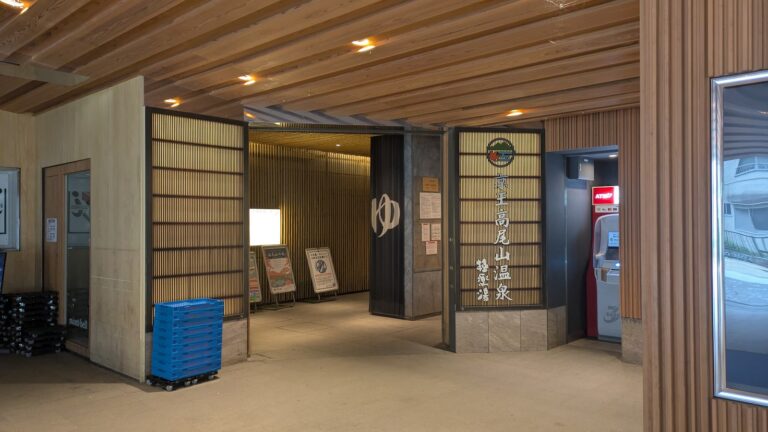
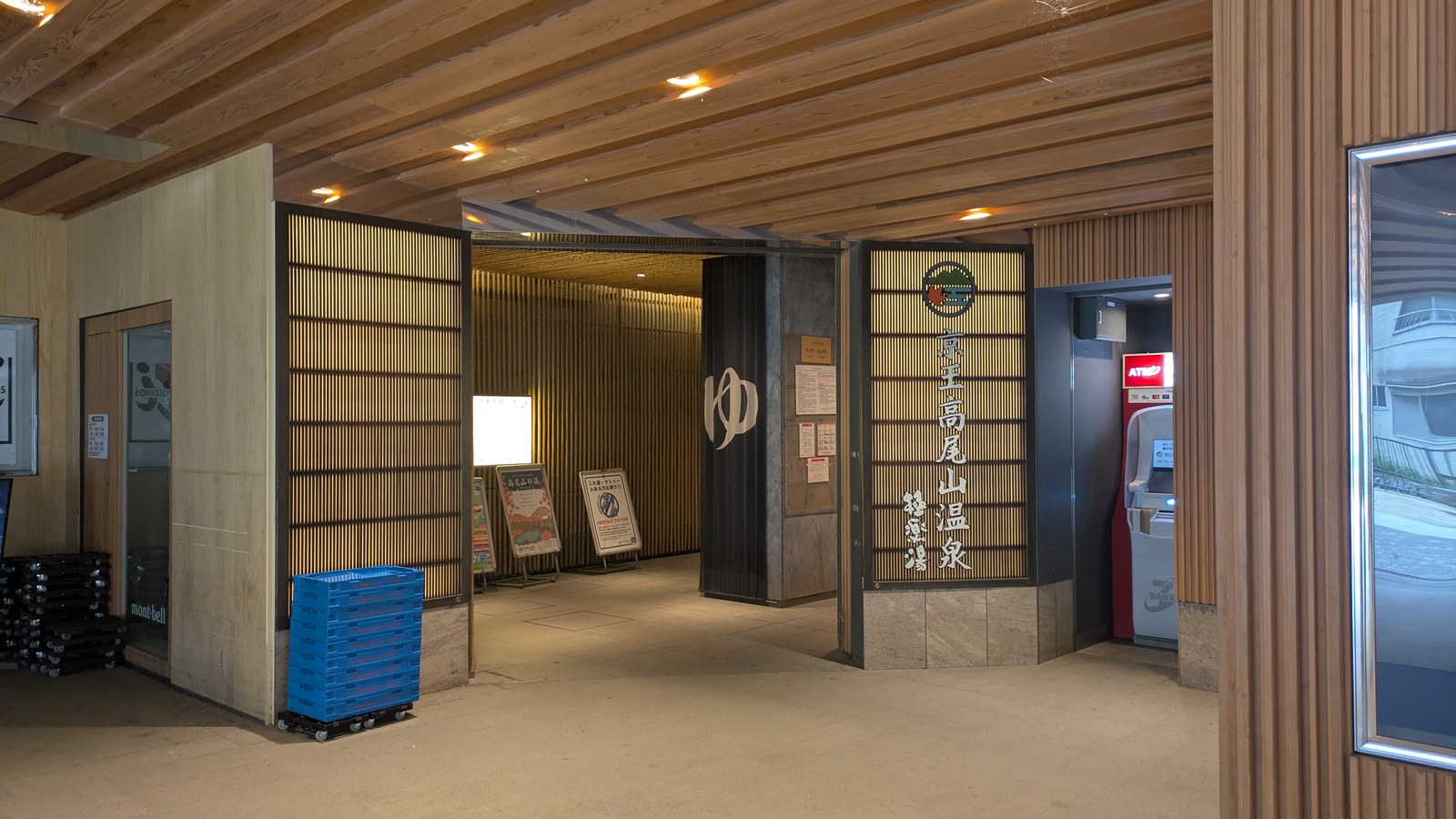
Keio Takaosan Onsen Gokurakuyu is a three minute walk from the ticket gates. On a normal day it is the best ending a mountain in Tokyo has to offer. We have written a whole guide to using it well, because it deserves one.
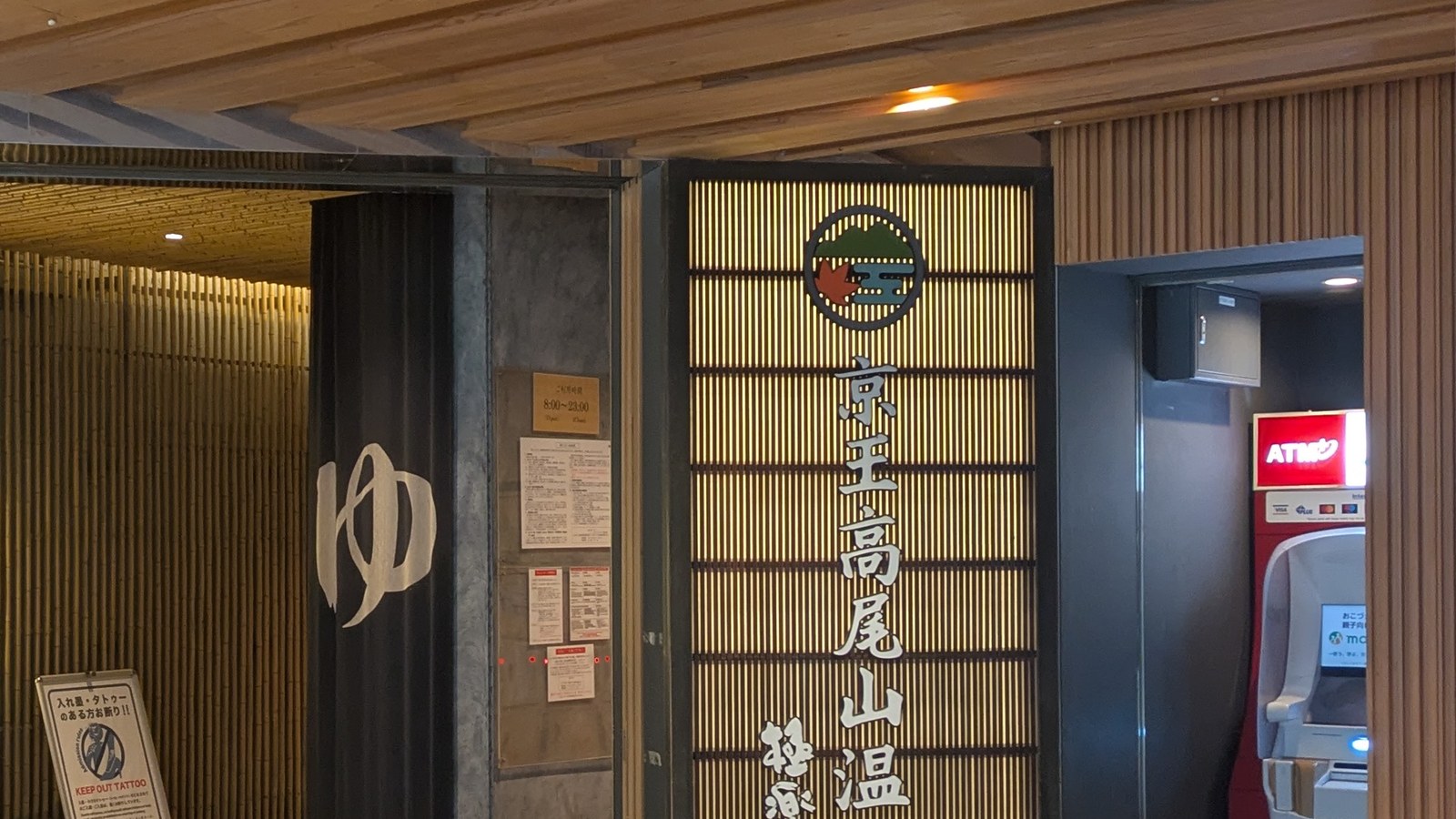
If you have a tattoo, none of that applies to you. The rule is absolute, it is posted in English at the door, and it is enforced.
This article is about what happens next. Not the disappointment part. The practical part: where you can actually wash, where you can actually soak, what it costs, and why an hour of searching in English will leave you more confused than when you started.
One thing to say at the top, because it shapes everything below. In Japan, which baths accept tattoos is not published information. It is not a secret being kept from foreigners. It is a question that most people here have never needed to ask, so the answer largely does not exist in writing. That single fact explains why this is such a strange problem to solve, and it explains why one of the options below costs about a hundred and thirty dollars.
Affiliate link. This site earns a commission if you book through it, at no extra cost to you. Photo from our own walk.
What this guide covers8 sections
The rule at the trailhead is not negotiable
Most English travel writing hedges on tattoos in Japan. The hedging is usually correct. Policies vary, staff sometimes look the other way, a small tattoo under a shoulder strap often passes without comment.
Gokurakuyu is not one of those places, and it is worth being precise about it, because a wrong guess costs you the end of your day.
The official rules of the operator state that entry is refused regardless of the size of the tattoo. Cover stickers are not accepted. Body paint is not accepted. Covering a tattoo with anything at all does not make you eligible. If you get in without anyone noticing and it is seen later, you are asked to leave. The restriction is not limited to the baths either: the restaurant and the other rooms inside the building are closed to you as well.
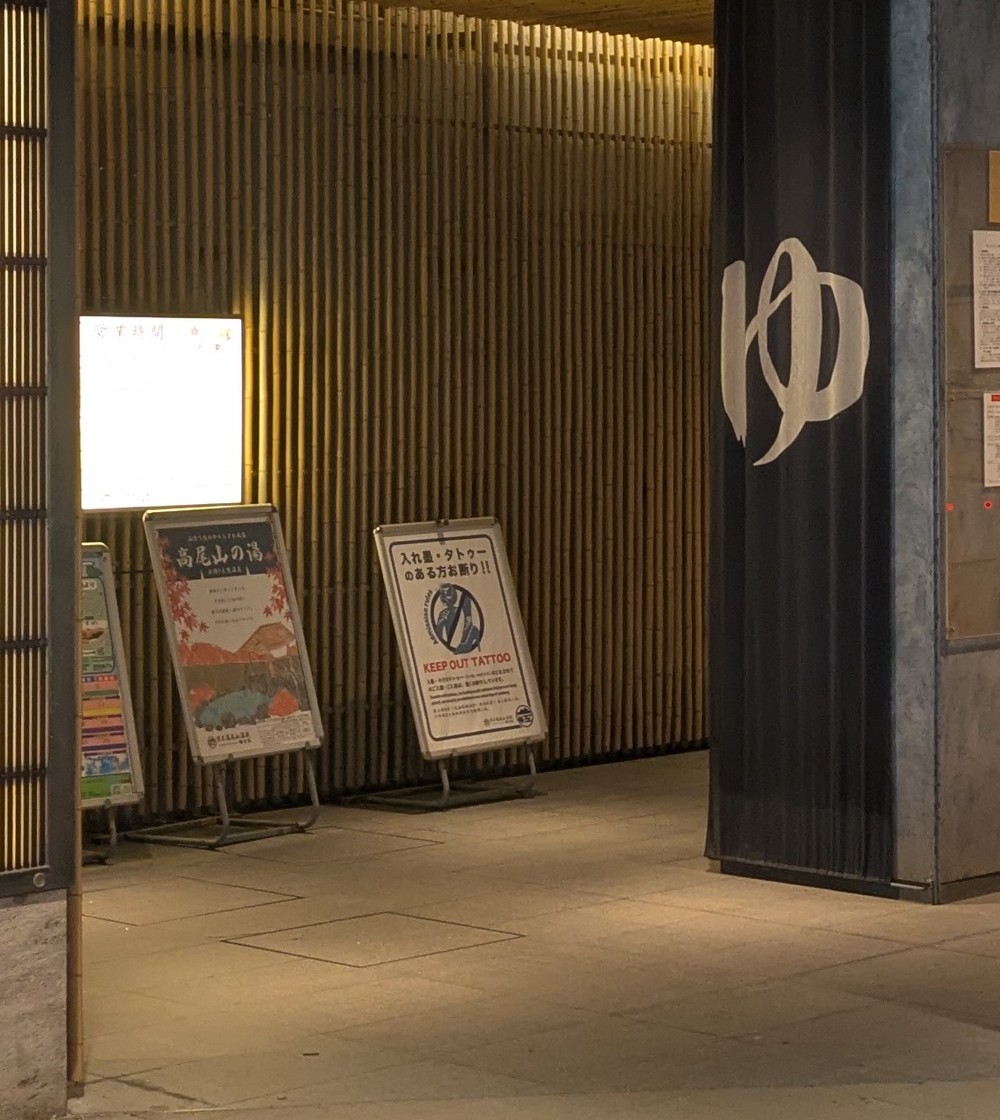
So this is not a situation where you try your luck and see what happens. It is a closed door, and the sign on it is one of the very few pieces of English at that entrance. We wrote about that irony in our guide to the hot spring by the station: the first English many visitors read at Takaosanguchi is the sentence that tells some of them to stay out.
Why searching does not solve this
Here is where the problem stops being about one building.
The natural move is to search for a tattoo friendly onsen near Mount Takao. We did that properly, in Japanese and in English, and then we checked every result against the source. Four things came out of it.
The Japanese aggregator sites are pointing at buildings that no longer exist. The two facilities they list for the Hachioji area, the city that contains Mount Takao, are Hachioji Onsen Yasuragi no Yu and Takao no Yu Furoppy. Yasuragi no Yu closed in April 2020 and demolition of the building began in the autumn of 2022. Furoppy closed on 10 March 2018. Both still appear on tattoo friendly listing pages today. One of them is not a business that stopped taking tattooed customers. It is an empty lot.
The largest English language directory of tattoo friendly onsen lists nineteen facilities in Tokyo, and not one of them is in western Tokyo. They are in Sumida, Shinjuku, Taito, Ota, Setagaya, Suginami. Every single one sits in the central wards. From the point of view of that directory, the entire western half of the metropolis, the half with the mountains in it, is empty.
Facilities that do make exceptions will not tell you what the exceptions are. Manyo no Yu in Machida is a large, well known hot spring complex. The official wording says that entry by people with tattoos is firmly refused, and then adds that guests who follow the rules of the facility may enter, and that you should ask the staff for details. Read that again. The condition exists. The condition is not published. You cannot find out whether you qualify until you have travelled there and asked a person at a counter.
And the places that everyone calls tattoo friendly are usually silent on the subject themselves. Kosugiyu in Koenji is the standard recommendation in English articles about bathing with tattoos in Tokyo. Its own website says nothing about tattoos at all. Not a welcome, not a rule, nothing. The recommendation is real, the reputation is real, and the facility itself has published no position.
That last one is the trap, so it gets its own sentence. The absence of a rule is not the same as a welcome. A listing site saying yes is not the facility saying yes.
Put those four together and you get the shape of the actual problem. This is not a search problem that you are failing to solve. The information is genuinely not there. Ask a Japanese friend and you will usually get an honest shrug, because very few people here have ever needed to know.
Which means the thing you are short of is not a bath. It is knowledge of where the baths are.
What a guided tour is actually selling you
We have spent eight articles on this website proving that Mount Takao needs no arrangement at all. No permit, no reservation, no guide, no Japanese. You tap an IC card at Shinjuku, you walk, you come back. We have said, in print, that you can decide to climb it on the morning of the day itself.
So we are the last people who would tell you to buy a tour of Mount Takao. For the mountain, you do not need one.
For this specific problem, the calculation is different, and here is the exact reason why.
There is a full day tour of Mount Takao that includes a hot spring, and its listing states plainly that guests with tattoos will be taken to a hot spring that accepts them. Buried further down the page is the operational detail that makes the whole thing make sense:
If anyone in the group has tattoos, we go to a different onsen on another mountain, about thirty five minutes away by car.
That is the product. Not a bath, not a shortcut, not a discount. Somebody who already knows which bath on which mountain will take you, and who has a car and rearranges the end of the day around your skin.
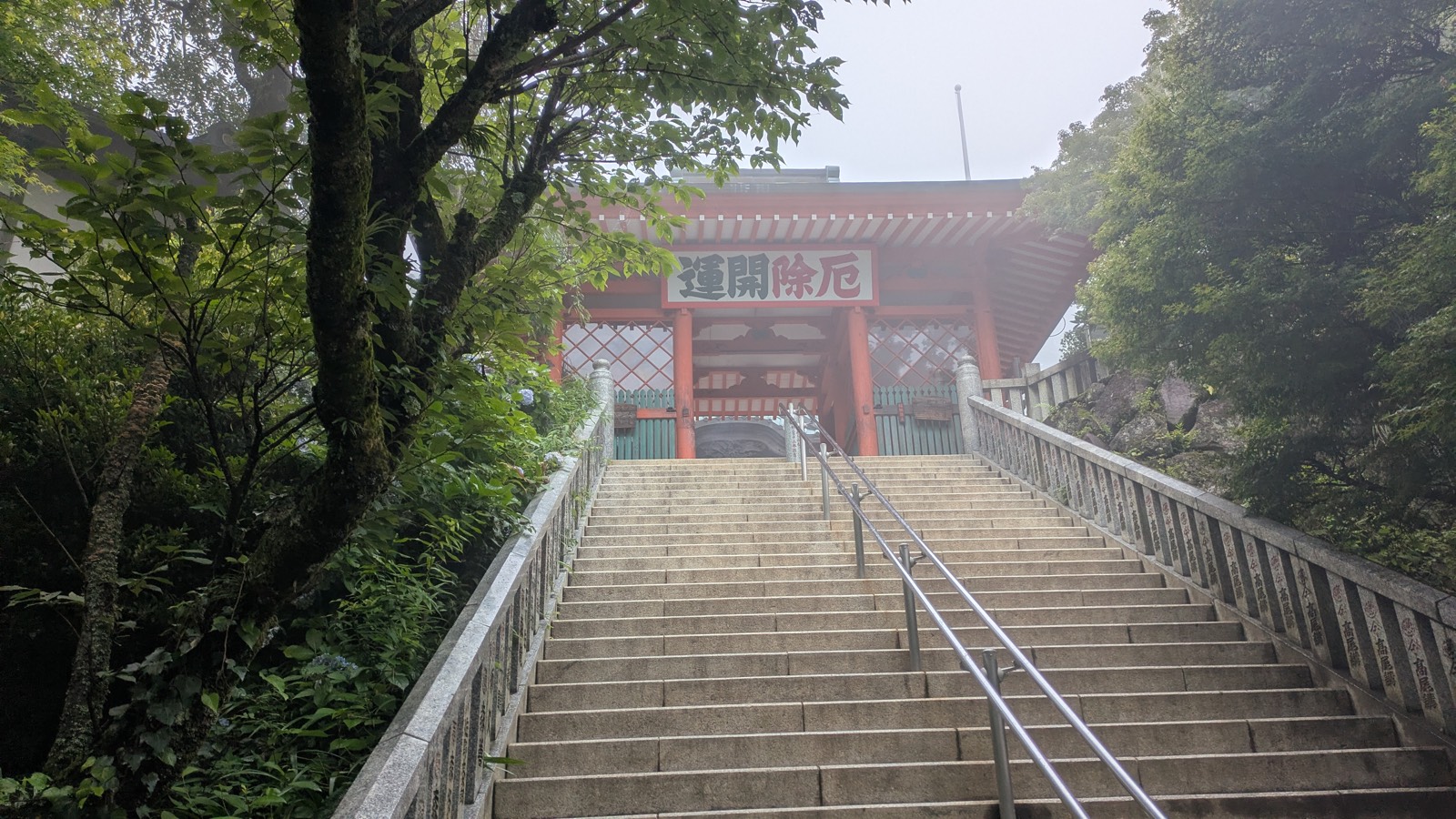
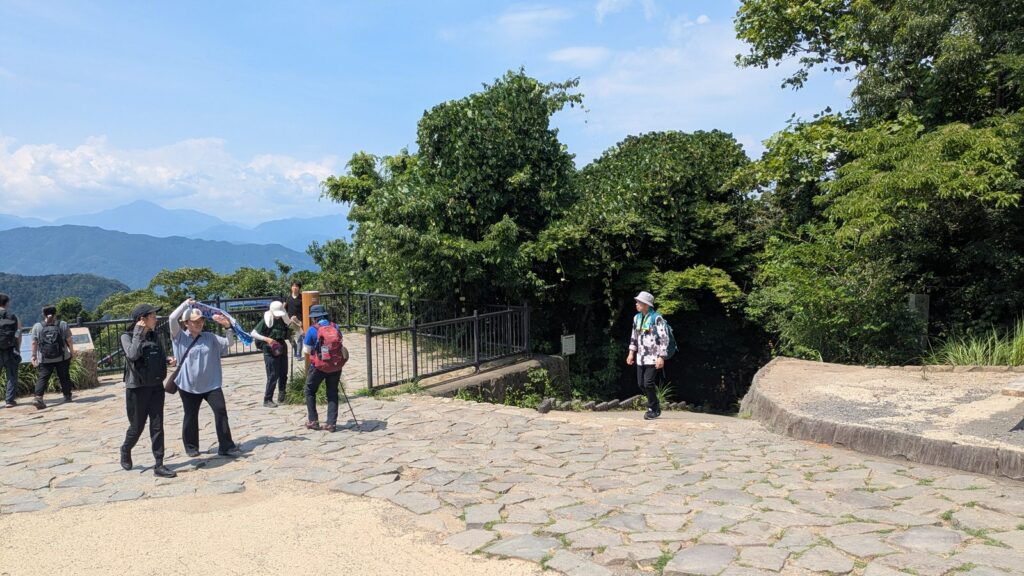
What the day contains, as of August 2026: eight hours, an English speaking guide, a maximum of seven people, meeting at the ticket gates of Takaosanguchi Station where the guide waits holding a yellow tennis ball. The Takao 599 Museum, a cable car or chairlift ride, the summit, the thirteen hundred year old temple of Yakuoin, a monkey park with more than ninety macaques, a Hachioji ramen lunch with vegetarian options, and about ninety minutes at the hot spring. A towel for the bath is included. The cable car ticket is not included and costs about five hundred yen, paid at the station. The day ends at Hachioji Station rather than back at Takaosanguchi. The price starts at 19,116 yen per person, cancellation is free up to twenty four hours before, and it holds a 5.0 rating from 107 reviews.
The limits, stated honestly. The tour does not name the hot spring it uses. We asked the page and it does not say, so we are not going to guess for you: all that is documented is that the operator says it accepts tattoos and that it is about thirty five minutes away by car. And the price is what a tour costs, not what a bath costs. You are paying for a day, and the bath is the part of the day that you could not have arranged yourself.
If that is the trade you want, the day is listed here: the Mt Takao tour with a tattoo friendly hot spring. That is an affiliate link, so this site earns a commission if you book through it, at no extra cost to you. We recommend it because it solves a problem we could not solve another way, not because of the commission.
Affiliate link. This site earns a commission if you book through it, at no extra cost to you. Photo from our own walk.
If you would rather do it yourself
Two options. Both are real, both are limited, and we would rather state the limits than pretend either one is a hot spring.
Wash without a bath, three minutes from the station
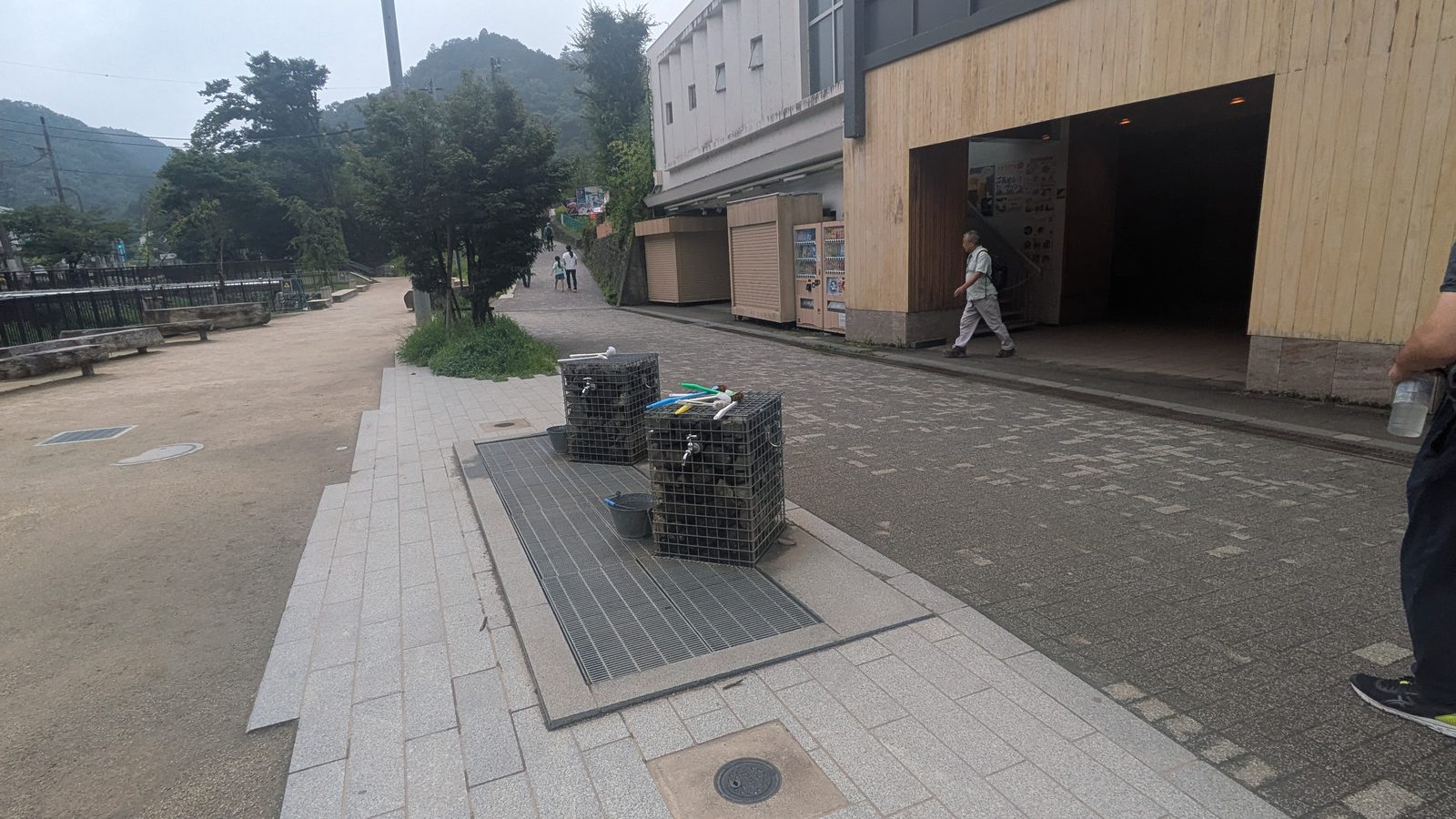
Mt.TAKAO BASE CAMP sits at 1799-3 Takaomachi, a short walk from Takaosanguchi Station, and it rents showers.
Five private shower rooms, one of them reserved for women. A shower with a locker costs 770 yen, a shower alone costs 550 yen, a locker alone costs 330 yen. Weekdays it is open from eight in the morning to eight at night, weekends and holidays from seven. No reservation is needed. Towels are sold rather than lent, so buy one at the counter or bring your own.
Nothing there has a tattoo rule, and the reason is worth stating out loud: a private shower room has no rule about tattoos because it does not need one. Every rule you have run into today exists because of a shared pool of water. Remove the shared water and the rule evaporates.
What you give up is the entire point of a hot spring. There is no soaking, no outdoor bath, no hot water pressing the day out of your legs. You get clean and you go home in dry clothes, which on a hot August afternoon is worth considerably more than it sounds.
There is a second shower option nearby at the hotel Takaone, at 500 yen, but it is closed to day visitors on weekends and holidays, which is exactly when most people climb. We mention it for completeness rather than as a plan.
Cover it, if it is small, and only on a Sagamiko day
The nearest hot spring with a written policy that admits some tattooed guests is Sagamiko Onsen Ururi, at the Sagamiko resort. The rule itself is published in Japanese on the price page of the official site, which is where the wording below comes from.
The official wording sets a hard boundary: guests with tattoos must cover them completely with the tattoo cover stickers sold at the facility, each sheet measuring 8.5 by 10.5 centimetres, and if two sheets do not fully cover the tattoo, entry is refused. Two sheets. That is a policy for one small piece of ink on a shoulder or an ankle, and it is honest of them to say so in advance. If you have a sleeve, this is not your option.
Access is the other half of the decision. From Takao Station it is one stop toward Kofu to Sagamiko Station, then about eight minutes by bus. The bus runs roughly once an hour. Admission is 950 yen on weekdays and 1,100 yen on weekends and holidays, and the baths run from eleven in the morning, from ten on weekends, until ten at night.
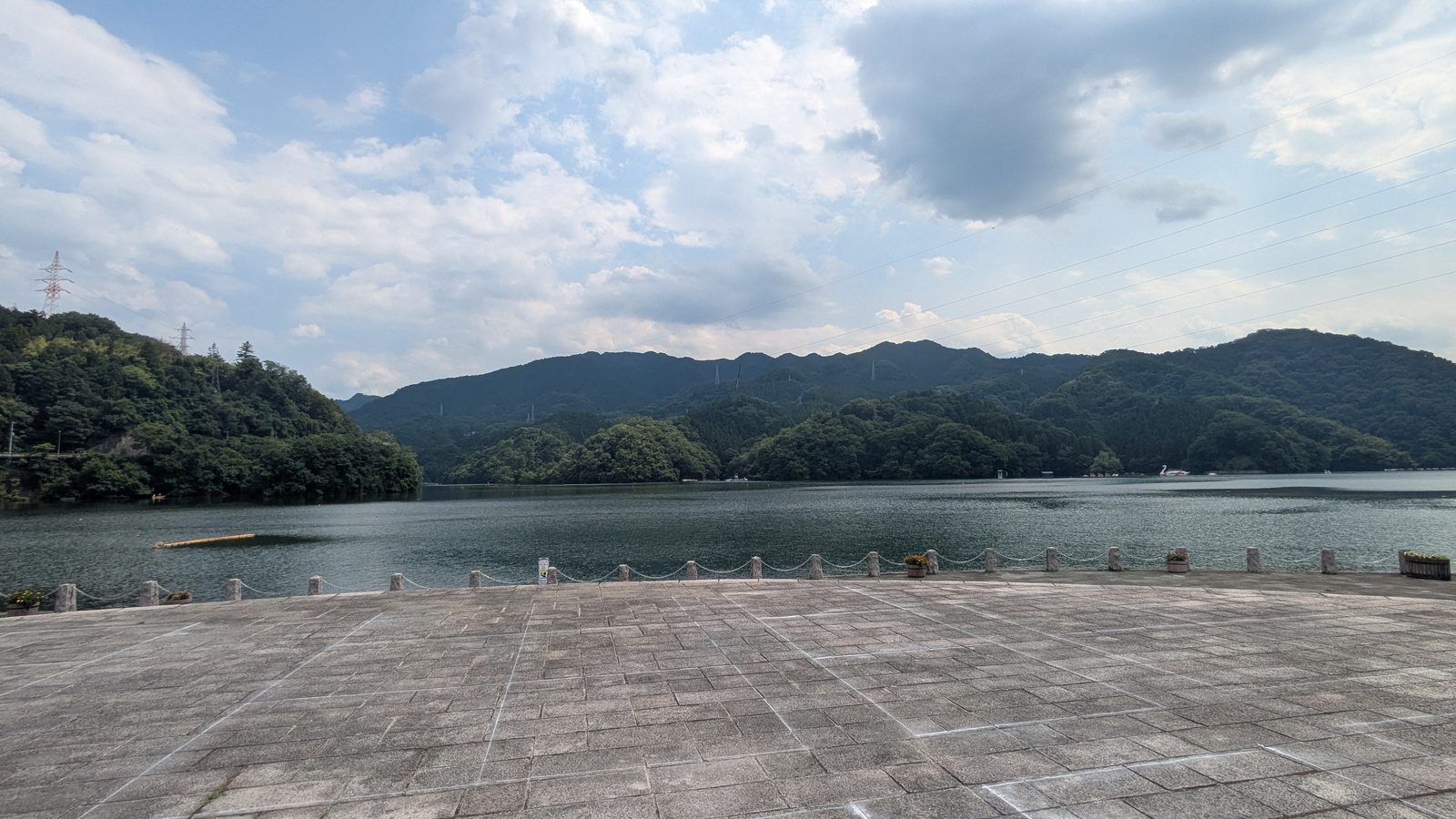
Doubling back from Takaosanguchi to get there is a poor use of a tired evening. But there is one day on which it makes complete sense, and that is the day you cross the ridge and come down the far side. We have walked and written the Sagamiko traverse in full, in the direction we recommend walking it, and Ururi sits at the end of it.
How to check anywhere else for yourself
You will keep meeting this problem, at other mountains and in other cities, so here is the method that survived contact with the evidence above.
Go to the official website of the facility. Find the page called information for visitors or frequently asked questions. Read what the operator itself says.
If it says tattoos are refused, believe it, including the part about cover stickers.
If it says nothing at all, treat it as unknown rather than as permission. The silence is what got Kosugiyu onto every English list in Tokyo without the facility ever having said a word, and silence at a counter after a two hour journey is a bad place to learn the answer.
If it names a condition without publishing the condition, as Machida does, then the only way to find out is to go and ask, and you should not build the end of a hiking day on it.
And treat listing sites as leads rather than as answers. Two of the ones we followed led to a business that closed in 2018 and a building that was demolished in 2022.
The decision table
| If you want | Do this | Cost | Watch out for |
|---|---|---|---|
| To actually soak, with no research | Book the guided day | From 19,116 yen | The hot spring is not named, and the day ends at Hachioji |
| To get clean and go home | Mt.TAKAO BASE CAMP, three minutes from the station | 770 yen with a locker | No bath to soak in, towels are sold not lent |
| To soak, with one small tattoo | Sagamiko Onsen Ururi | 950 to 1,100 yen | Two cover sheets must hide it completely, buses run hourly |
| To check some other place | Read the official site of the facility | Free | Silence is not permission |
Questions people actually ask
Can I cover a tattoo with tape and get into the hot spring at the station? No. The published rules of Gokurakuyu specifically reject cover stickers and body paint, and refuse entry regardless of the size of the tattoo.
Is the rule really enforced, or is it just a sign? The operator states that a guest who enters without being noticed will be asked to leave when the tattoo is seen.
What about the restaurant, if I skip the baths? The restriction covers the other rooms inside the building as well, so the restaurant is not a workaround.
Does the mountain itself have any restriction? None whatsoever. The trails, the cable car, the chairlift, the temple, the summit and the view of Mount Fuji are all open to everyone. Nothing on Mount Takao asks about your skin.
Where can I leave a bag if I use a shower instead of the hot spring? Mt.TAKAO BASE CAMP rents lockers at 330 yen, or 770 yen bundled with a shower.
Which hot spring does the tour use? The operator does not publish the name. It states only that guests with tattoos are taken to a hot spring on another mountain that accepts them, about thirty five minutes away by car.
Is there a tattoo friendly public bath closer to Mount Takao than the ones here? Not one that publishes a policy. The Hachioji facilities that appear on tattoo friendly lists have both been closed for years.
I have a full sleeve. What is my realistic option? The guided day, or a shower and a train home. The cover sticker route at Sagamiko is written for a small single piece and the facility says so plainly.
The mountain is not the thing turning you away
It is worth ending here, because the disappointment at that station entrance can colour a whole day retroactively, and it should not.
Mount Takao asked nothing of you. The trails were open. The cable car sold you a ticket without a question. Yakuoin let you walk through the gate, ring the bells, and climb the hundred and eight steps. The summit gave you the same view of Mount Fuji it gives everybody, and the walk down was yours in exactly the way it was for everybody else.
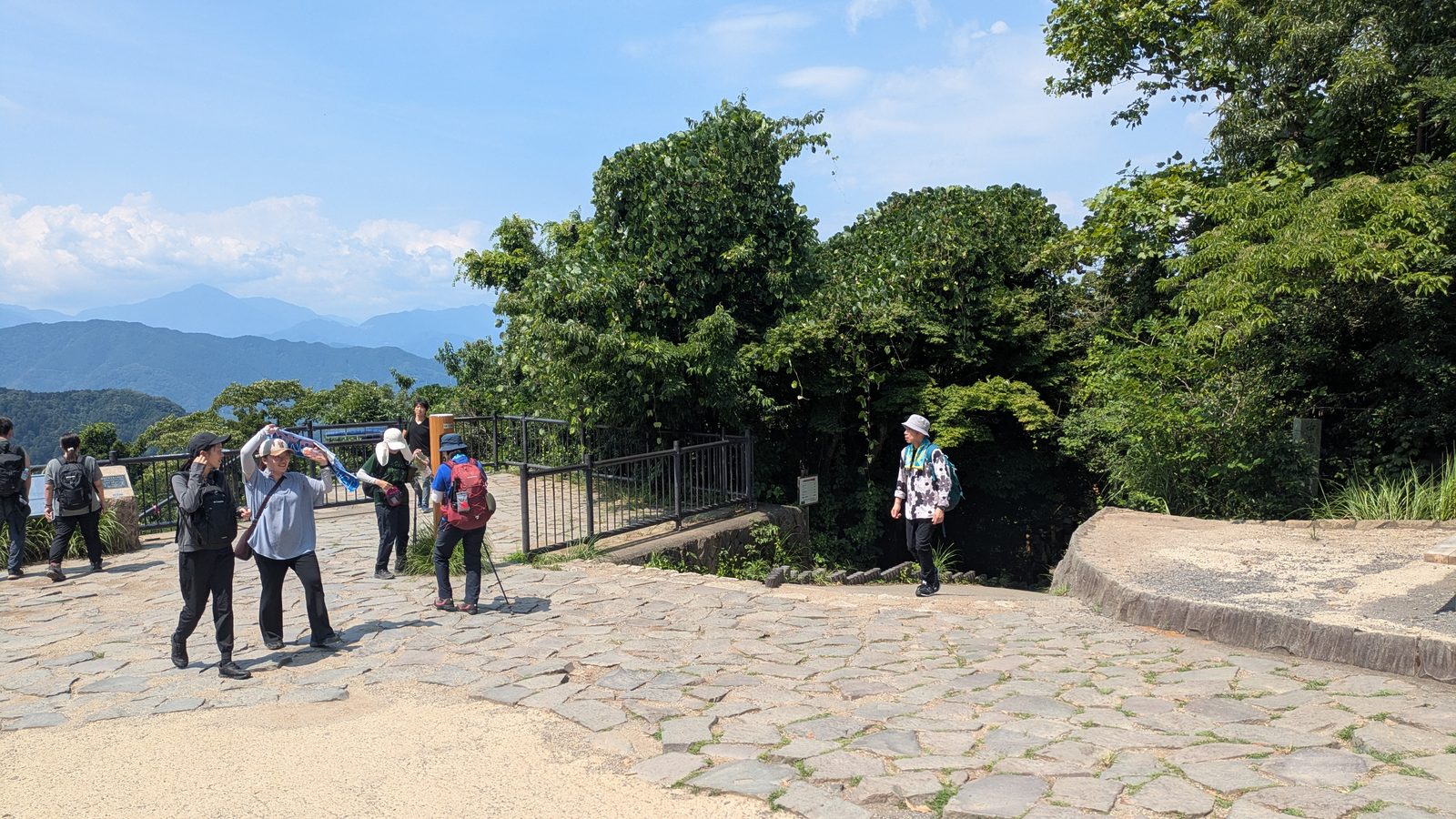
One building at the bottom said no. One. Everything else about the day was already yours, and the ending, whether that is ninety minutes in a hot spring on another mountain, a private shower three minutes from the platform, or a small tattoo under two cover stickers by a lake, is now a thing you can plan instead of a thing you discover at a door.
Related reading
- The hot spring by the station, and its rules — the full guide to the building described above.
- The Sagamiko traverse, station to station — the day that puts Ururi at the finish.
- Which trail should you take up Mount Takao — start here if you have not chosen a route yet.